Home-visiting nurses are pillar of support for new parents
New parents, who often encounter challenges and have many questions, are being supported by home-visiting nurses in Ukraine.

- Українська
- English
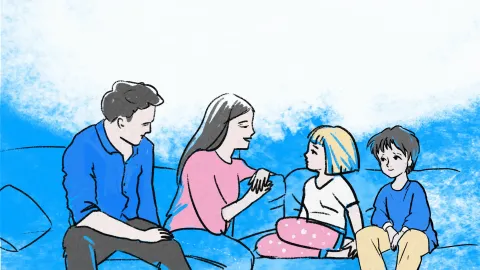
Taras and Oksana recently became first-time parents for the first time. The pair prepared thoroughly for their baby’s arrival by reading books, following medical advice and preparing themselves emotionally. However, when their long-awaited son was born, they found themselves with a multitude of questions.

“Theory is one thing, but when the baby is actually in your arms, it’s a completely different story. The anxiety can be so intense that most of your knowledge simply disappears. And then there are things you just can’t predict.”
To their relief, help is at hand thanks to Nataliia Tkachuk, a family nurse who carries out home visits as part of Ukraine’s Home Visiting Programme, run jointly by the Ministry of Health and UNICEF.
“Nataliia first visited us when I was eight months pregnant. I was feeling a bit nervous about giving birth, but she clearly explained the physiological changes taking place in my body and what to expect afterwards. It gave me real confidence.”
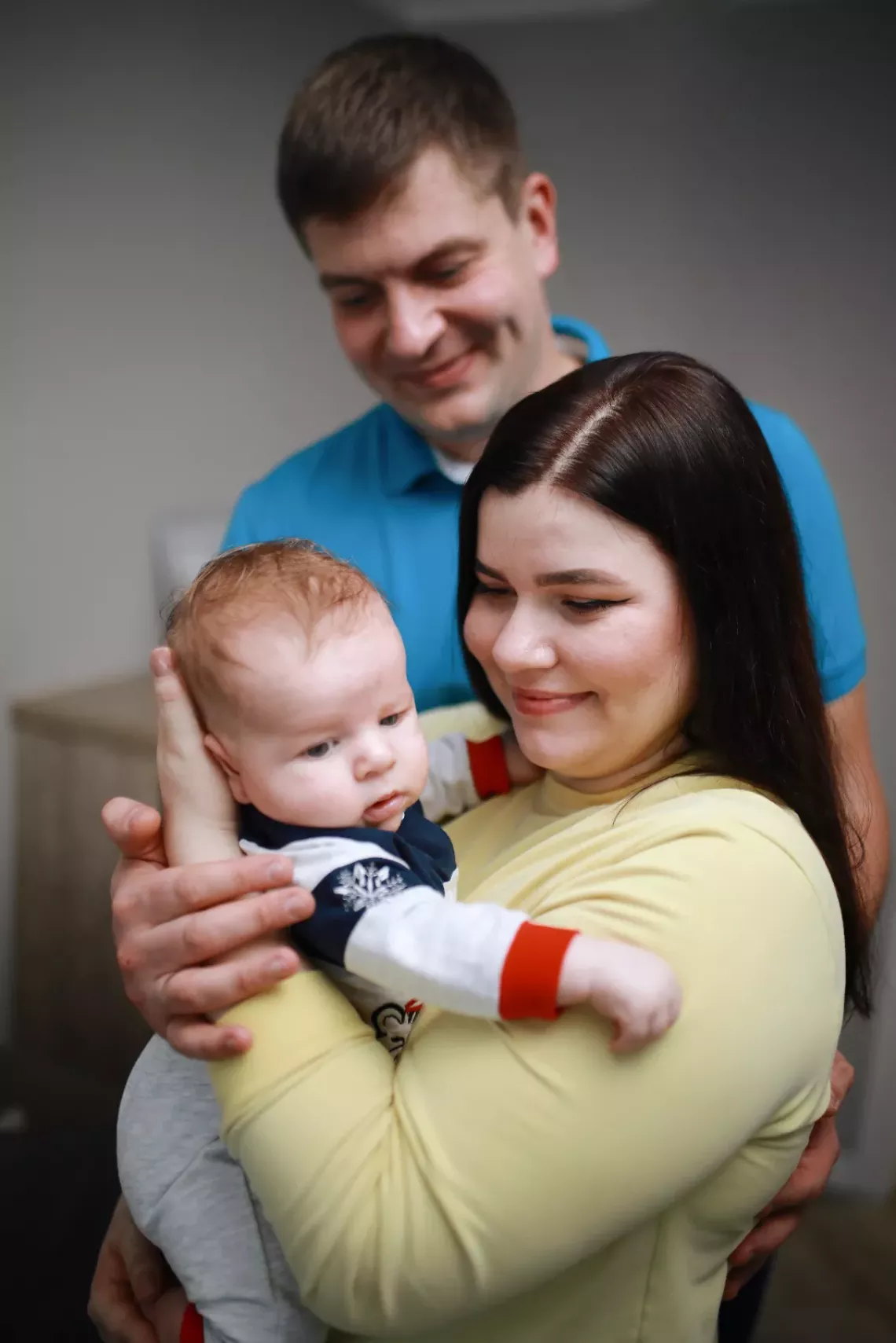
For the past six months, Nataliia has been supporting a number of families with young children, helping them adapt to this new stage of life. Typically, her introductory visit takes place before the baby is born.
“This first visit is incredibly important as it helps build trust with the family, creates a comfortable space for communication, and provides parents with reassurance and support ahead of the birth,” explains Nataliia.

Since their son was born three months ago, Taras and Oksana have contacted Nataliia many times. In particular, Oksana had questions about breastfeeding, so the nurse taught her the correct latching technique and showed her how to hold the baby after feeding to prevent reflux.
Taras also noticed a slight tremor in Illia’s lower lip, and asked the nurse whether it was normal and how they should respond.

“It’s so reassuring to have someone who can answer all your questions and provide professional support. We always look forward to Nataliia’s visits.”
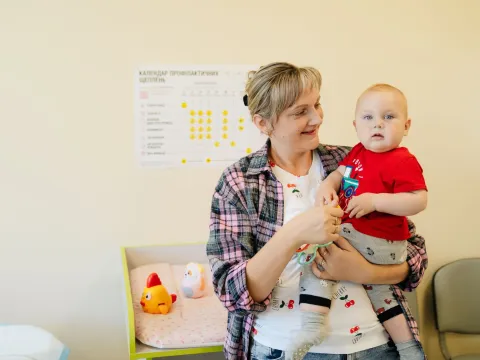
Nataliia’s visits can last up to 1.5 hours. During this time, she assesses the baby’s development, advises the parents on infant care, and discusses important topics such as routine vaccinations.
The nurse has observed a growing trend towards more mindful parenting.
“When both parents actively take responsibility for their child’s well-being, it not only supports the child’s development but also strengthens family bonds. This shared experience helps parents understand each other better, share responsibilities equally and maintain emotional balance at home. In turn, this creates a nurturing environment for a happy childhood.”

The Home Visiting Programme is implemented by the Ministry of Health of Ukraine in partnership with UNICEF, with support from the Government of Japan, the German Federal Ministry for Economic Cooperation and Development (BMZ) via the German Development Bank (KfW), and Citi.
The programme is being implemented in 15 regions of Ukraine. Аs of today, around 20,126 children from 0 to 4 years old, and 33,525 parents and caregivers, have been supported by 1,451 health care workers through this programme.