4 out of 10 children missing out on regular early childhood education – UNICEF survey
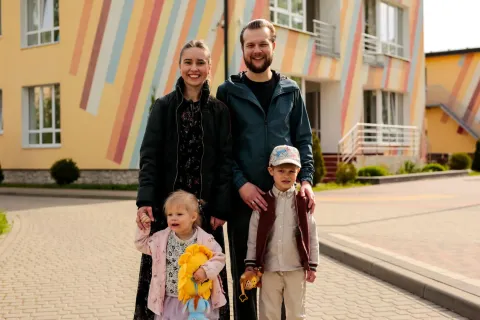
Demand for diversified forms of early childhood education is high among parents and caregivers given the barriers to accessing traditional kindergartens and concerns around entrusting children's safety to others.

- Українська
- English
KYIV, 19 December 2024 – Four in ten children aged 3 to 6 years are missing out on regular attendance at early childhood education facilities in Ukraine, according to parents and caregivers surveyed in the latest UNICEF ‘Parents’ and caregivers’ attitudes and engagement practices in early childhood education in Ukraine’ research report.

Most caregivers have an understanding of the importance of early childhood education, with 64 per cent describing themselves as somewhat or very knowledgeable, but the closure of facilities primarily due to the war, safety concerns and reported low trust in others to ensure their child’s safety, are cited as the lead barriers to attendance.
Given the challenges to accessing formal early learning facilities, the survey reveals that caregivers are open to more diversified forms of preschool education. This includes 64 per cent stating an interest in part-time kindergartens and 66 per cent in holiday programs, while corporate and mobile services are also of interest, highlighting a strong demand for specialized and flexible childcare solutions.
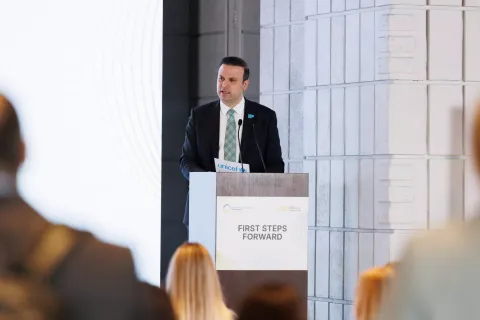
“Early childhood education sets the foundation for lifelong learning and is key to unlocking every child's potential,” said Munir Mammadzade, UNICEF Representative to Ukraine. “Improving access to quality, inclusive and safe preschool education is so important to not only help children thrive in their learning but for their holistic development through integrated health, nutrition and protection services that give every child the best start in life, added Mammadzade.

Encouragingly, nearly 40 per cent of caregivers say they enrol their 3 to 6-year-old children in early childhood education to support their social, emotional, and educational development. For a quarter of parents, the primary focus is on giving their children the chance to build social skills. These priorities are shared almost equally by male and female caregivers, highlighting a common understanding of the importance of preschool education for holistic child development.
The survey findings also revealed a significant demand for diversified flexible preschool education options in Ukraine as the war continues. Part-time kindergartens appeal to 64 per cent of parents, while 66 per cent are interested in holiday programmes. After-hours care and weekend kindergartens are also sought by 56 and 55 per cent of caregivers, respectively.
"Despite the war and disruptions to early learning, the holistic development of preschoolers must continue,” said Mammadzade. “The commitment by the Government of Ukraine towards finalizing the early childhood education ‘normative framework’ as a part of its obligations under the Convention on the Rights of the Child and meeting the requirements under the EU accession process is an important step forward in realizing inclusive and age-appropriate development opportunities,” added Mammadzade.

UNICEF’s support to early childhood learning and development includes:
- Supporting the development of the comprehensive ‘Early Childhood Education Normative Framework’ to drive systemic reform in preschool education as a core component of the Ukraine Facility Plan.
- Modelling diversified forms of kindergartens to improve access to early childhood education. This includes mobile teams and family-based kindergartens to bring services closer to underserved communities.
- Equipping parents, caregivers and educators with resources for creative learning and play to use in kindergartens, at home and elsewhere, such as the NUMO preschool development platform and the 'Sparks of Superpower' alternative learning tool package.
- Rehabilitating shelters in more frontline areas to provide safety and a more child-friendly environment.
Notes to Editors
The UNICEF study ‘Parents’ and caregivers’ attitudes and engagement practices in early childhood education in Ukraine’ is representative of the population of Ukraine aged 18 and older who have children aged 0–6 years not yet attending school. It covers all government-controlled areas of Ukraine, excluding temporarily occupied territories and areas where Ukrainian mobile communication was unavailable at the time of the survey. The study was conducted by the research agency IPSOS from May 13 to May 24, 2024, using the Computer-Assisted Telephone Interviewing (CATI) method.
Media contacts
About UNICEF
UNICEF works in some of the world’s toughest places, to reach the world’s most disadvantaged children. Across 190 countries and territories, we work for every child, everywhere, to build a better world for everyone. For more information about UNICEF and its work for children, visit www.unicef.org
Follow UNICEF Ukraine on Facebook, Instagram , Twitter та TikTok.