UNICEF and KOICA launch second phase of climate-resilient WASH programme in Karamoja
Initiative focuses on water, sanitation, and hygiene in schools and health facilities

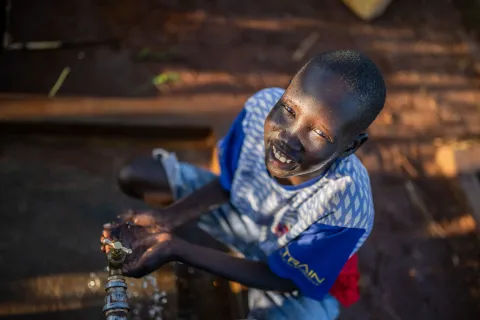
Water scarcity in Karamoja, an arid region in northeastern Uganda, is well known. Children walk long distances in search of water leading many to miss school while at the same time face many challenges along the way.
To improve the water, sanitation and hygiene (WASH) challenges in the region, UNICEF with funding from the Korea International Cooperation Agency (KOICA) implemented a programme that provided water and sanitation infrastructure starting in 2018 to 2023 in 100 schools.
The programme also strengthened local capacity by training local hand pump mechanics, empowering school management committees, and mobilizing communities to take ownership of the facilities.
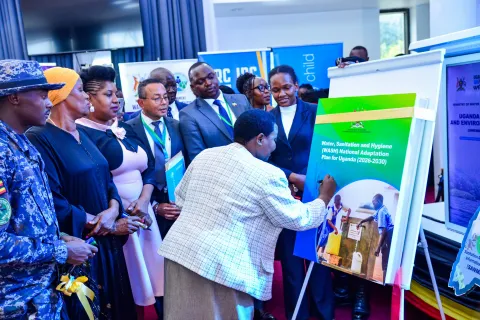
Drawing on the success of that project, UNICEF, KOICA and the Government of Uganda through the Ministry of Education and Sports (MoES) launched the second phase of the programme this time targeting 50 schools and 15 healthcare facilities across all the nine districts in Karamoja. The US$10m five-year programme is implemented in partnership with the Ministry of Health, Ministry of Local Government, Ministry of Water and Environment, Ministry of Karamoja Affairs in the Office of the Prime Minister.
In remarks by Dr Kedrace R. Turyagyenda, Permanent Secretary, Ministry of Education and Sports read for her by Dr Cleophus Mugenyi, Commissioner Basic Education during the launch of the programme at the MoES offices at Legacy Towers in Kampala, she reaffirmed her ministry’s resolve in ensuring that the programme succeeds so that every child gets access to clean water, dignified sanitation and good hygiene even in the face of climate challenges.
“This programme is not merely about infrastructure; it is about equity, resilience, and dignity by giving every child in Karamoja the chance to learn and thrive in a safe, healthy environment. It is about ensuring that no woman dies from preventable infections because her clinic lacked clean water,” she said.

Working with UNICEF, KOICA and other partners, “we can transform the story of Karamoja from one of water scarcity to one of sustainable access; from vulnerability to resilience; and from dependency to empowerment,” she added.
She said that the Accelerating Climate Resilient WASH programme for schools and healthcare facilities comes as a timely and transformative intervention ensuring that by 2030, all schools and healthcare facilities in Karamoja have climate-resilient WASH infrastructure that can withstand droughts, floods and other disasters.
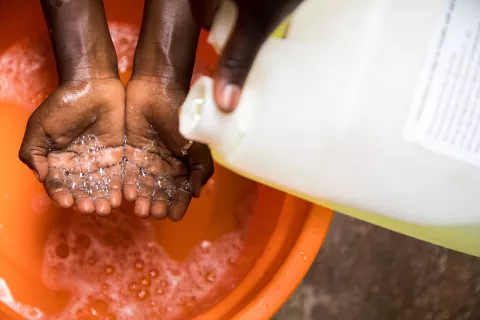
Dr Robin Nandy, the UNICEF Representative to Uganda emphasized the importance of WASH in curbing diseases that affect children. “We must note that WASH goes beyond improved school attendance and learning outcomes. Handwashing is critical in reducing diarrhoea and pneumonia, which are leading causes of death among children,” he said.
He added that UNICEF and KOICA are proud to launch the second phase of the programme that will scale up our best practices and lessons learned to reach additional 50 schools and 15 healthcare facilities while strengthening operational and maintenance systems, building climate-resilient WASH facilities such as solar electric motorized water supply systems, groundwater monitoring systems and systems strengthening at regional, district and institutional levels, including neighbouring communities.
“We are determined to ensure that every investment we make will not only serve the next five years but will become part of the long-term legacy of Karamoja, a model of sustainability that others can replicate to further sustain the anticipated achievements and results,” he added.
The importance of collaboration among partners could not be overemphasized. “Issues of WASH can’t be handled by one sector alone as they are closely linked with education, health, nutrition, water, and climate action, as well as key cross-cutting areas such as gender equality and disability inclusion. Through this programme, we aim to demonstrate how working together across these areas can deliver greater and more lasting results for better health, better learning, and stronger communities,” Dr Nandy said.

A programme that deals with WASH in schools and health centres is essential to achieving many of the Sustainable Development Goals (SDGs), from improving children’s nutrition and ensuring universal access to education, to reducing child mortality, improving water and sanitation, and advancing gender equality.
Jihee Ahn, Country Director, KOICA Uganda said that the programme is adopting a water facility design which allows water source sharing between institutions such that WASH services extend beyond the school and health facility gates into the heart of vulnerable communities thereby improving access to clean and safe water. By doing this, KOICA and UNICEF seek to create more sustainable and community-wide impact.
“This project is a continuation of a journey we began in 2018 with the aim of improving access to WASH to enhance gender sensitive and adolescent-friendly environments in Karamoja that ensure that every child, every teacher, and every community member in Karamoja has access to safe water, adequate sanitation and a clean, dignified environment for learning and healing,” she said.
Stakeholders at the launch said that the programme is an opportunity to strengthen delivery systems. “We see this as a gateway that leads to the functionality of school water points, hygiene compliance and behaviour change among learners as well as facility maintenance and community ownership levels,” said Alice Doya, Team Leader Education, Delivery Unit, Office of the Prime Minister
“The programme will help bridge the gaps that currently exist in Karamoja when it comes to universal water supply,” said Martin Akonya, a Senior Environmental Health Officer at the Ministry of Water and Environment. He retaliated his ministry’s commitment to the programme.
Bosco Okia, the Principal Health Inspector and acting Commissioner Environmental Health at the Ministry of Health welcomed the programme, which he saw as an opportunity that will accelerate infection prevention and control. “Hygiene practices will be adhered to due to availability of water in our health facilities thereby preventing many of the diseases that afflict our people,” he said.
With the programme being implemented in all the nine districts of Karamoja as well as introducing new components such as faecal sludge management, water source sharing between institutions, and joint evaluation between UNICEF and KOICA, the impact is expected to help the region adhere to climate challenges while creating an inclusive environment that is the foundation for health, education, and dignity.