Uganda's fight against child labour on coffee farms
Parasocial workers help over 100 children return to school in Kalungu's coffee-growing region
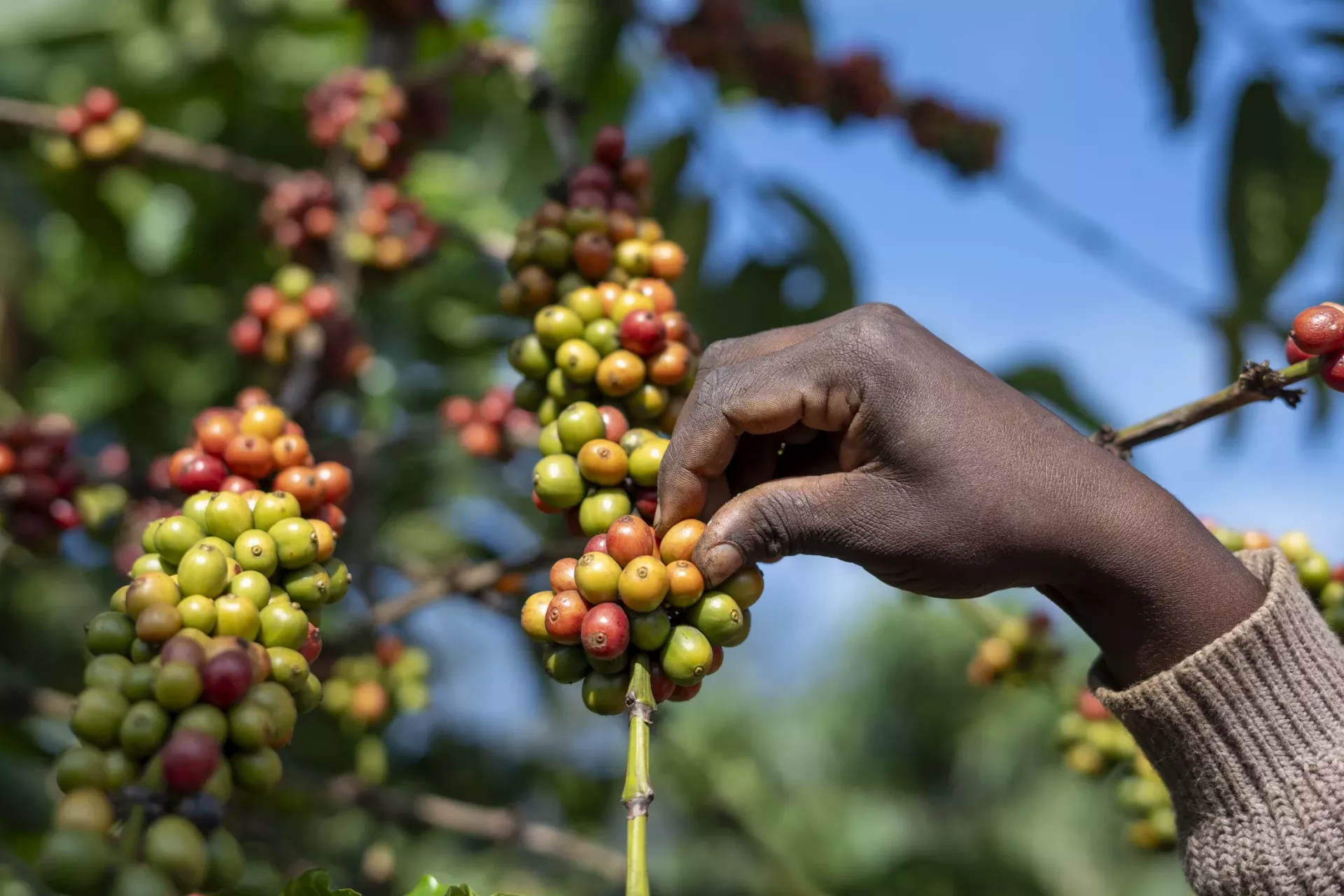
It is coffee harvesting season at Swaibu Kakooza’s plantation in Kiwunga village, Kyamulibwa Sub-County, Kalungu District. At first light, Swaibu, 58, and his over 12 workers descend on the 12-acre plantation, baskets in tow, to pick the coveted red berries.
Kalungu District in the central region of Uganda is one of the country’s biggest coffee producers. More than 90 per cent of the households, according to Dr. Paddy Kayondo, the Resident District Commissioner (RDC), are engaged in coffee farming. This has increased the demand for cheap labour, especially during the picking season, endangering the future of school going children.
As Paulina Namatovu, the Deputy Head Teacher at Kyamulibwa Baptist Primary School, explains, absenteeism and late coming increase by more than 30 per cent during the harvesting season.
“Some parents bluntly tell us that their children’s school fees will come from the coffee they are harvesting. It is not uncommon for a learner to show up for school at 2 p.m. or to miss classes for a month and show up to sit examinations,” Namatovu adds.
According to Rita Ruzena, the District Community Development Officer, the cases of child labour had reached calamitous levels, with parents weaponizing poverty to the extent of removing their children from school to “make money.”
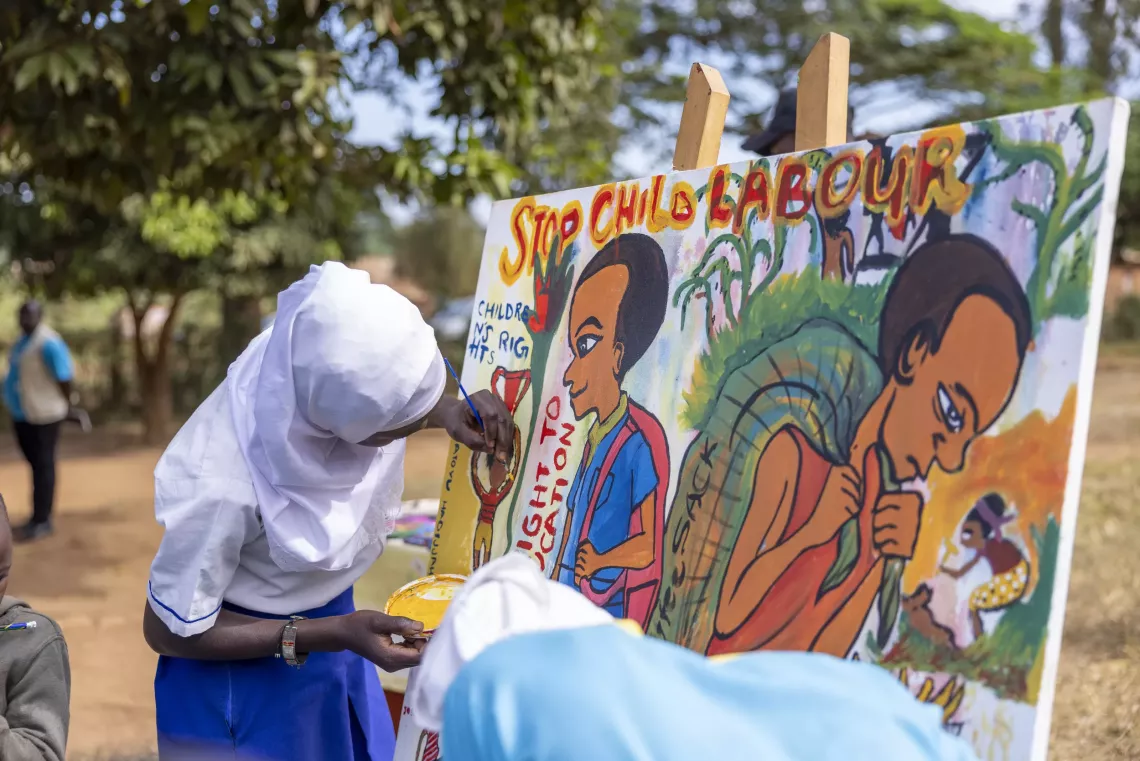
In June 2024, Kalungu District in consortia with the United Nations Children’s Fund (UNICEF), the International Labour Organization (ILO), the Food and Agriculture Organization (FAO) and the International Trade Centre with funding from the European Union (EU) started implementing the CLEAR Supply Chains Project – Ending Child Labour in Supply Chains: Addressing the Root Causes of Child Labour through an Area-Based Approach.
The project is part of Uganda’s efforts to comply with the EU’s Corporate Sustainability Due Diligence Directive to not only eliminate child labour and the employment of young workers in the coffee value chain but also to build robust child protection systems.
The project’s key interventions include raising community awareness on the implications of child labour on Uganda’s coffee exports, training farmers, community leaders and child protection actors on children’s rights, parenting, and the risks of child labour.
The project also fronts education as a sustainable alternative, equips adolescents with life skills, and provides remedial support to affected children through a structured case management system.
More than 1,699 cases involving children have been managed through social work case management between June and August 2024, including the withdrawal and reintegration of 82 children from child labour into school. Additionally, 534 members of the community and school-based social service workforce were trained, collectively reaching over 20,981 individuals with vital information and support services.
Impact of parasocial workers
Arguably, the biggest highlight of the CLEAR Supply Chains Project is establishing and supporting the Child Wellbeing Committees (CWCs) at district and sub county levels cascaded by a trained and dedicated workforce of 130 parasocial workers operating at the village level.
Through their effort in Lwabenge and Kyamulibwa sub-counties, more than 400 cases of child labour have been traced, investigated and resolved. This has resulted in over 110 children returning to school to continue their education. Over 170 children have been referred for further technical vocational support by the CLEAR Supply Chain project.
Among the cases is one of Maria Gorret Nayiga, whose husband abandoned her with a set of twins and a baby boy. Unable to afford rent and school fees, she and her children worked on several coffee farms for food and shelter. The twin girls, now 16-years-old worked twice as hard so their young brother could go to school. Moved by their gesture, their mother approached a parasocial worker who escalated her case to the probation officer.
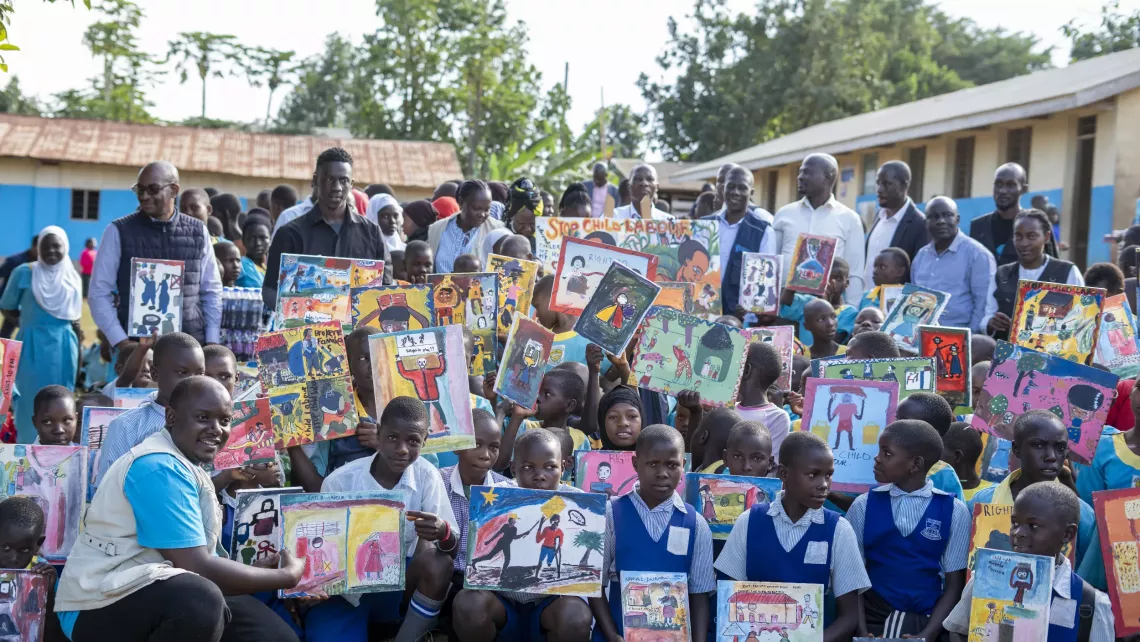
As a result, the twins and their brother were enrolled at Kyamulibwa Baptist Primary School, one of the 42 primary and secondary schools whose teachers and school management committees (SMCs) have been trained and equipped with tools to track and address violence and enhance child protection in school settings.
Testimonies reverberate in several schools about the impact of parasocial workers at household level. Faustine Mutasingwa, the headteacher of Ssala Good Hope Primary School credited the parasocial workers for the increase in the school’s enrolment since the project started.
“There is great awareness in the community about child labour and its impact on children’s success at school. Since the project started, we have registered 104 new entrants, and more than 35 pupils who had dropped out have resumed classes,” Mutasingwa added.
With the formation of other social structures such as the Child Wellbeing Committees and model parents like Swaibu Kakooza who insist on a no-child employment policy on their coffee plantations, Kalungu is on course to being a model child labour free district in Uganda.