Uganda holds the first ever National Play Day
“National Play Day is vital in enabling us to introduce in a formal way for this country to remember that our children need to be children, they need to be allowed to play both at home and in school..."

Occasionally on social media platforms like X and WhatsApp in Uganda, photos of children trend with “legend’ as a single word caption accompanying the photos. The child is usually seen returning to their home having spent an enormous amount of time playing, sometimes in the muddy playground in the community or with tattered clothes having been sliding downhill especially on a rainy day. In some instances, an unhappy parent or guardian is seen giving the child a tense look.
Sometimes, parents and guardians admonish the children for having spent all their time playing instead of focusing on their studies or household chores. Yet play is considered one of the most transformative forces in children’s life through which they learn and develop and improve their psychosocial wellbeing.
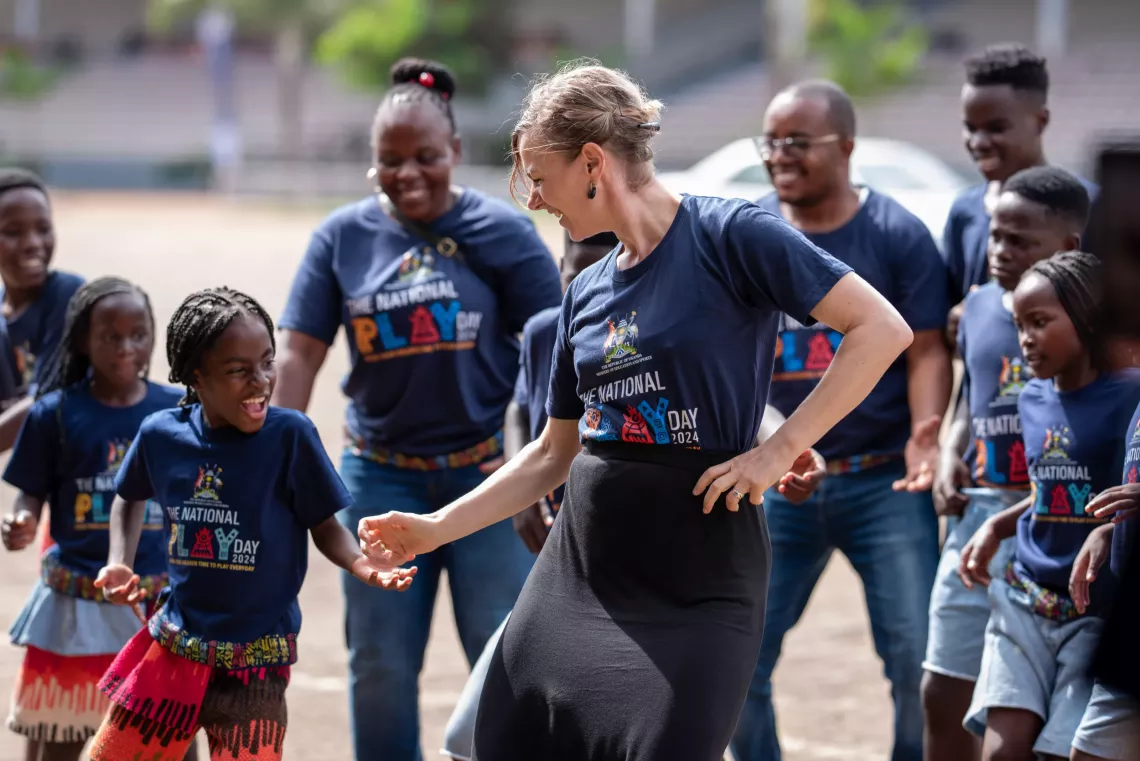
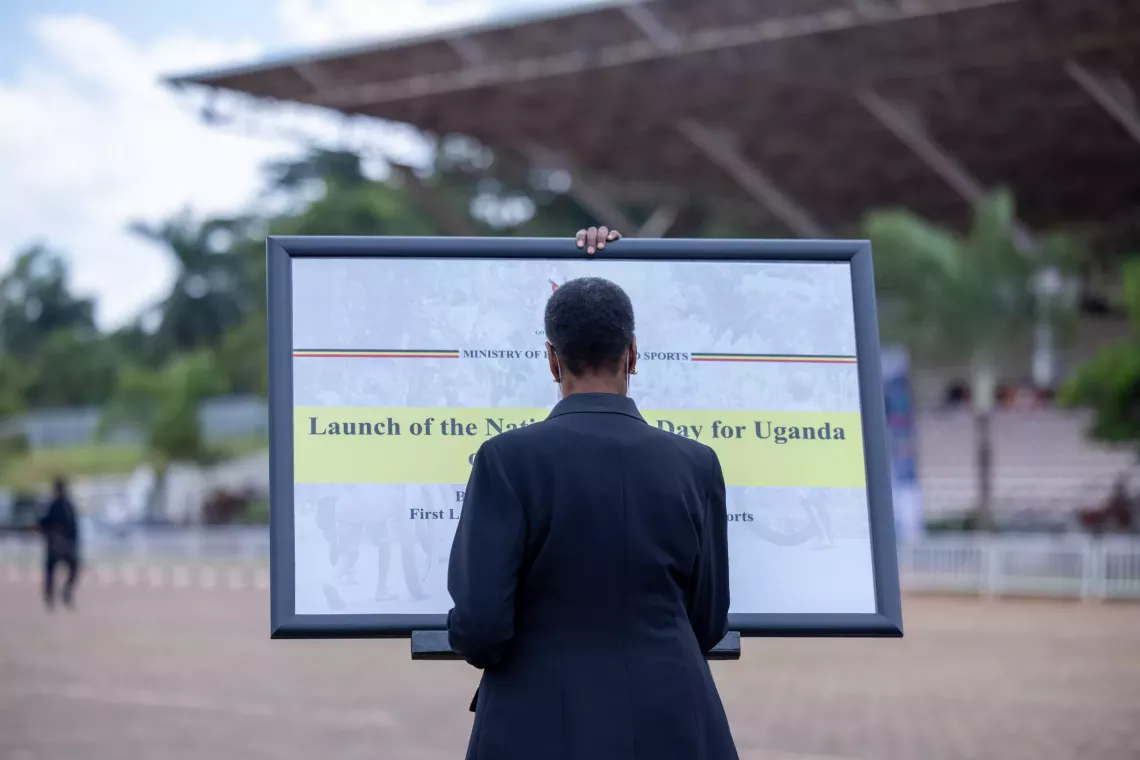
It is under this background that Uganda held its inaugural National Play Day on 30 April at the Kololo Independence Grounds in its capital Kampala, becoming the first country in the world to do so following the declaration by the United Nations General Assembly that designated every 11 June as the International Day of Play.
Uganda’s national play day was organized by the Ministry of Education and Sports in partnership with UNICEF, Plan International with funding from Lego Foundation and Education Cannot Wait.

Play, hundreds of stakeholders among them children attending the event were told, helps in unlocking potential, facilitating resilience and recovery from trauma. Through play, children develop important skills including literacy; learn how to respect others’ emotions and manage their own; work as a team; and solve problems, among others.
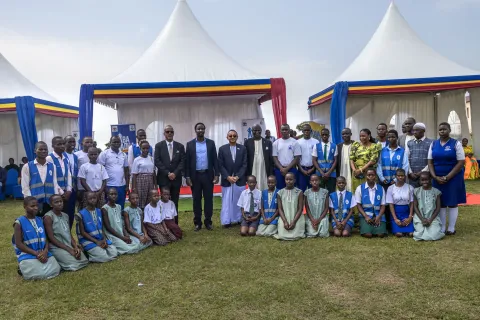
The event was presided over by the Minister of Education and Sports and also First Lady, Hon Janet Kataha Museveni, who recognized that the “National Play Day is vital in enabling us to introduce in a formal way for this country to remember that our children need to be children, they need to be allowed to play both at home and in school beginning with early childhood development centres or kindergartens as they are commonly known.”
She added that the Government of Uganda appreciates “the value of play in supporting children’s holistic development and lifelong learning, as well as the collective effort required from all stakeholders, including parents, to ensure that every child is given the opportunity to play.”
To that effect, Hon Janet Kataha Museveni revealed that the Ministry of Education and Sports has developed an Early Childhood Care and Education (ECCE) Policy, which will soon go to cabinet for approval.
“The objective of the policy is to provide direction and guidance in the implementation of ECCE services in the country. Once approved, it will provide the necessary guidelines for the effective management of learning through play and ECCE services in general,” she revealed.


Additionally, the Permanent Secretary at the Ministry of Education and Sports, Ketty Lamaro, revealed that her ministry is developing the National Guidelines for Learning through Play.
“We are in the process of developing these guidelines and the National Curriculum Development Centre and Basic Education Department are leading this process,” she revealed.
She pledged her ministry’s commitment to work with all stakeholders to ensure that play is emphasized in teaching and learning through retooling teachers, providing instructional materials such as teachers’ guides, and sharing effective practices for learning through play.
She added that “through a series of events, activities, and initiatives, we will work tirelessly to promote and protect the right to play for all children across Uganda.”
Dr. Munir A. Safieldin, the UNICEF Uganda country representative explained that learning through play is the process of learning that is joyful, meaningful, and socially interactive in an experience that actively engages children, encouraging iterative exploration and discovery.
To ensure that it is experienced by children countrywide, Safieldin announced that in collaboration with the Government of Uganda and Play Action International, UNICEF will build 72 new playgrounds in Early Childhood Development (ECD) centers and schools across Uganda!
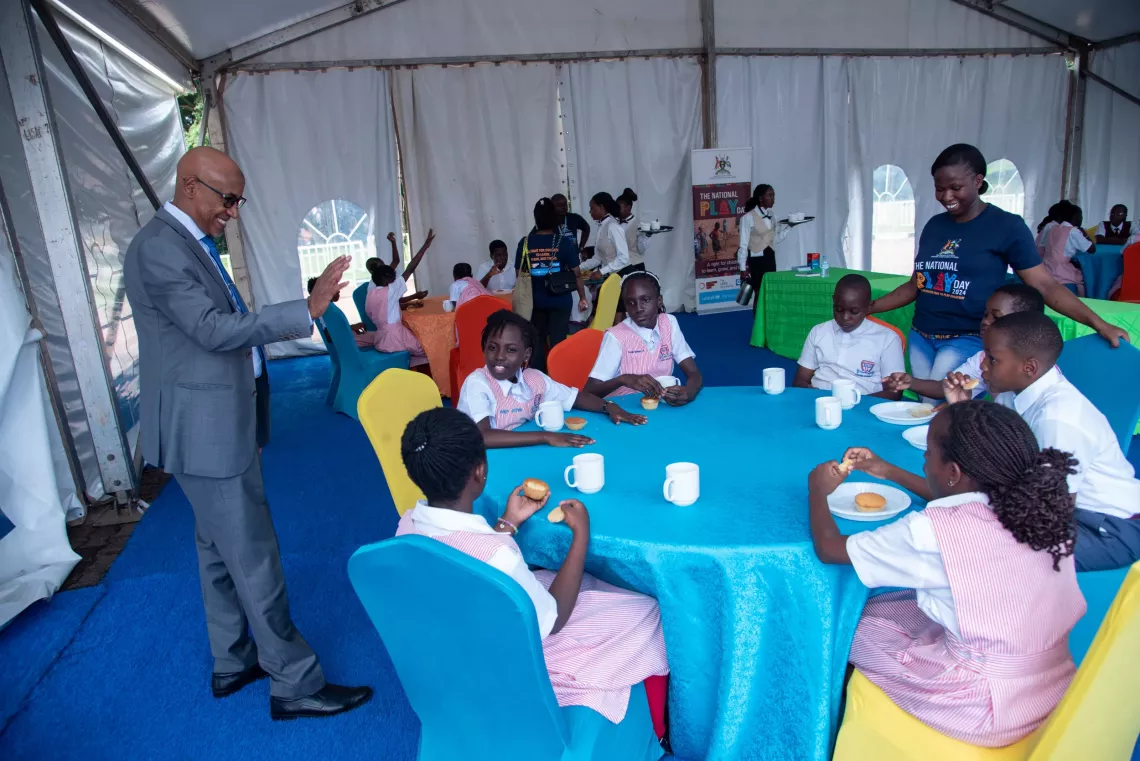

He commended Plan International, The LEGO Foundation, Education Cannot Wait, and the Danish Government, for their unwavering support in organizing the National Play Day as well as Faith Based Organizations and over 30 civil society organizations alongside UNICEF that made the Play Day possible.
Phoebe Kasoga, the Country Director of Plan International Uganda called for the adoption of sustainable low-cost materials. “Locally made materials are crucial because they are easy to get at an affordable cost,” she said.
While play is not the solution to everything, Kasoga urged parents, guardians, and caregivers to work together to ensure that children learn through play and called upon the Ministry of Education and Sports to institutionalize play by incorporating it in the national curriculum.
Joselyn Agaba, a teacher at Lohana Academy, a primary school in Kampala, testified to the role of play in a child’s life. “We have seen that children learn better through play whether it is literacy or numeracy. They also become considerate and learn to work as a team,” she said.
“The National Play Day could not have come at a right time as more needs to be done so that all children in all schools are facilitated to play,” she added.
At Kololo, the reality of the work that lies ahead to ensure children learn through play was put on display through a skit by pupils of Buganda Road Primary School where a mother was against her child spending some of her time after school to engage in play activities. Teachers and community members were able to convince her to relax her stand so her child can develop through play, which she eventually accepted. Like they say in Africa, it takes a village to raise a child. Indeed, it will take the entire village to raise a child through play.