Remarks by the UNICEF Representative to Uganda on the launch of audio/visual version of the budget
To continuously foster transparency and accountability in government, we must endeavour to provide clear information using accessible channels and in the right format about how national resources are collected and spent.
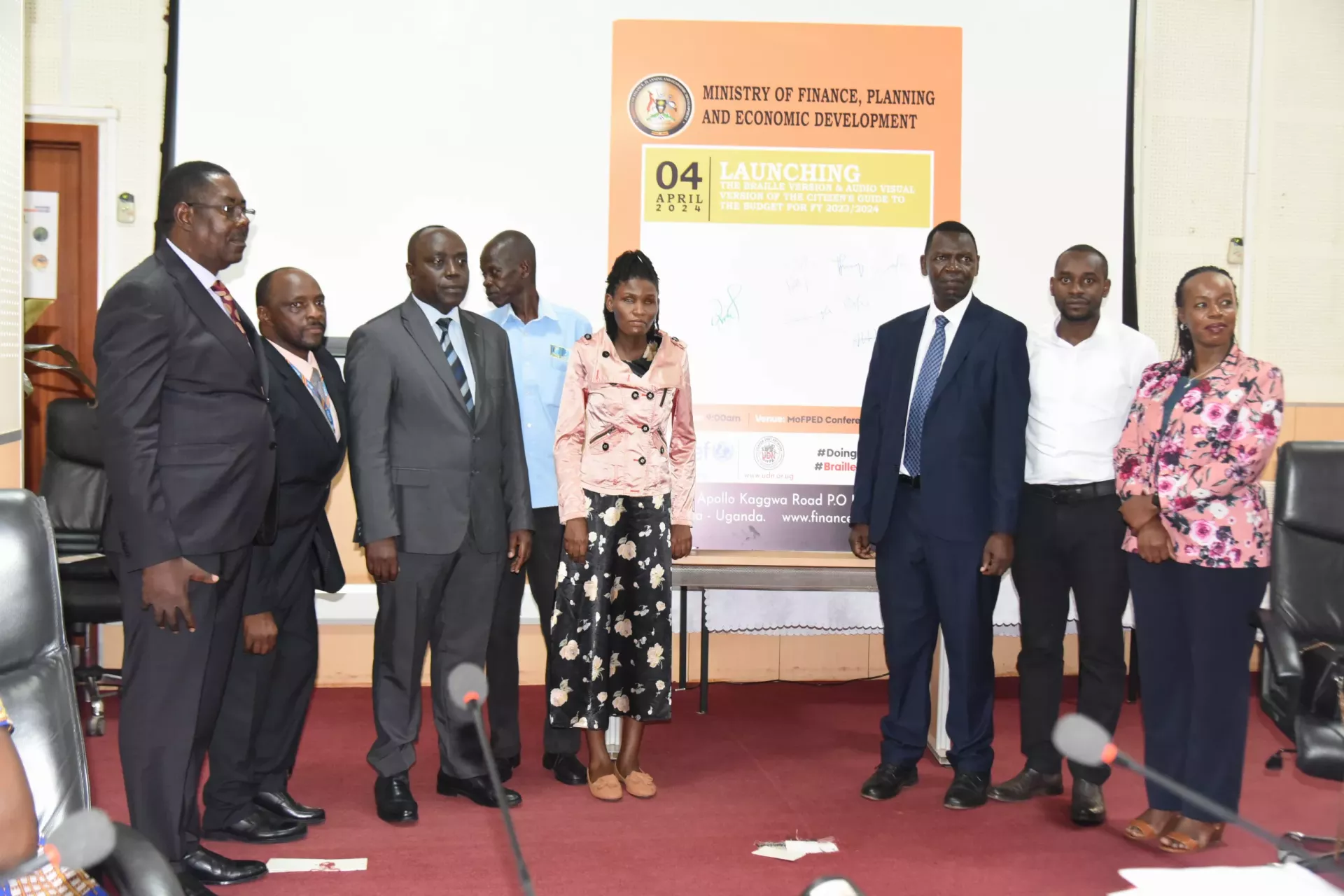
On behalf of UNICEF, I am pleased to be here with you today for the official launch of the Braille and Audio/Visual versions of the citizen’s guide to the budget for FY 2023/2024.
In a special way, I applaud the Government of Uganda and the Ministry of Finance, Planning and Economic Development, for their unwavering commitment to ensuring that every citizen has equal access to vital information, regardless of their abilities or disabilities through the development of their very first Audio/Visual version of the citizen’s guide to the Budget for FY 2023/2024 and the consistent publishing of the Braille version since FY 2022/2023.
This development is testament to government’s interest to ensure that citizens understand and appreciate the annual national budget and all processes involved. It provides an opportunity to the citizens and other stakeholders to continue participating in subsequent national budget cycles at national but also lower levels in their communities, an approach critical to the realization of the 2030 Agenda.
To continuously foster transparency and accountability in government, we must endeavour to provide clear information using accessible channels and in the right format about how national resources are collected and spent. When citizens are equipped with correct and relevant information, they are empowered to ask critical questions which will help to facilitate and strengthen the processes of allocation of national resources at all levels, across all sectors.
Ladies and Gentlemen,
The production of the Braille and Audio/Visual formats of the Citizen’s guide to the National Budget for FY2023/2024 is a collaborative effort aimed at fostering inclusivity. I am glad to share that this is the first initiative supported by UNICEF in 21 countries in East and Southern Africa Region, placing Uganda as the lead in support for access to information by the visually and hearing-impaired members of our society.
As UNICEF, we believe that this is not merely an act of providing information; but a strong act of empowerment, enabling these individuals to participate actively in shaping their own future and that of their communities.
Throughout history, individuals with disabilities have faced countless barriers in accessing information and services, often leading to marginalization and social exclusion. The lack of accessible formats has further exacerbated these challenges, particularly in fostering civic engagement. However, today, more bold steps are being taken to break down these barriers and foster a truly inclusive society.
However, more still needs to be done and it can be done. We hope that views collected from citizens can be responded to and included in subsequent budget processes. This will greatly improve Uganda’s Open Budget Survey Score, which has recently flattened below the required threshold of 61 and help in articulating the “Leave no One” principle of SDGs in Uganda’s SDG Voluntary National Review that is to be presented at the High-Level political Forum of the UN Economic and Social Council (ECOSOC) in July this year.
Distinguished Participants,
Let me also take this opportunity to remind all of us that key actions will be required to foster change among the visually and hearing-impaired members of our society. Children bear the worst of the challenges as they cannot easily access essential social services, including health and education – though they all continue to possess a spirit and determination that knows no bounds.
Uganda has a disability prevalence of 16 per cent among children. However, enrolment is very low in school with only 1.97 per cent of the total enrolment in primary schools for the year 2023 being children with disability (OAG report, 2023). This needs urgent action to ensure adequate staffing with the right skills so that children attend school and are learning. More inclusive classrooms are needed to accommodate children with disabilities to allow them enjoy learning and the school facilities like all schoolchildren. For example, we see that in some schools, learners with autism are sharing classes with deaf learners, making it difficult to cater for the needs of such children[1].
To drive the point home, Uganda has only two qualified braille mathematics university lecturers (only in Kyambogo University). In addition, there are only 24 schools for the blind across the country (private and government) and 11 secondary schools for the blind, with each school having only 1 braille mathematics primary and secondary teacher. This situation takes away capable children from pursuing careers in STEM sectors.
As stakeholders, when we look into the eyes of a child with a disability, we need to see a world of possibilities and potential waiting to be unlocked. This should remind us that true strength lies not in physical abilities, but in the depths of our hearts and the power of our minds. Therefore, it is our collective duty to ensure that every child with a disability is given the support, resources, and love they need to thrive to build a society that is inclusive, accessible, and accepting of all individuals, regardless of their abilities.
The unveiling of Braille and Audio/Visual formats of the Citizen’s Budget today should continue to inspire us to do more.
I want to commit that UNICEF will continue to support the production of the Braille and Audio/Visual versions of the Citizen’s Guide to the Budget. Please count on us to continue strengthening this partnership, in all aspects of the national budget and public finance in general.
I once again congratulate the government on this important launch. It is my sincere hope that by investing in inclusivity, we are not only contributing towards a more just and compassionate society but also unlocking the full potential of our nation.
Thank you.
Munir Safieldin Ph.D.
[1] Office of the Auditor General’s report, https://parliamentwatch.ug/wp-content/uploads/2024/01/AG-CONSOLIDATED-REPORT-2023.pdf