Playing, singing, drama, storytelling help refugee children heal from traumatic experiences
At UNICEF Child Friendly Spaces

The impact of war is devastating and has a negative impact on children. It is no different for the refugee children from South Sudan, arriving in Lamwo District, Northern Uganda. The district is currently receiving an average of 300 refugees a day, 63 per cent of whom are children. Many have lost parents, peaceful homes, families, others arrived by themselves while some have been separated from their parents and are staying with extended family. Many children seem lost and need as much support as possible to continue with their lives.
In Palabek refugee settlement located in Lamwo District, UNICEF has constructed two Child Friendly Spaces (CFS) with classroom blocks, a spacious play area with swings, slides, provided plenty of play materials as well as water and sanitation facilities, thanks to EU humanitarian aid and UN CERF.
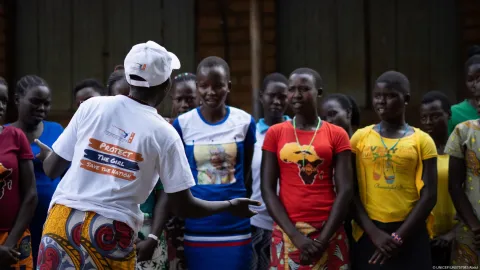
Unity Child Friendly Space, one of the CFSs, attracts an average of 206 refugee children and those from host communities, daily and provides the little ones with ample space to play, dance, act, draw, interact with one another as well as engage with case workers and facilitators as healing therapy. The CFS is open all day and enjoyed by older children in the afternoons after school.
During the midmorning break, children storm out of the classrooms to the swings, slides as others look out for toys and building blocks, it’s all about play. The games are provided to help the little ones overcome stress and trauma from the past horrible experiences.
Among the case workers at Unity CFS is Moses Otema Oran from Lutheran World Federation, UNICEF’s implementing partner. He moves around the play area, pushing the children on the swings, catching them as they roll down the slides, cracking jokes with many as some shout out his name. Some rush to the newly installed water tap stands to quench their thirst, it is scorching hot.
Otema and other CFS staff have been trained to listen, counsel and support these children as well as refer other child protection cases related to fostering unaccompanied children, reunification of separated children and provision of psychosocial support to other children at risk, thanks to the support of UNICEF.
Many of these children have gone through a lot of traumatic experiences but with the new tactics from the training, I provide the necessary support.” “All they need is love, care and support
As Otema moves around the play area, he notices a little girl sitting by herself while others play. “We were taught that whenever we see a child in isolation, there is usually something bothering him/her. Further probing and one-on-one interactions helps identify the problem, a starting point towards identifying the support this child needs,” Otema narrates.
Storytelling is another avenue we utilize to provide support to the children. “For instance, during these storytelling sessions, some children break down in tears. This indicates that this child needs assistance, which we provide, and follow-up sessions are done to facilitate healing.”
Otema is confident that the support he and his colleagues provide bring healing and a smile on one child’s face brings joy to all the staff. “When the children come here for the first time, they come with gloomy faces but after a few visits, our welcoming smiles in the morning are received back with smiles from these children.”
In the community Otema is well known by the children and they run to him as he moves around during his follow-up visits.
I love it when they call me by name. It makes me feel part of their lives and it makes me happy too.
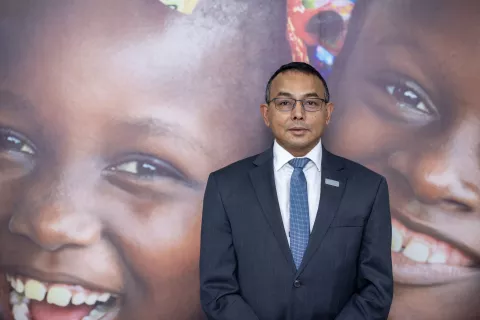
UNICEF’s Child Protection Specialist, Nasar Ali agrees too. “UNICEF has been able to provide the much-needed support to the refugee children including unaccompanied and separated minors and ensured follow-up visits are done to confirm they are settling and healing well with the foster families.” UNICEF has also invested in strengthening community-based child protection structures and the members trained to identify, report and refer child protection cases which ensures all children are reached with the necessary services.
Otema is optimistic that despite the increasing number of refugee children, the impact of their work is evident and will last long. This is witnessed through the drawings by the children. “Through the drawings they paint their ideal world, which makes them happy and that’s our joy. The drawings slowly replace the past traumatic experiences the little ones have been subjected to,” he ends.