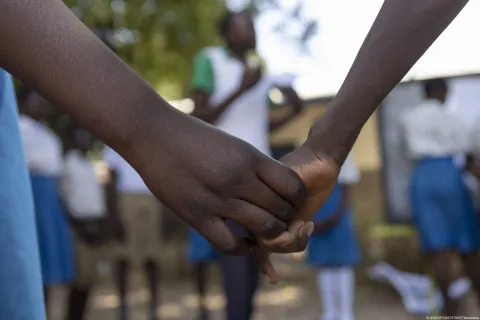
Parents, schoolchildren and community celebrate access to water, sanitation and hygiene facilities
How a Ugandan school community transformed desperation into dignity
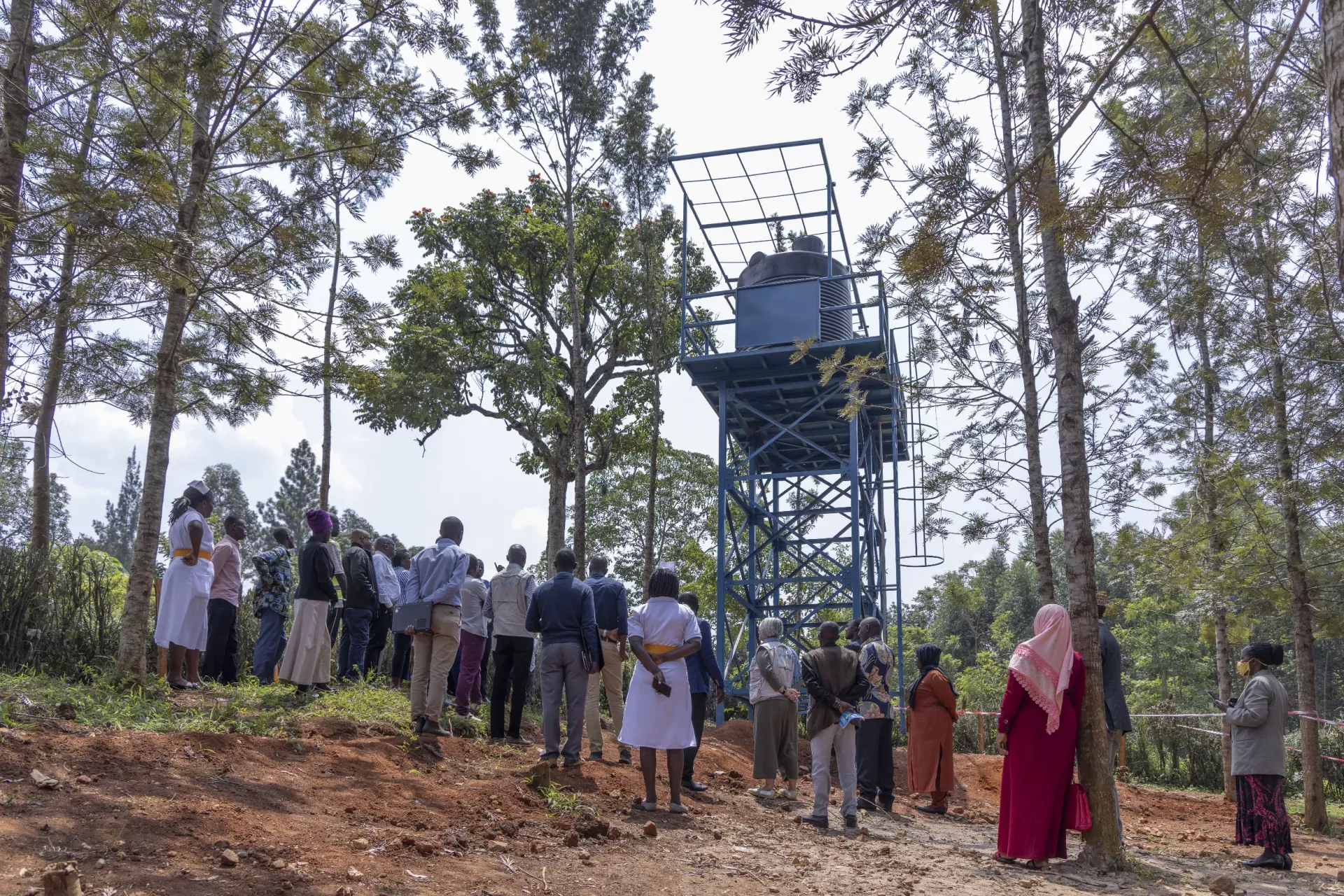
It is difficult to imagine the impact of having no reliable water until you have experienced it firsthand. For years, the over 1,000 students at BT Kasorora Early Childhood Development (ECD) and Primary School in Ntonwa Sub County, Kamwenge District, struggled alongside their surrounding communities. Now, visible signs of change are evident.
The school once faced a grim reality: children drank and washed with stagnant water from a nearby pond, risking diseases like cholera. A single, doorless latrine served everyone, stripping away privacy and driving girls away during menstruation. The lack of sanitary pads compounded their challenges. Dropout rates told a stark story, with fewer students reaching primary seven than starting at primary one.
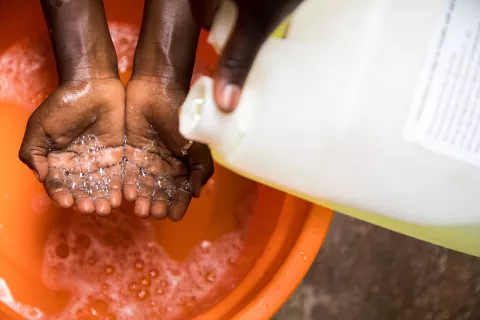
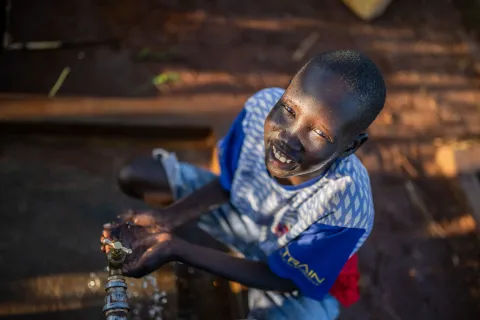
When the children assemble to welcome the team from UNICEF and The Church of Jesus Christ of Latter-Day Saints who have funded this progress, they sing original songs that express the pride Kasorora School now embodies. Their parents, seated to one side, affirm these changes with their own observations. New latrines, five stances each for boys and girls, stand proudly, designed with care. The boys’ latrine includes disability-friendly features like handles and a urinal, while the girls’ latrine has a changing room for menstrual hygiene and an incinerator for sanitary waste. “We’ve seen where these facilities are put; now our daughters are comfortable attending school.” Handwashing stations dot the compound, encouraging cleanliness. These changes have restored dignity, particularly for girls who once skipped school during their periods. The headmaster proudly shares the district-wide trend of rising enrollment due to improved WASH (water, sanitation, and hygiene) facilities.
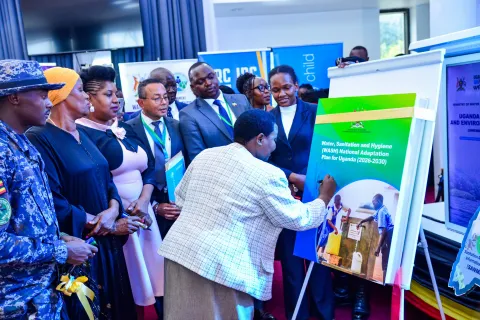
Fredrick Kamya and a team from The Church of Jesus Christ of Latter-Day Saints, visited to witness the impact of WASH facilities on education. Their support in the collaboration with UNICEF is far-reaching. A borehole, drilled nearly a kilometer away, now feeds two 5,000-liter tanks, delivering clean water to replace the contaminated pond.
Solar panels will soon power a pump, ensuring a steady flow in a region where underground water is scarce. This system serves not only the school but also the surrounding community, acting as a shared lifeline in a water-stressed area.
Kamya emphasizes community ownership: “Parents should not always be at the receiving end; they should be seen doing something,” he urges, echoing President Museveni’s call to blend spiritual, economic, and other priorities. “Faith leaders should work with the district to amplify key messages. As a community, you can do something to uplift your lives.”
On the issue of sustainability, UNICEF trained school WASH management structures, parents and teachers’ association, senior management committees on hygiene promotion, operations and maintenance of water and sanitation facilities including incorporating climate change resilience, developing of School Improvement Plans (SIPs), training on revised school management committee guidelines, waste management and greening schools.
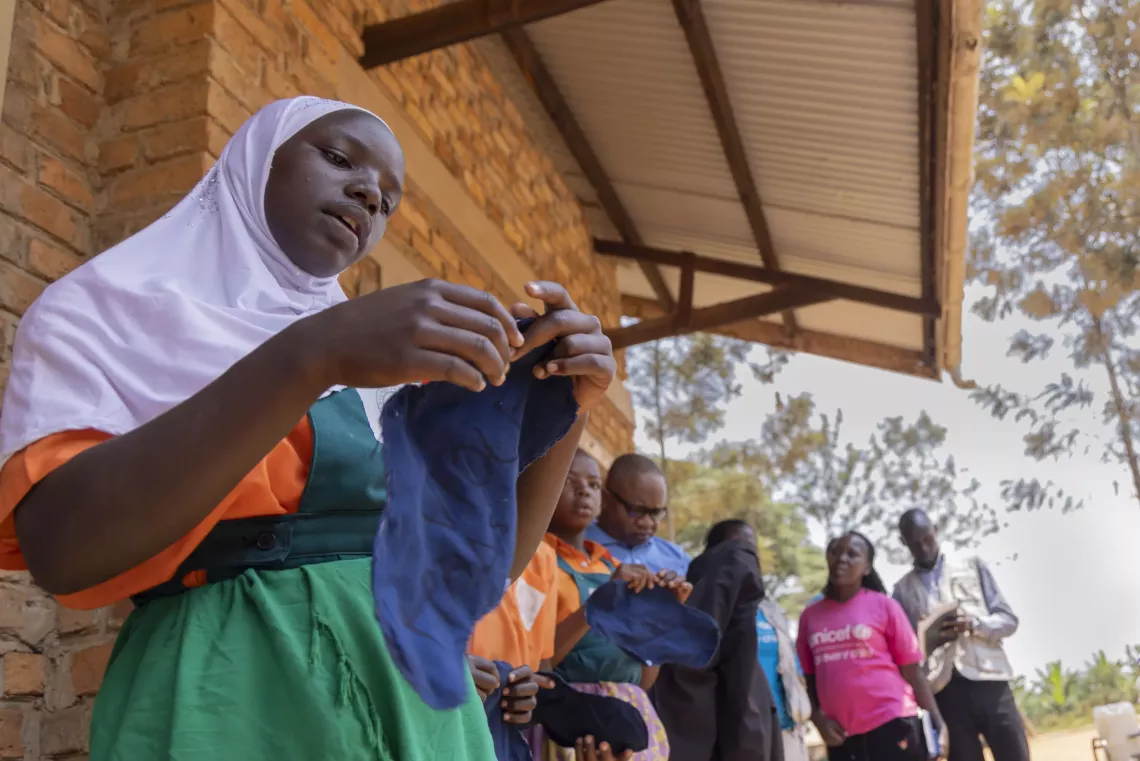
Emmanuel, 14, and Nabila, 13, are part of the school’s sanitation club, actively addressing the school’s longstanding sanitation challenges. They stand before this group of visitors, each holding a dark blue handmade sanitary pad with nervous pride. Every Wednesday afternoon, the sanitation club meets to weave sustainability into the school’s fabric. They craft reusable sanitary pads and produce liquid soap. Emmanuel beams when the boys’ participation is recognized.
To him, it’s common sense: “We must know how to make sanitary pads because we have sisters, and we even teach them how to use them. My parents were thrilled to know I can make pads at home for my sisters.” For Nabila, who understands the harsh realities of poverty, the initiative is vital: “Our families don’t have enough money to buy pads, so we make our own.” These skills ease financial burdens, with parents praising the club’s efforts for fostering independence and reducing reliance on handouts.
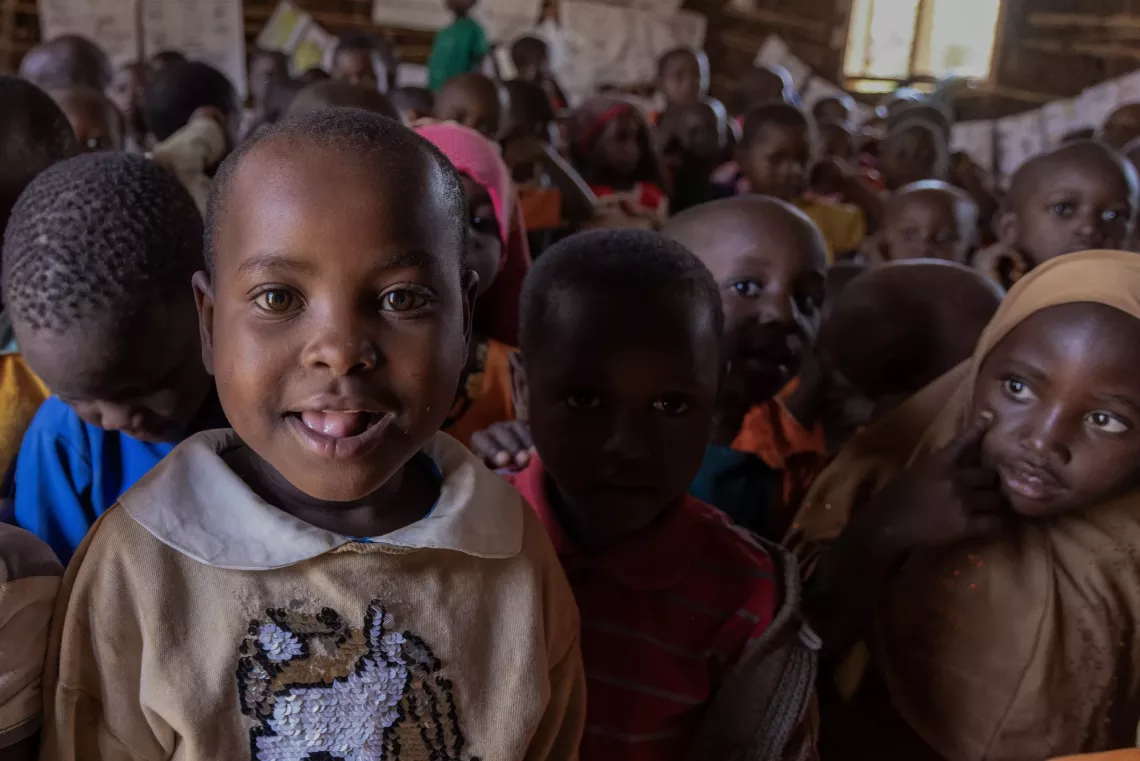
Yet, challenges persist. Overcrowded classrooms strain resources, and the ECD lacks outdoor play materials. Students rely on insufficient leftover food packed by parents, inadequate for growing minds. Low pay for ECD teachers threatens retention, posing a quiet threat to progress. The school dreams of permanent ECD classrooms, play facilities, and more land to accommodate its growing numbers, especially given its proximity to a refugee settlement. Currently, the school serves 324 ECD children (176 boys, 148 girls, including 13 refugees) and 742 primary students (396 boys, 346 girls, including 51 refugees).
BT Kasorora’s story is one of grit and possibility. Clean water flows, latrines provide privacy, and students lead with purpose, crafting pads and soap to sustain their community. The collaboration between UNICEF and The Church of Jesus Christ of Latter-Day Saints has laid a foundation, but the community’s commitment - students, parents, and leaders working together, will carry this progress forward. As 13-year-old Nabila says, “We make our own,” a simple phrase capturing a profound shift: a school and its community taking charge of their future.
Besides the WASH investments in BT Kasorora, under the same- The Church of Jesus Christ of Latter-Day Saints funding, UNICEF has also supported Bwizi Primary School in Kamwenge, Kimbugu, Karuhinda primary schools in Kikuube District and Kyangwali Health Centre IV with similar WASH facilities.
UNICEF does not endorse any company, brand, organization, product or service.