Ntoroko District in western Uganda grapples with heavy flooding
UNICEF responds as schools re-open for third term.
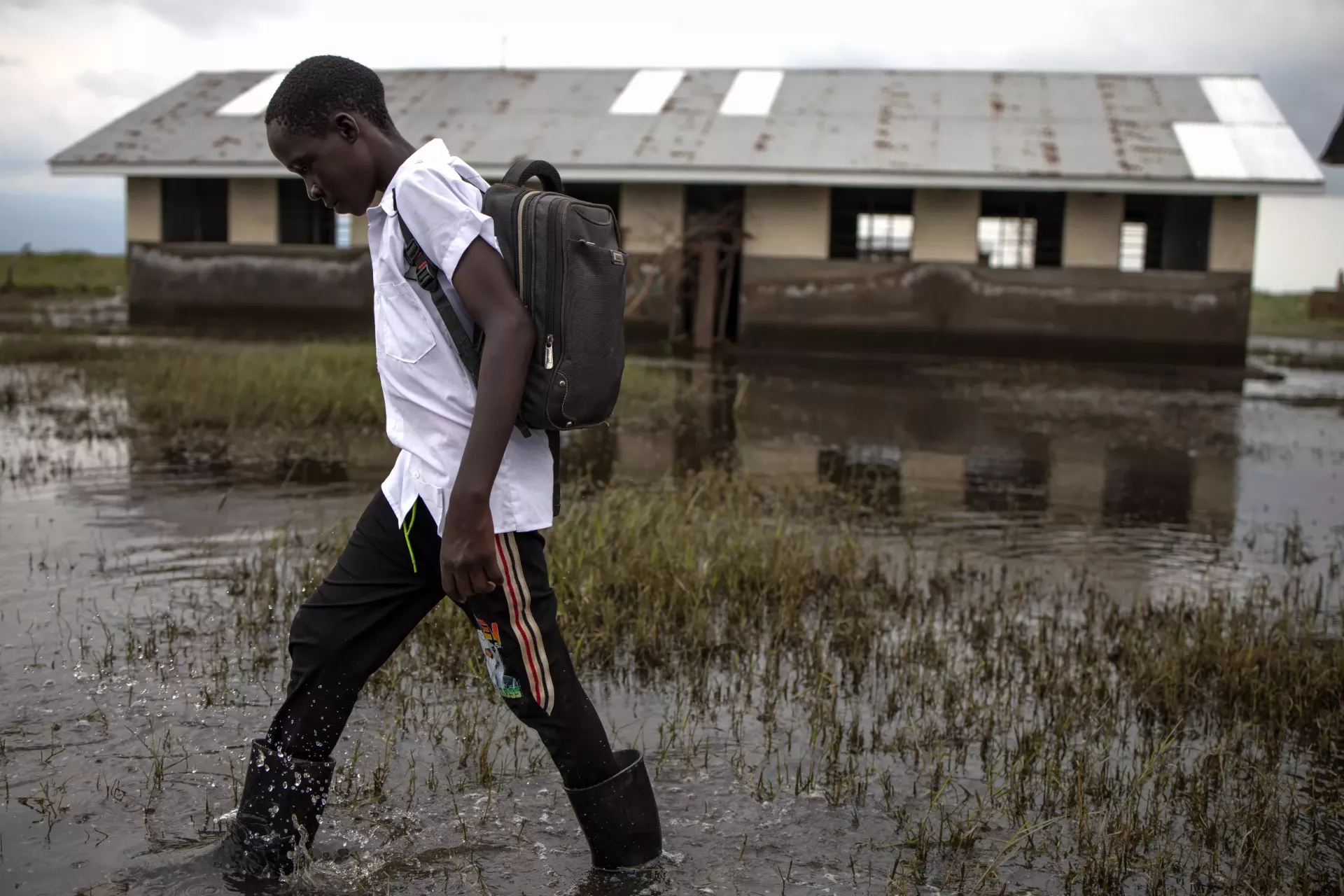
Vincent Asiimwe, the Head Teacher of Masaka Primary School in Ntoroko District in western Uganda had spent the entire second academic term of 2024 preparing his learners for their exams. For the candidate class who will be sitting for their primary leaving examinations at the end of 2024, they would be doing their district mock exams. The district mock exams help prepare learners for the national exams as they transit to secondary and post primary education.
A night before the examinations, the entire school got submerged in water as a result of River Semiliki breaking its banks. Flooding is not unusual in Ntoroko given its proximity to River Semiliki and Lake Albert. Ntoroko lies in the western Rift Valley, a low-lying terrain surrounded by the Rwenzori Mountain ranges. But heavy rains are only expected in September, not early August. Indeed, the rains that are responsible for flooding Ntoroko occurred in the Democratic Republic of Congo (DRC). As the border district, they suffered the consequences.
Asiimwe summoned his staff and consulted the school board and district education office and they all agreed to close the school to protect the learners. However, there was one problem: the candidate class. Missing their mock exams would be detrimental to their academic progress.
All parties agreed to let the candidate class sit their mock exams from some of the classrooms which were not fully flooded. “The challenge was how the children would access these classrooms as the entire compound was flooded,” Asiimwe recalls. “The water in some areas is deep even for an adult to walk through,” he quickly adds.
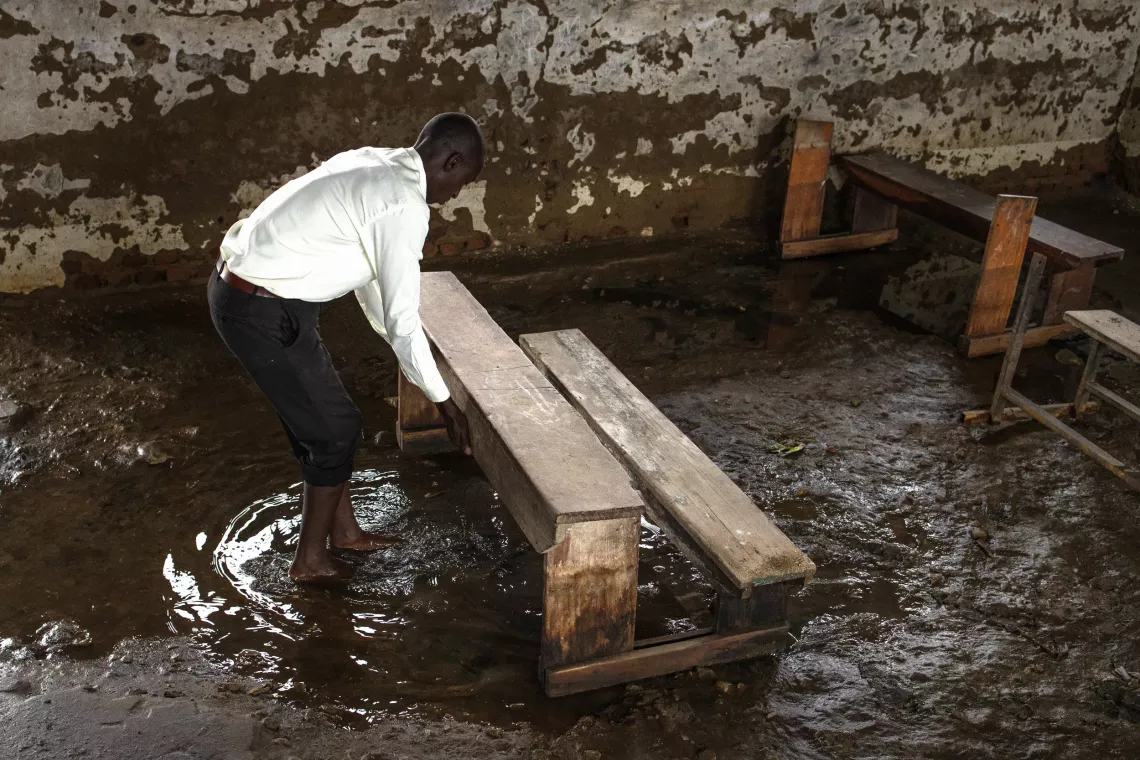
Luckily, because of the existence of both River Semiliki and Lake Albert, one of the key income activities in Ntoroko District is fishing. “This enabled us to quickly mobilise canoes to help the learners cross from the main road to the classrooms that were not so badly affected for the two days of the mock exams,” Asiimwe explains.
The learners were able to sit for their mock exams after which the school was closed. However, Asiimwe and the learners are worried of what will happen when the third academic term opens in mid-September 2024.
“My ambition is to finish my education to prepare myself for a career in politics,” says Francis Tusiime, a final year primary school candidate who would like to one day contest for the Ntoroko District Local Government chairpersonship. “I am worried that the school may not be able to open for the third term,” Tusiime says. “We can’t be accessing the school on canoes. What if there are crocodiles or snakes?” Alex Isingoma another learner at Masaka Primary School worriedly asks.
It is not just Masaka Primary School that is flooded. There are 11 schools that are flooded and inaccessible affecting more than 4,000 learners. Homes were not spared. More than 24,000 people in more than 5,500 households have been affected with many living in internally displaced people camps.
“We don’t know where the majority of these learners will access their education from. We need quick interventions to set up temporary structures such as tents in safe places so that the academic term can commence,” explains Maureen Kusemererwa, the acting Ntoroko District Education Officer (DEO). “Otherwise, there will be higher school dropouts, increased teenage pregnancies and childhood marriages,” she adds.

Responding to the situation in Ntoroko, UNICEF has acted promptly by providing 12 tents to six schools of the submerged schools benefitting 3,269 learners.
Ntoroko’s infrastructure which was already poor has further been destroyed by the flash floods cutting off roads, destroying safe water sources and pit latrines among others.
“Without quick interventions, diseases like cholera are going to ravage this district,” worries Philip Limlim, the UNICEF Western Uganda Regional Chief. “Pregnant mothers can’t access health facilities and health workers, Village Health Teams also can’t access households due to flooding,” says Dr Frederick Kahuma, the acting Ntoroko District Health Officer (DHO). “We can’t trace where some of the people are now and, in the camps, we worry about children because the systems to protect them from harm are lacking,” says Nema Kabazaire, a parasocial worker in Kanaara Sub County, one of the most affected areas. “Children and adults are sleeping in the same tents. You don’t want to imagine what they are watching.”
People in Ntoroko derive their livelihoods from farming, fishing and cattle keeping. “All these income sources have been affected. The gardens have been destroyed. Pasture for cattle is submerged. Roads have been cut off, those involved in fishing can’t transport it,” explains Williams Kasoro, the Ntoroko District Local Government Chairperson. “The situation is dire for everyone. This is even before the expected rains of September to December start. What will happen when the rains come as expected? More flooding,” he asks and quickly answers himself.

Although Ntoroko is prone to flooding and has been experiencing severe flooding since 2019, the intensity of the August 2024 flooding hadn’t been experienced in more than 50 years. After the September-December rains, a prolonged severe drought is expected to follow.
Since every cloud has a silver lining, the August flash floods didn’t directly lead to any deaths. This is largely attributed to the training by UNICEF of the District Disaster Management Committee (DDMC) and Sub County Disaster Management Committees. “The training has enabled us to have some systems in place which were quickly rolled out to save lives,” Wilfred Sekanabo, the Ntoroko DDMC Focal Person explains. “For example, people quickly built timber bridges to escape the flooded areas or used them to access safer grounds,” he adds.
Schools like Masaka were able to deploy canoes so that candidate learners can sit for their exams while households quickly moved to safer spaces. However, without more support from government and partners, the consequences of regular flooding and the expected drought in the new year (2025) will continue derailing learners like Francis Tusiime from achieving their potential.