The mango tree and the white coat
How a water tank, a hygiene lesson and a dozen exercise books changed a life.

Some children go to school for one reason only, not because they dream of a profession, but because there is food there.
I was one of them.
A childhood measured in hunger
I was born in 1992 in Ongeracam Village, Amuru District, to peasant farmers during the Lord’s Resistance Army (LRA) insurgency. The nearest school was seven kilometres away, across a stream with no bridge, and as the war closed in no parent would risk the walk.
In 1997 we moved into Amuru Internally Displaced Persons Camp. My father had been taken into the bush and held for six months. He returned quieter, afraid of both the rebels and accusations that he had helped them, and home became only a memory.
The camp was crowded, sanitation was poor, and families who had always fed themselves now queued for World Food Programme rations. If your share was stolen, hunger stayed with you for months. At home the pot was often empty, at school there was food, and that was my whole reason for wanting to go.
So, in 1998 I started walking to school. Two weeks later they sent me home for being too young. Readiness was tested by stretching your arm over your head to touch the opposite ear; my fingers fell short, so I practised alone for a year, and in 1999 they reached, and I enrolled in Primary One at Mutema Primary School in Amuru District which the war had pushed inside the camp.
Our classroom was the shade under a mango tree. More than 300 of us sat beneath it, writing our first letters in the dust with sticks and rubbing them out with our palms so we could write again. Exercise books were soplpl scarce they were cut in half to last longer.
I sat somewhere in the middle of that class, around position 25. Nobody expected anything of me, and I expected nothing of myself. I was not a clever boy; I was a hungry boy who had found the place where there was food.
That was my life, and I had no reason to believe it would ever be anything else.
Then UNICEF came
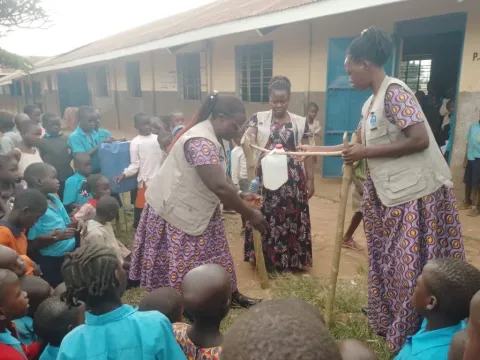
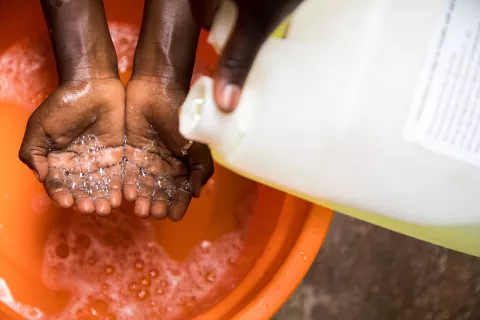
It was the year 2000. UNICEF gave our school a water tank and held a session on clean water, sanitation, latrine use and hygiene. To them it must have been one school among many; to me it was the hour my life turned.
At the end they asked questions. My hand kept going up, and so did my cousin Aber Brenda's, then in Primary Five and a police officer today. We were given a dozen Picfare exercise books, pens, pencils and a ruler.
That was not a prize, it was a fortune. Children in the camp fought over far less, so my teacher and my cousin walked me home. I held the books against my chest the whole way.
That night I could not sleep; I kept touching the covers in the dark. Somebody had looked at me and seen that I was clever; I had come to school for food, and the next morning I went back for a future.
What the books did
After that session I stopped playing with school. I rose from position 25 to 7, then to 2, in a class of more than 300.
The exercise books did not make me clever; they helped me believe I already was. Most children do not lack ability; they lack the moment that reveals it. For me, that moment came through a water tank and a hygiene lesson.
The people who would not let me fall
In 2004 my brother-in-law moved me to Adjumani, where I sat Primary Seven at Mirieyi Primary School beside South Sudanese refugee children before joining Adjumani Model Secondary School. In 2009 I was the district's best candidate in the Uganda Certificate of Education. That same year I buried my father.
In 2010 Mrs Elizabeth Allimadi, Commissioner for the Peace, Recovery and Development Programme, took me on, called me her son and sent me to St Joseph's College Layibi. Two terms later she fell ill and travelled abroad, and I was back in the village, saving coins as a loan officer.
One afternoon, carrying millet to sell, I heard a car hoot behind me. It was Sister Hellen Lamunu, my teacher from Layibi. She asked why I was not in school. I told her the truth with the sack still on the bicycle’s carrier I was riding, and she said she would carry my fees herself. Layibi had no space, so I entered Senior Five at Pope John Paul II College Gulu in 2011.
When her money ran out, a classmate's uncle pressed 100,000 Uganda shillings (approx. US$ 25) into my hand for a boy he had never met. Mrs Helen Opwonya, the school director, let me sit my examinations with fees still owing. I was chased out of class more than once; I waited outside, and fortunately was let back in.
The white coat
In 2013, I taught at Blessed Jildo Irwa Secondary School before moving to South Sudan to teach at Chukudum Senior Secondary School. At a time when many people were fleeing the country, I chose to go there because I had grown up in conflict and believed I could support children experiencing the same.
One evening, missing my mother deeply, I climbed a hill to find a phone signal so I could call her. Before I could dial, the phone rang. It was Sister Hellen, calling to tell me that a university place had opened.
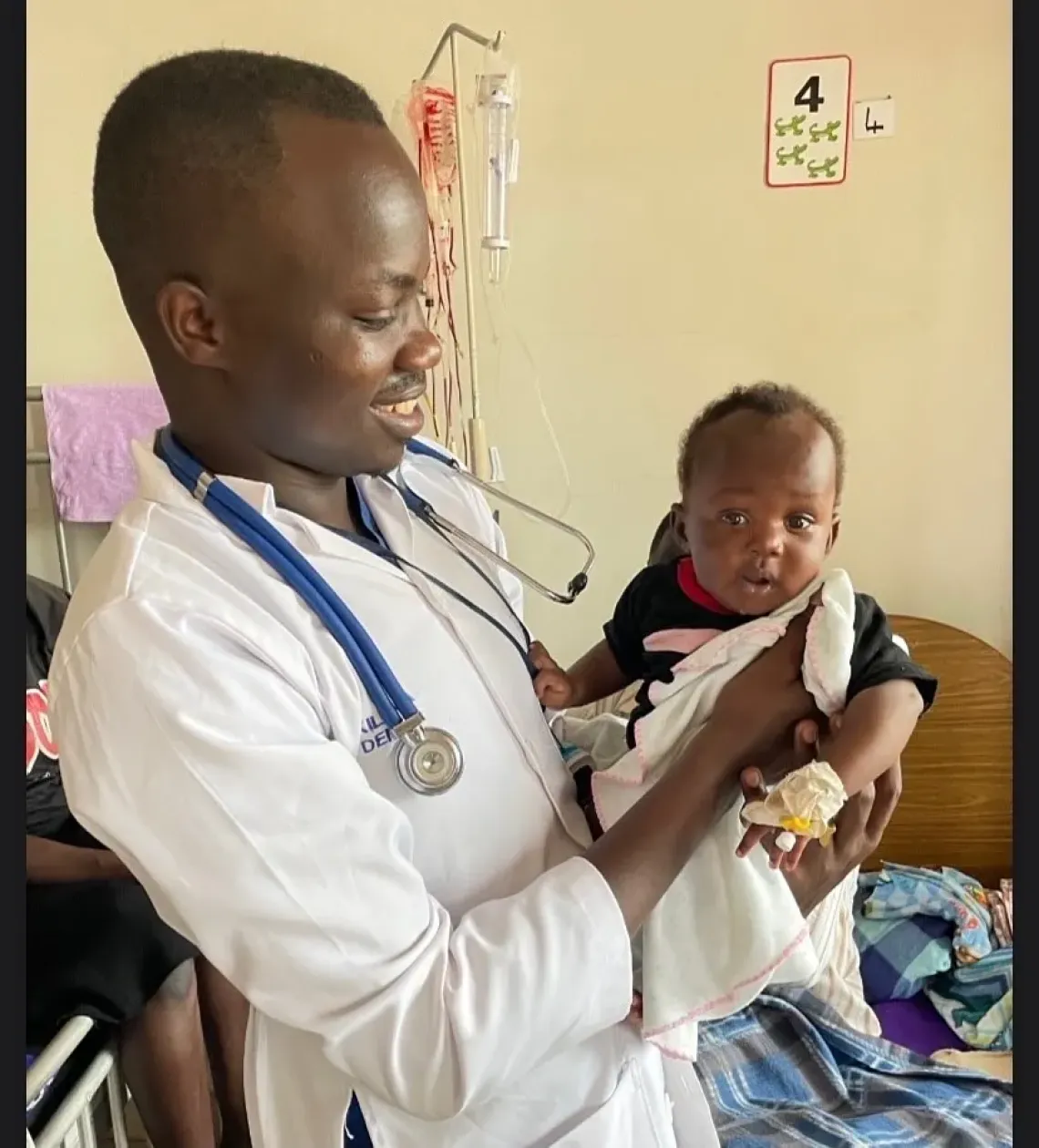
I enrolled at Gulu University for a Bachelor of Education degree, before receiving a government-sponsored place to pursue a diploma in orthopaedic medicine at Mulago Paramedical School in 2016. While helping correct clubfoot among children at Lacor and Gulu Regional Referral Hospital, I found my calling: I wanted to wear the white coat.
In 2017, Gulu University admitted me for a Bachelor of Medicine and Bachelor of Surgery. I paid my own way while working as a medical representative until Kidega Richard Yulam, who was then supported by Yotkom Uganda Limited, a private not-for-profit hospital in northern Uganda, began covering my rent and shared my story with the organisation's Australian founders. I was referred to Brother Elio at St Jude Children's Home, who offered to pay my tuition. A State House scholarship also came through, followed by the welcome news from Mrs Anne Wright that an Australian doctor was willing to cover all my costs. After one year of struggling for one term's fees, I finally had options, and I chose Yotkom.
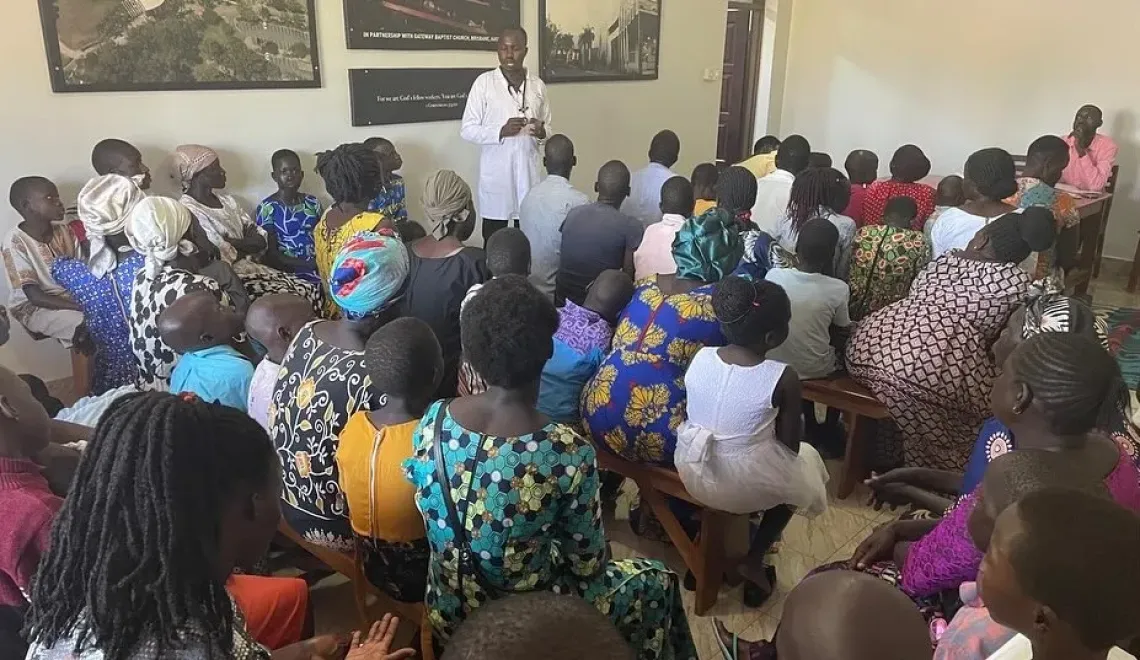
I graduated in 2022 after studying through the COVID-19 lockdown, then completed my internship at Mulago National Referral Hospital with major rotations in paediatrics and surgery. The first time I wore the white coat, I remembered the dust, the sticks, and the mango tree where my journey had begun.
Full circle
Before my internship ended, I began advocating for children living with sickle cell disease. That work became a programme through Yotkom Hospital, which now supports more than 200 children in Kitgum, and Yotkom asked me to serve as one of the Ugandan directors and Secretary to its Board.
Health and education cannot be separated. A sick child cannot learn, a hungry child cannot concentrate, a child without clean water is never safe, and a child who does not believe in himself may never find out what he was carrying.
I know, because I was that child.
The UNICEF team that visited Mutema Primary School that morning may not remember the moment. They may never know that a water tank, a hygiene lesson and a dozen white exercise books helped turn a hungry boy under a mango tree into a doctor.
Every child I examine, and every mother I reassure, reminds me of what that small investment made possible. I hope to pass that gift on so another child can discover, as I did, that even the smallest support at the right time can change the course of a life.
As UNICEF says: 'For every child, education'.