EmpowerU Cash+ transforms lives in Lamwo District's agoro hills
The programme targeted a maximum of four children per household with a transfer of Shs45,000 ($12) per a month per a child, totaling to Shs180,000 ($48) for each beneficiary household per a month.

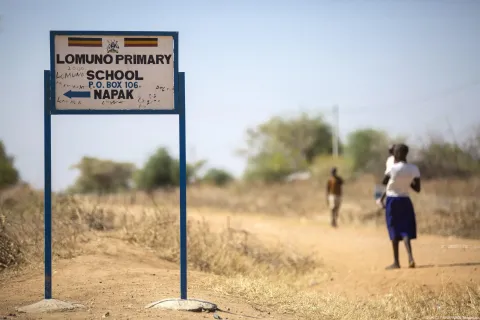
Lamwo District:- Nestled in the scenic landscape of Agoro Hills, Lamwo District, rural Uganda, the natural beauty is matched only by the challenges faced by its residents. As the rainy season envelops the region, Winnie Labol's story unfolds, illuminating the impact of EmpowerU Cash+.
Polucire West village is where Labol calls home, a 37-year-old mother of seven, including a one and a half-month-old baby named James Ogonya. When Ogonya was born with breathing difficulties and leg deformities, Labol sought medical care beyond the hills, reaching St. Mary's Hospital Lacor in Gulu, almost 200 kilometres away.
It was EmpowerU Cash+ that provided Labol with a lifeline. This programme, a partnership between the United Nations Children’s Fund (UNICEF) and the Office of the Prime Minister Development Response to Displacements Impact Project (DRDIP), funded by the Kingdom of the Netherlands, empowered families with cash transfers for six months. These funds aimed to address malnutrition and food insecurity and foster sustainable income-generating activities while encouraging a savings culture.
Labol had enrolled two of her children in the programme. With the support she received, she could afford to supplement the weekly medical and transport expenses for her baby's treatment. A return trip to Lacor hospital costs Shs50,000 ($14) in transport alone and Shs25,000 ($12) for the manipulation and casting of the legs, and this is money she must have every week. She embarked on wise investments by purchasing goats and chickens and improving her distilling business.
“Without that support from UNICEF, I wouldn’t have been able to capitalise on my business so that I could look after the baby. Shs75,000 ($26) on transport and hospital bills every week was before beyond my means, and I don’t think we would be able to cater for the baby."
Labol's story is not unique. Many, like Jane Aciro of Panyule Village, have benefited. Aciro, a widowed mother of six, once ran a grain mill, but when the machine broke down, she couldn't afford to repair it. Enrolling in the EmpowerU Cash+ programme breathed new life into her business. The funds she received enabled her to fix the mill and, in turn, rekindled her income.


Charging approximately Shs200 ($0.5) per every 10 kilogrammes for milling of either maize, millet, or cassava, Aciro is able to make a net profit of $6 per day, which I partially save for servicing the mill. She says poor maintenance was responsible for the collapse of her business before, while the remaining funds to cultivate sunflowers further diversify her income.
For both host communities and refugees in Lamwo District, EmpowerU Cash+ has been a transformative force. It provides not just financial support but also the knowledge and resilience to overcome life's challenges and pursue brighter futures.
The Programme
EmpowerU Cash+, a humanitarian cash transfer programme, was devised to empower selected families with cash transfers for six months to complement protection, health, education, and nutrition services. Savings and skills training were an integral part of the package and were provided by DRDIP not only to beneficiaries but also to non-beneficiaries.
The goals of the programme were to provide humanitarian cash transfers to children to address malnutrition and food insecurity, develop skillsets and referral pathways to sustainable income-generating activities, and foster a savings culture that would cushion communities from acute shocks.
The programme targeted a maximum of four children per household with a transfer of Shs45,000 ($12) per month per child, totaling Shs180,000 ($48) for each beneficiary household per month. Money was dispatched every two months, making it three payment cycles. The programme was implemented in Lamwo, a district with a high influx of refugees, mainly from South Sudan.