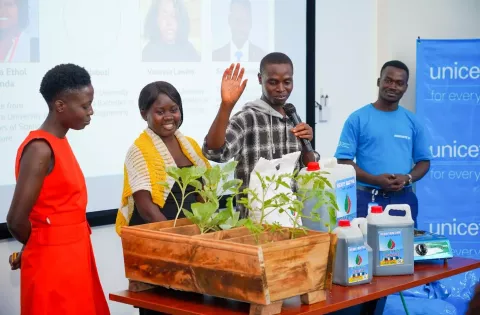
Climate action of children, by children and for children
At Uganda’s national children’s dialogue on climate action, children shared their experiences, challenges and recommendations as front runners for climate action

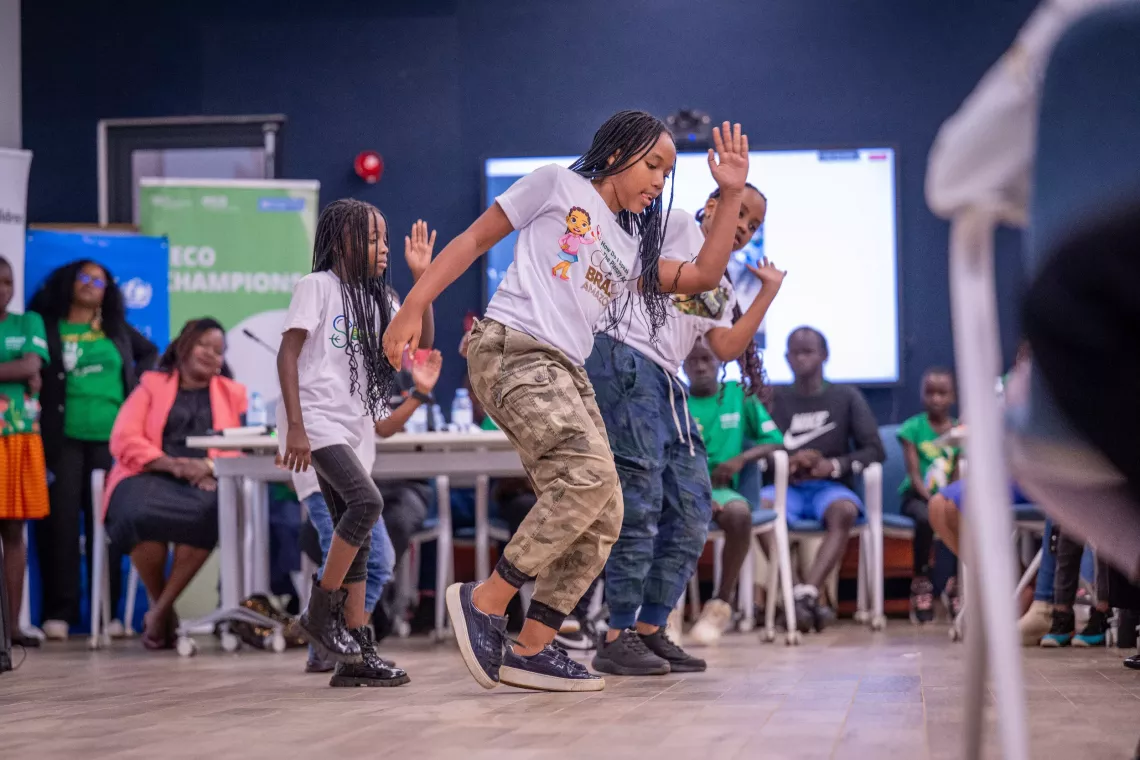
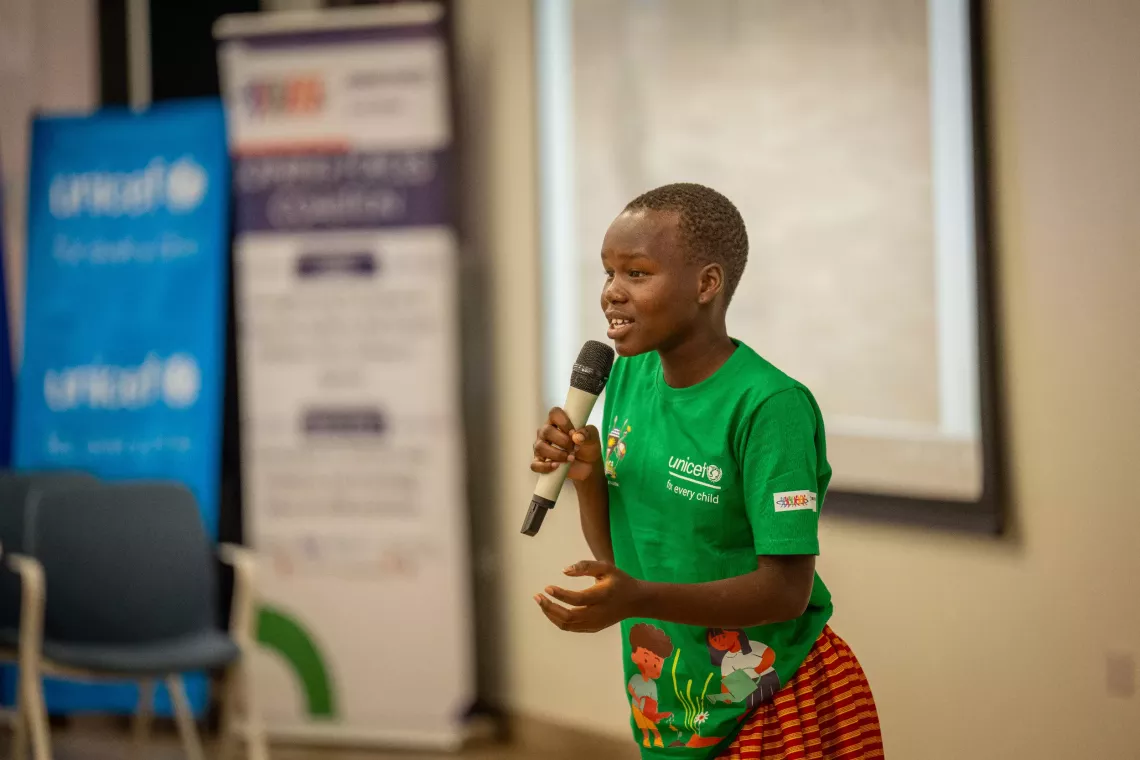
The five-year-old disc jockey walked onto the stage and took his seat at the sound system, followed by two 13-year-old moderators. The audience comprising mostly primary and secondary school children quickly filled the seats, accompanied by about one adult per table of six children. The adults only took over the stage during the intergenerational panel discussion, to respond to questions about what they were doing individually to support children in mitigating climate change and what they could do better, among other questions. There was no doubt that children were in charge at the national children’s dialogue on climate.
The national children’s dialogue on climate is a collective effort of UNICEF in partnership with the Government of Uganda through the Ministry of Water and Environment, and Joining Forces, a coalition of seven international child-led organizations to build synergy for child protection and participation. Held on 5 September 2025 at the UNICEF Head Office in Kampala, the dialogue brought together child delegates and key stakeholders from the government, parliament, academia and civil society to expound on the theme ‘My Right, My Climate: Child Responsive Climate Action in Africa.
“Creating the opportunity to hear children’s voices is part of child protection,” said Luke Siduda, a member of the Technical Working Group of Joining Forces Coalition.
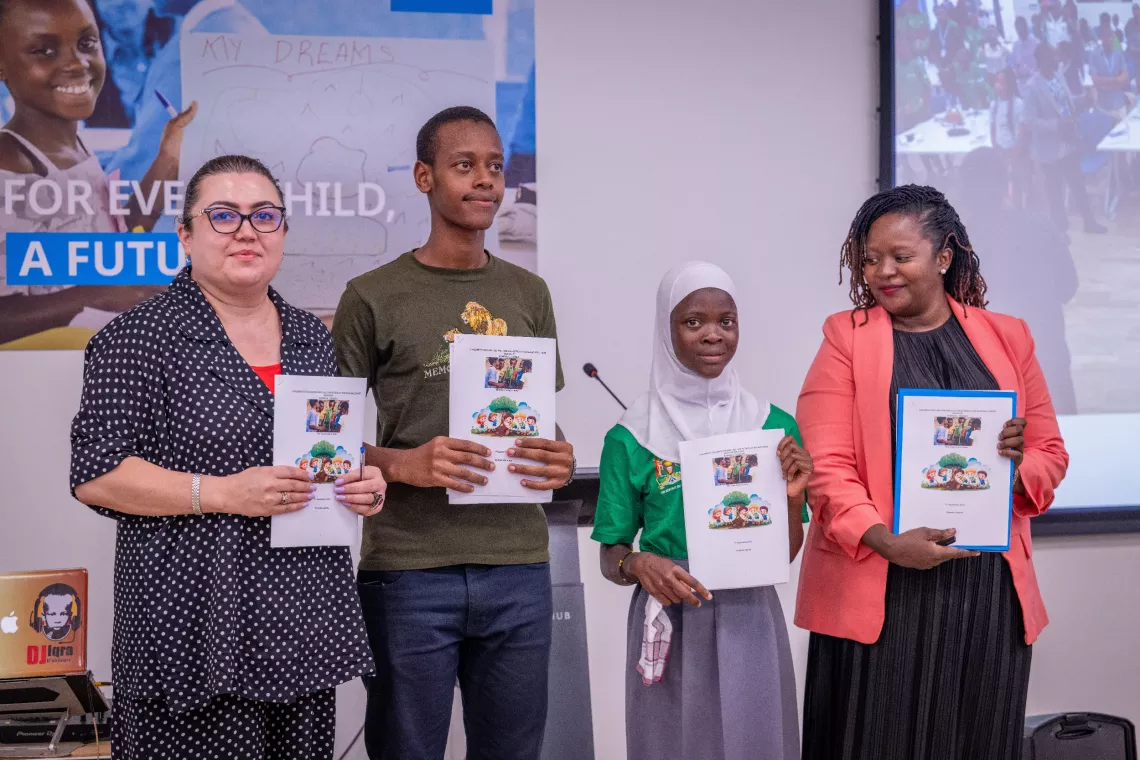
Whereas not all children could attend the dialogue, their voices will be carried in the declaration and call for action that was developed by over 90 children from all over the country, and that will be presented at the Africa Children’s Climate Summit in Ethiopia in September 2025. The eight-page declaration highlights how climate change is affecting children in Uganda, makes recommendations in line with the Sustainable Development Goals, and proposes key climate actions at household, community and national levels.
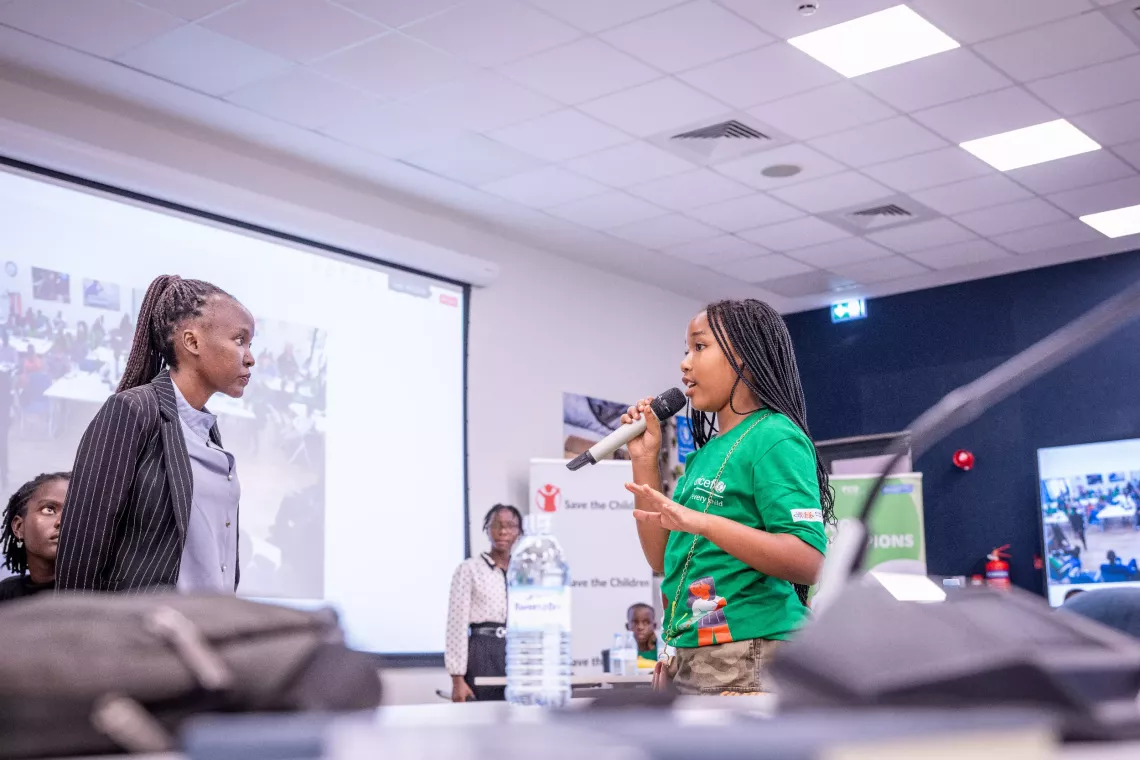
While receiving a copy of the declaration, Barno Mukhamadieva, UNICEF Uganda’s Chief of Education who was the Acting Deputy Representative at that time, noted that the end goal is not the summit itself, but rather continued awareness raising; proactive youth greening initiatives; increased advocacy and partnerships; as well as a growing crop of ambassadors who not only speak up, but also step up for climate action.
The climate ambassadors are a lot like thirteen-year-old Clara Amatun who has championed the use of paper instead of polythene bags at her home in Moroto in north east Uganda; or Presley, 18, who spearheads the discussion of climate-sided motions in his debate club at school; or Lyka, 10, who uses moving poetry to highlight the destruction to nature and the corresponding pledge to protect it.
In the jam-packed conference room, it is immediately evident from their playful and carefree interaction that the principal delegates are children. However, as they share what they are doing, plan to do, or will continue doing to cause positive climate change, the children’s intention is serious.
Consider Talia, 13, who launched a campaign in April 2025, to plant one million trees across the country. She has so far, along with friends and partners planted 110,000 fruit and indigenous trees.
Giggling as she mispronounces a word in her haste to speak, Talia apologizes and states her point, “Children don’t have money…what we have are voices, energy, songs and dreams…but if we unite, we can avoid being the sheep that does not listen and ends up in the cooking pot.”
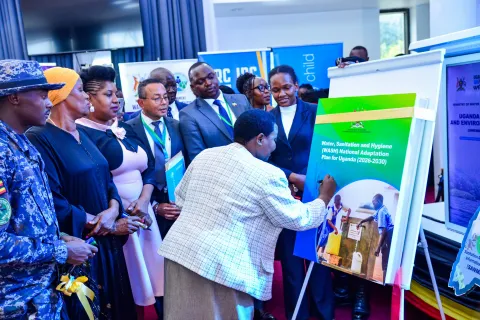
At the close of the dialogue, the Chief Guest, Anastasia Nalumuli, the Senior Climate Change Specialist at the Ministry of Water and Environment, expressed government commitment to partner with all stakeholders to continually scale the children’s response across the country. The words written on the wall behind the podium at which she stands summarize the intention reiterated throughout the national children’s dialogue on climate to create, A future, for every child’.