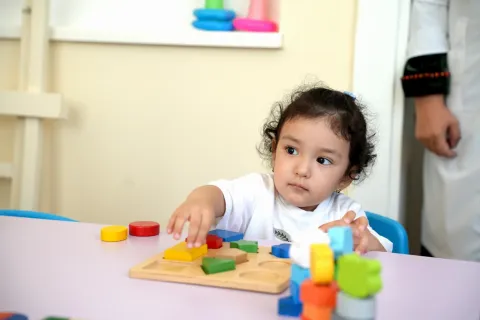
Nearly 19 million newborns at risk of brain damage every year due to iodine deficiency
UNICEF and GAIN urge immediate action to increase access to iodized salt amid longstanding evidence on how deficiency reduces cognitive ability
Nearly 19 million babies born globally every year – 14 per cent – are at risk of permanent yet preventable brain damage and reduced cognitive function due to a lack of iodine in the earliest years of life, according to a new joint report by UNICEF and GAIN released today. More than 1 in 4 of these children – 4.3 million – lives in South Asia.
Brighter futures: Protecting early brain development through salt iodization notes that iodine deficiency is a leading cause of preventable brain damage worldwide. Insufficient iodine during pregnancy and infancy results in neurological and psychological deficits, reducing a child’s IQ by 8 to 10 points. This translates into major losses in the cognitive capital of entire nations and thus their socio-economic development.
“The nutrients a child receives in the earliest years of life influence their brain development for life, and can make or break their chance of a prosperous future,” said UNICEF Senior Nutrition Adviser Roland Kupka.
“By protecting and supporting children’s development in early life, we are able to achieve immense results for children throughout their lifespan.”
Salt iodization is both cost effective and economically beneficial at only US $0.02–0.05 per child annually. Every dollar spent on salt iodization is estimated to return US $30 through increased future cognitive ability.
While South Asia is home to the largest proportion of babies at risk globally, the region has the second highest iodized salt coverage rate at 87 per cent of the population, preceded by East Asia and the Pacific at 91 per cent coverage. The lowest coverage with iodized salt was seen in Eastern and Southern Africa, where around 25 per cent of the population do not have access to iodized salt, leaving 3.9 million babies every year unprotected against iodine deficiency disorders.
“Iodine is critical for childhood development,” said Greg S. Garrett, Director of Food Policy at GAIN.
“Due to the collective efforts of governments, industry, civil society, UNICEF, GAIN and others, we are on the verge of being able to ensure sustainable iodine intakes for all children. But there is still much more to be done to end iodine deficiency and we hope others join our efforts to further scale up salt iodization in the hardest to reach areas.”
The earliest moments of life, from conception up to age 2, are the most critical for a child’s development. Nutrition – along with protection and stimulating activities like play and early learning – during a child’s first 1,000 days shape brain development for life.
The report outlines urgent steps to reduce the risk of mental impairment to babies’ growing brains:
- Integrate salt iodization into national plans to support children’s nutrition and brain development in early childhood;
- Align salt iodization and salt reduction agendas;
- Establish surveillance systems to identify unreached populations;
- Strengthen regulatory systems to enforce existing legislation on salt iodization;
- Recognize the growing importance of fortified foods as potential sources of iodized salt.
UNICEF and GAIN have been working together for the past 10 years to tackle iodine deficiency disorders. In Europe and Central Asia, the salt industry has made iodization part of good manufacturing practices.
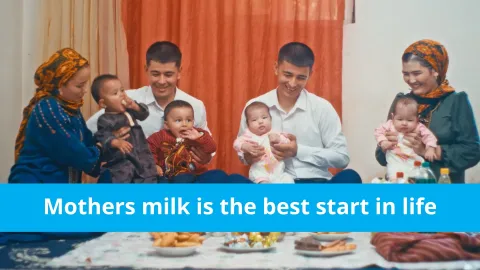
UNICEF has been working closely with the Government of Turkmenistan in its efforts towards elimination of Iodine Deficiency since 1996. As a result, the country is the first in the region, which achieved universal salt iodization in accordance with the international standards in 2004. It also sustains high coverage of population with iodized salt, at 97 per cent as indicated by the recent Multiple Indicator Cluster Survey.
Iodine Global Network in partnership with UNICEF are working closely with Ministry of Health and Medical Industry of Turkmenistan towards strengthening national monitoring and evaluation system to track the impact of the salt iodization programme.
Media contacts
About UNICEF
UNICEF promotes the rights and wellbeing of every child, in everything we do. Together with our partners, we work in 190 countries and territories to translate that commitment into practical action, focusing special effort on reaching the most vulnerable and excluded children, to the benefit of all children, everywhere.
For more information about UNICEF and its work for children, visit www.unicef.org.