Climate Change Education for Preschool Children: A Methodological Guide for Educators

About
This guide helps kindergarten and preschool educators introduce young children to nature and climate change through play. It is built around three goals: helping children love and care for nature, teaching them simple everyday actions for a sustainable lifestyle, and giving them a first idea of basic climate concepts such as the greenhouse effect and desertification. The programme has three sections, each matched to a different age group:
- Getting to know nature in the context of climate change (ages 3–4): six 15-minute sessions.
- Sustainable living: adapting to and mitigating climate change(ages 4–5): five 20-minute sessions.
- How climate change happens (ages 5–6): six sessions of 20–25 minutes.
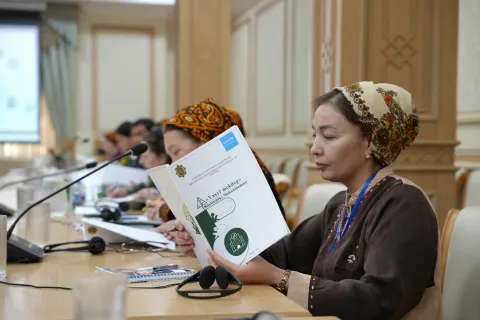
The approach is play-based and grounded in current research on early childhood development. It supports children’s physical, social, emotional and cognitive growth through games, hands-on activities and simple group discussions, with no theory lectures or reading required. Educators do not need specialist knowledge, only a general everyday familiarity with the topic. The guide is recommended for use in kindergartens across Turkmenistan and in general education schools with a half-day preschool groups.