Rosalia’s life inspires self confidence among young people with disability
Rosalia’s life inspires self confidence among young people with disability

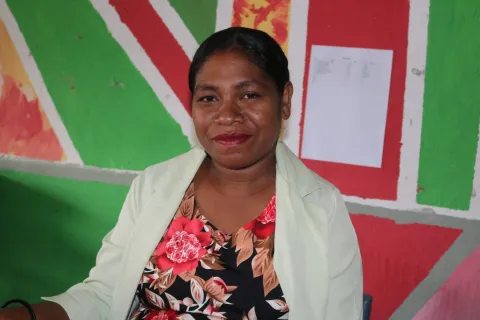
Dili Municipality, 13 March 2025: Growing up in Metinaro, approximately 20 kilometres from Dili, a young Rosalia always looked forward to her time with friends at school and in the community, running, playing and enjoying many childhood adventures. In 2009, her life took an unexpected turn after an accident while hiking with her father, left her paralysed.
“I spent one year in hospital, unable to continue learning and missing the opportunities I once had to play and interact with my friends. I am grateful for the support of my parents and family who made it easier for me to make that transition back to school after a whole year and now unable to walk and run like my friends did,” says Rosalia (Ozia), who testifies that she has never allowed her physical condition to hold her back.
Fifteen years since her accident, Rosalia has transformed her life’s experience into a mission to support and guide other young girls with disabilities, who are often too shy and who have been shunned and humiliated by society, to a point of losing their self-esteem. As a Project Manager at Asosiasaun Defisientes Timot-Leste (ADTL) and a Life skills coach, Rosalia now devotes her time to building the confidence of young girls with disabilities.
“It was not easy to grow up as a young person with disability. I used to be very shy and withdrawn. I kept to myself and was afraid of what people would think of me. I see this old version of myself in the many girls I interact with today,” says a confident Rosalia, who has led the Life Skills-Based Education (LBSE) training, which was done by ADTL with UNICEF support in 2024.
“By participating in life skills training, many girls get to see that their situation is not unique and that there are ways for them to cope with living with disabilities.”
Social exclusion and isolation are common problems faced by young people living with disabilities. People in communities, including their own family members, do not often provide them with support, resulting in young people with disabilities being shy, withdrawn and with little zeal for life.
Recognising these pervasive issues, the Life Skills-Based Education (LSBE) program was introduced as a critical initiative to empower young people with disabilities with skills on how to navigate through some of the social barriers such as social exclusion, low self-esteem and isolation.

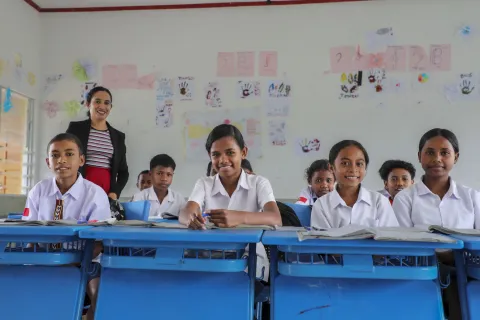
With UNICEF funding, ADTL organized three Life Skills-Based Education (LSBE) workshops in 2024, reaching 315 participants, including adolescents and young with and without disabilities, students from pre-secondary to university levels, family representatives of youth with disabilities, and organizations supporting persons with disabilities (DPOs).
Developed by Alumni of Timor-Leste Youth Parliament (APFTL) in collaboration with UNICEF Timor-Leste, the LSBE manual consists of eight modules, which include topics on Reproductive Health, Drug and Alcohol awareness, HIV Presentation, communication, problem solving and managing emotions.
“The topics on sexual and reproductive health were of great interest to many young people, because they are at an age when they are exploring and understanding their sexuality, and at the same time, dealing with the stigma of people who think they should not be dating,” says Rosalia.
The Life Skills-Based Education (LSBE) training is designed to be interactive, engaging, and practical, using a variety of methods such as open discussions, group projects and role plays to ensure participants develop practical knowledge and skills to boost their confidence.

Rosalia’s support to young girls goes beyond the training sessions. She has also become an invaluable resource for those seeking guidance and support to overcome their own challenges. “During one of the training sessions last year, there was a participant who cried when we worked through the module on parenting support. She later told me that she felt sad that her own parents do not provide her with this kind of support. Since the training, I have now dedicated time to having sessions with the parents, so that they are more open to supporting her daughter.
Rosalia’s journey is one of resilience and leadership. She continues to inspire others by proving that with determination, anyone can transform their struggles into stepping stones for success. Her contributions are a testament to her unwavering belief in the potential of people with disabilities, showing that they too can be powerful agents of change.
//Ends