Protecting young girls from HPV, one shot at a time
Protecting young girls from HPV, one shot at a time
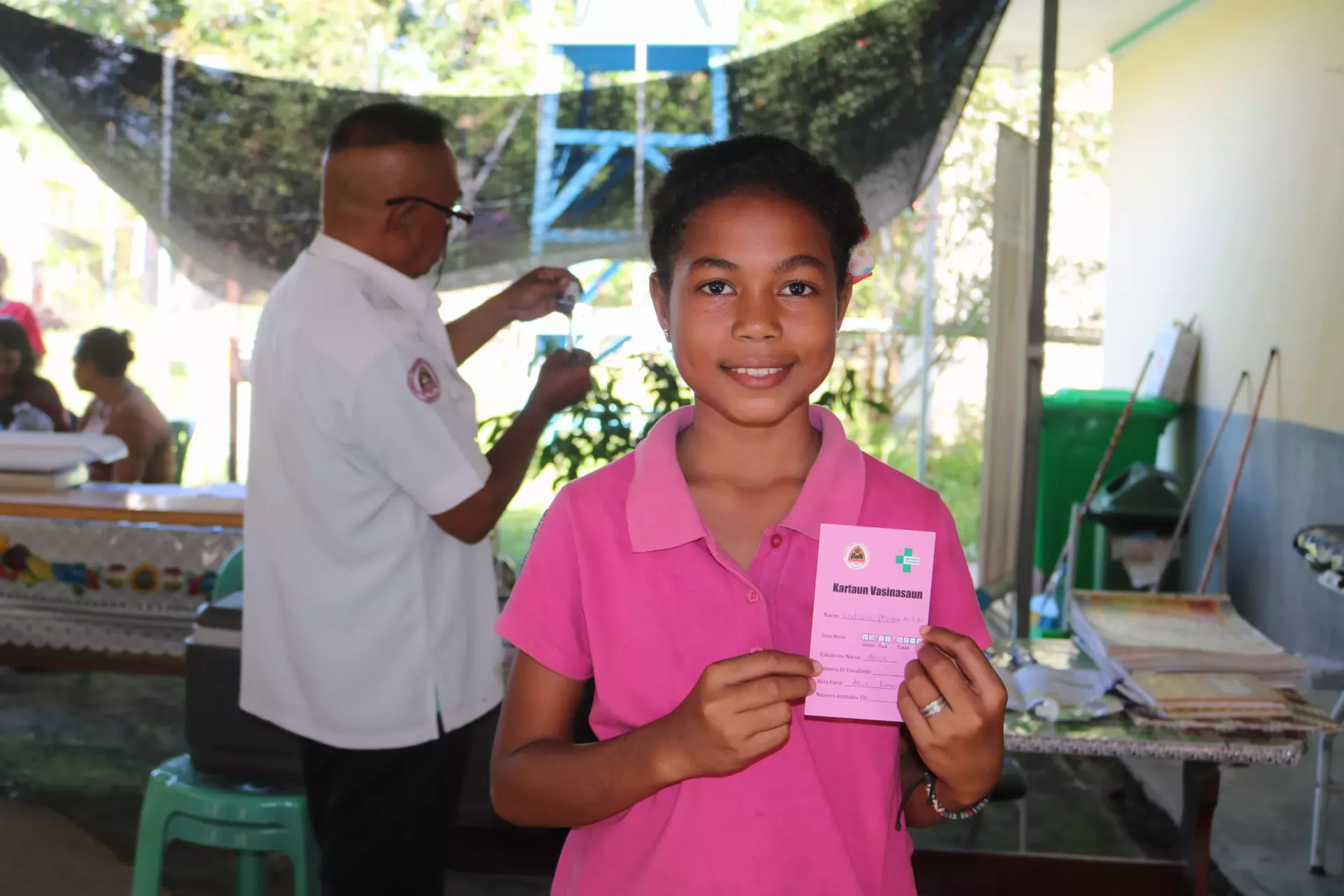
Dili Municipality, 24 April 2025 - Eleven-year-old Vedelvia from Dili Municipality shares a lot of pleasant memories with her cousin and confidante, Zerania, who is also 11 years. Since their early years, they have supported each other with homework, doing household chores and have held each other’s hands during difficult times.
Today, their camaraderie has led them to Hera Health Post, where Vedelvia will receive her first vaccine shot against the Human Papillomavirus (HPV), which causes cervical cancer and other diseases among women. The HPV vaccine was launched and introduced into Timor-Leste’s routine immunization programme in July 2024, primarily targeting 11-year-old girls.
As they approach the health post’s pavilion where different vaccine antigens are administered, her excitement about the process, shifts to fear as she hears the shrill cries of babies as they receive their own shots.
“I was last vaccinated when I was child. I don’t remember much about that experience, but I know it was painful, and I also know it is the protection from those vaccines that helped me to grow to what I am today,” says Vedelvia, who understands that the brief pain and discomfort of the injection is a pathway to safeguarding her future against diseases.
According to WHO statistics, cervical cancer is the fourth most common cancer in women globally with around 660 000 new cases and more than 350 000 deaths in 2022. The highest rates of cervical cancer are in low- and middle-income countries. The HPV vaccine is the most effective way to avoid infection.
With funding from GAVI and the Government of Australia, UNICEF has contributed 79 470 doses of the HPV vaccine to ensure that girls are vaccinated against HPV before they are exposed to the virus. To date, more than 61,789 of all girls aged 11-14 have been vaccinated through campaign and regular services.
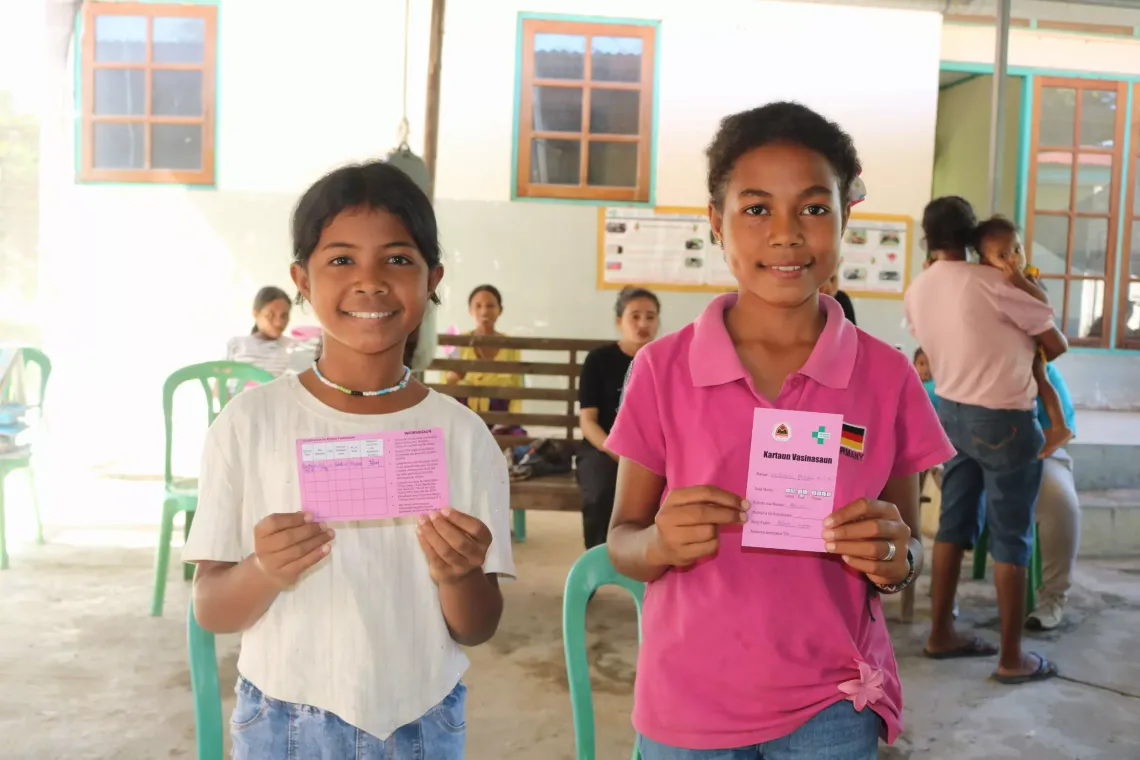
“Zerania received her vaccination earlier this year, and I have always envied her for being among the first girls in our school to receive this vaccine,” says Vedelvia, who is happy to have the comfort of Zerania’s friendship through this process.
As Vedelvia awaits her turn to be vaccinated, she is happy to listen in on the comprehensive health promotion session, which is led by Midwife Joanina Leopoldina Freitas, who also heads the Hera Health Post. This is part of the procedures done to ensure that caregivers and children are aware of the vaccines they will receive and gives the nurses a chance to dispel some of the myths and misconceptions that people have about vaccines.
In support of the introduction of the HPV Vaccine, UNICEF has also supported the production of leaflets, radio programmes and TV spots, which are also used by Midwife Joanina Leopoldina Freitas to help build trust in the vaccine and provide communities with the scientific truth about the lifesaving benefits of the HPV vaccine.
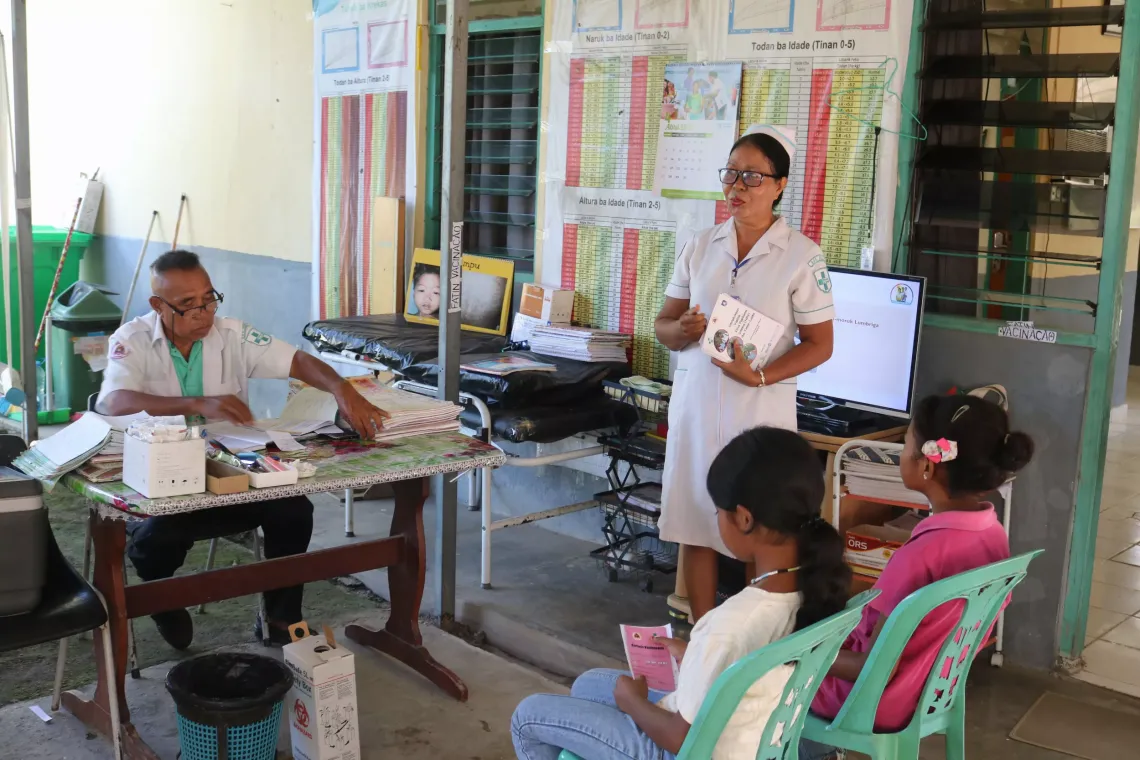
“The information I got from the session was helpful. My mother currently does not have any information on this vaccine, and my only source of information is through the nurses. I am also happy that mothers who came with their little children, also got this information, and they will share it with their own children when they get older,” says Vedelvia.
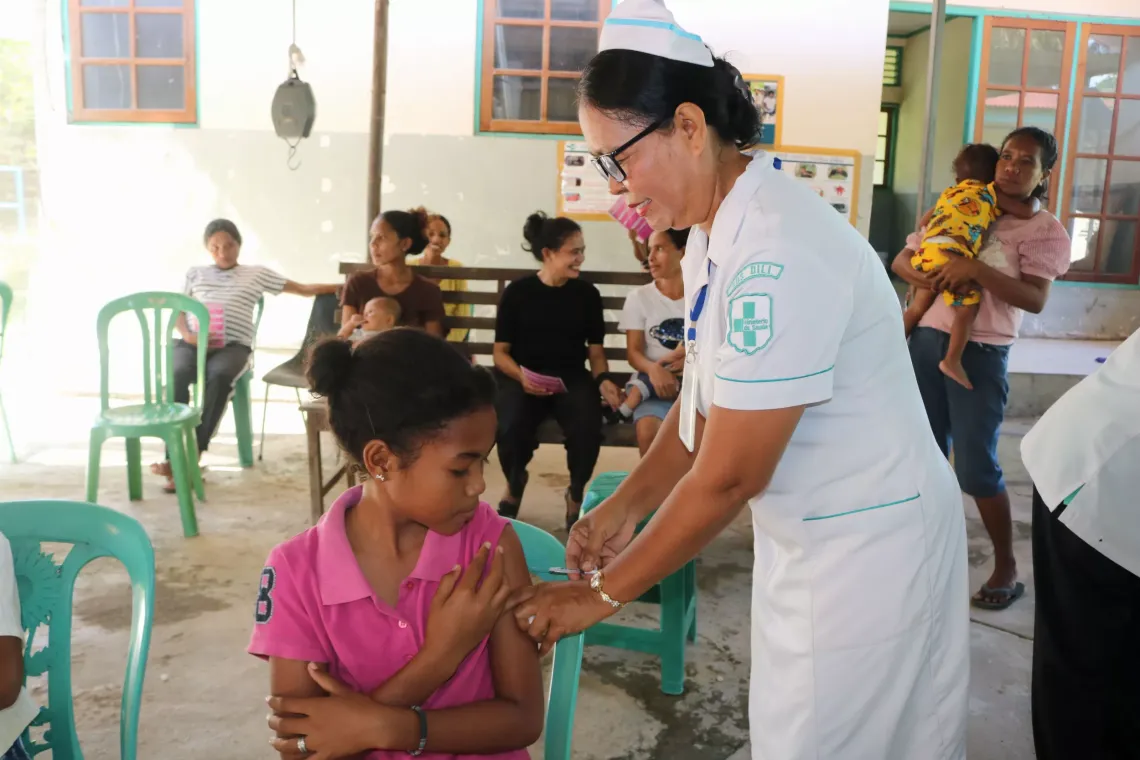
After the health promotion session, Vedelvia’s details were entered into a pink leaflet, which contains the date she received her shot, and when she is expected to come back for the follow-up shots. She then rolls her sleeve and watches as the injection pierces into her arm.
“It was not as painful as I thought,” says a smiling Vedelvia. “I am going to tell my friends that I have been vaccinated against HPV and encourage them to also be vaccinated."
She explains that Zerania’s support and encouragement made this experience easy and bearable for her.
//Ends