Powered for the Future: How One Solar System is Transforming Children’s Lives in Hera
Improving Education, Safety, and Opportunity for Children Through Clean Energy

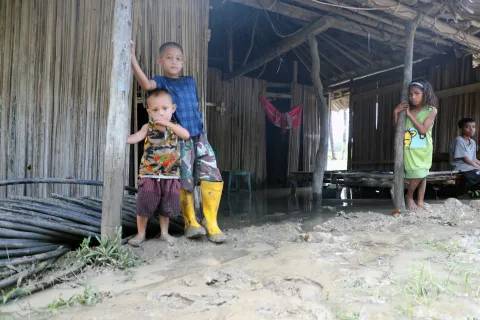
In Timor-Leste, climate change is no longer a distant threat; it is shaping childhood today. Floods, droughts, and extreme weather events disrupt access to clean water, health care and education, placing additional pressure on communities and the essential services they rely on.
For coastal communities like Hera, where climate risks are high and services are often stretched, even a single climate shock can have far-reaching consequences. Flooding can cut access to schools and health facilities, while unreliable water and electricity services make it more difficult for children to learn, stay healthy, and thrive.
For years, families in Hera faced these challenges. Schools struggle with limited access to clean water and adequate sanitation facilities. Power outages disrupted essential services, affecting the healthcare facility’s ability to safely store medicines and vaccines and limiting activities at the community centre.
These everyday challenges illustrate a broader reality: when climate impacts intensify, children are often among the most affected.
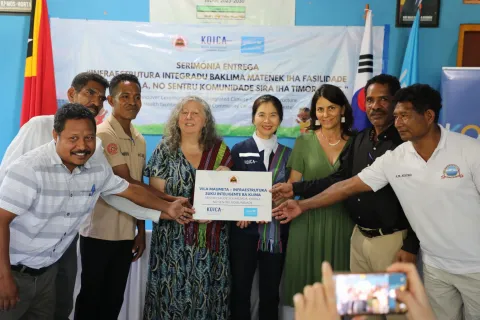
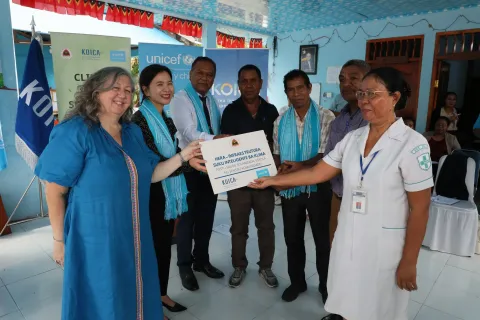
Today, that story is beginning to change. A new solar-powered energy system now connects to the health post, school and community centre, providing reliable electricity where it matters most. Combined with upgraded water, sanitation and hygiene (WASH) facilities, the initiative is helping strengthen essential social services and improve the well-being of children and families.
This integrated climate-smart approach demonstrates how renewable energy and resilient infrastructure can work together to address the growing impacts of climate change while supporting children’s rights and development. This is more than infrastructure. It is a foundation for resilience.

At the health post, reliable electricity is transforming service delivery. Health workers can now provide services consistently in a safer and more functional environment without worrying about power disruptions. Solar energy powers critical cold chain equipment, ensuring that vaccines and medicines are stored safely and remain effective.
For children, this means something vital: uninterrupted access to life-saving health services. Every vaccination delivered on time represents a stronger, more reliable health system that can continue serving children even in the face of climate-related disruptions.

Behind the scenes, solar energy powers cold chain systems that keep vaccines at the right temperature. In a country where distance and climate conditions can make delivery difficult, this reliability ensures that every child has a better chance of receiving life-saving immunization on time. Small systems like this quietly protect thousands of futures.

The impact is equally visible at the school. With dependable electricity, classrooms now have access to tools that support teaching and learning, including projectors and other educational equipment. In a country where climate-related events can interrupt education, better-equipped learning environments help ensure that children can continue learning and building skills for the future.

The improvements extend beyond electricity to vital infrastructure. Upgraded sanitation facilities now provide clean, gender-segregated, and accessible toilets for children with disabilities.
By ensuring safety and dignity, these simple yet powerful changes remove barriers to regular school attendance and help build an environment where every child feels they belong.

Access to clean water is now part of daily life at school. Functioning water systems and handwashing stations ensure that children have access to safe and clean water and can practice good hygiene throughout the day.

Reliable water access plays an important role not only in supporting school feeding activities but also in promoting school greening initiatives. In the past, the school did not have a reliable water system, and water for meal preparation had to be collected and stored in tanks for several days before use.
Today, a stable water supply allows students to regularly water the school garden behind their classrooms, where they grow vegetables and other crops.

These activities provide valuable hands-on learning opportunities, helping children better understand the links between climate, food production, and environmental stewardship.
The produce harvested from the garden can then be prepared with safe, clean water and incorporated into school meals.
These daily meals provide children with the nutrition and energy they need to learn, grow, and stay healthy.
In communities where climate shocks threaten food security, school feeding programmes serve as a critical safety net, protecting children's health and development while also fostering practical life skills and environmental awareness.

The benefits go beyond the school and health post. At the community centre, the solar-powered electricity system supports community services, gatherings, and activities that bring people together. Improved access to energy also enhances safety and allows community life to continue after sunset.
In this way, a single integrated system is helping strengthen the resilience of the entire community.

For the children of Hera, these changes are already creating new opportunities and a more secure future.
In Timor-Leste, where children and young people make up a significant share of the population, investments in climate-resilient infrastructure are investments in the country’s future.

Climate change continues to pose serious challenges across Timor-Leste. Yet Hera demonstrates that practical, integrated solutions connecting energy, water, health and education can make a meaningful difference in the lives of children and their communities.
This solar-powered system is more than a source of electricity. It is a lifeline that helps children stay healthy, continue learning, and grow up in a safer, more resilient environment.
Supported by the Government of the Republic of Korea through the Korea International Cooperation Agency (KOICA) and implemented in partnership with UNICEF, this initiative represents an important step forward in expanding climate-smart services Timor-Leste, helping ensure that every child has access to quality education, health care and a safe, sustainable future.