Child Protection Officers Stand with Children Before and After Emergencies
Reflecting on a Path Through a Climate Disaster

As the country prepares for El Niño induced droughts, a Child Protection Officer reflects on other climate events she has responded to. When the heavy rains kept coming in April, Juliana thought it would pass quickly. Instead, days turned into weeks of rising water and thick mud that swallowed paths, damaged homes, and disrupted daily life across her community in Viqueque. Juliana, a Child Protection Officer, said, “The calls for assistance began coming in. Flooding did more than damage properties. It threatened people’s safety, interrupted children’s education, and added more stress to already vulnerable families.”
Juliana drives by motorbike through the muddy roads between the storms. She meets with Olimpia to assess her children’s situation and what assistance is available for her family. "Every day it rained. Just like today," Olimpia recalls. "The water came down from the hills and around our house. There is mud everywhere."
The floods transformed ordinary routines into daily challenges. The path to school for Olimpia’s children became difficult and sometimes dangerous. Shoes were lost, roads became impassable, and classes were frequently disrupted. Like many children affected by climate-related disasters in Timor-Leste, Olimpia’s children faced the possibility of falling behind in their education through no fault of their own.
Yet despite the obstacles, Olimpia remained determined to keep her children learning and safe. "I wanted my children to keep going to school," she said. "Even when it was the worst, we were given clean school clothes by the neighbours."
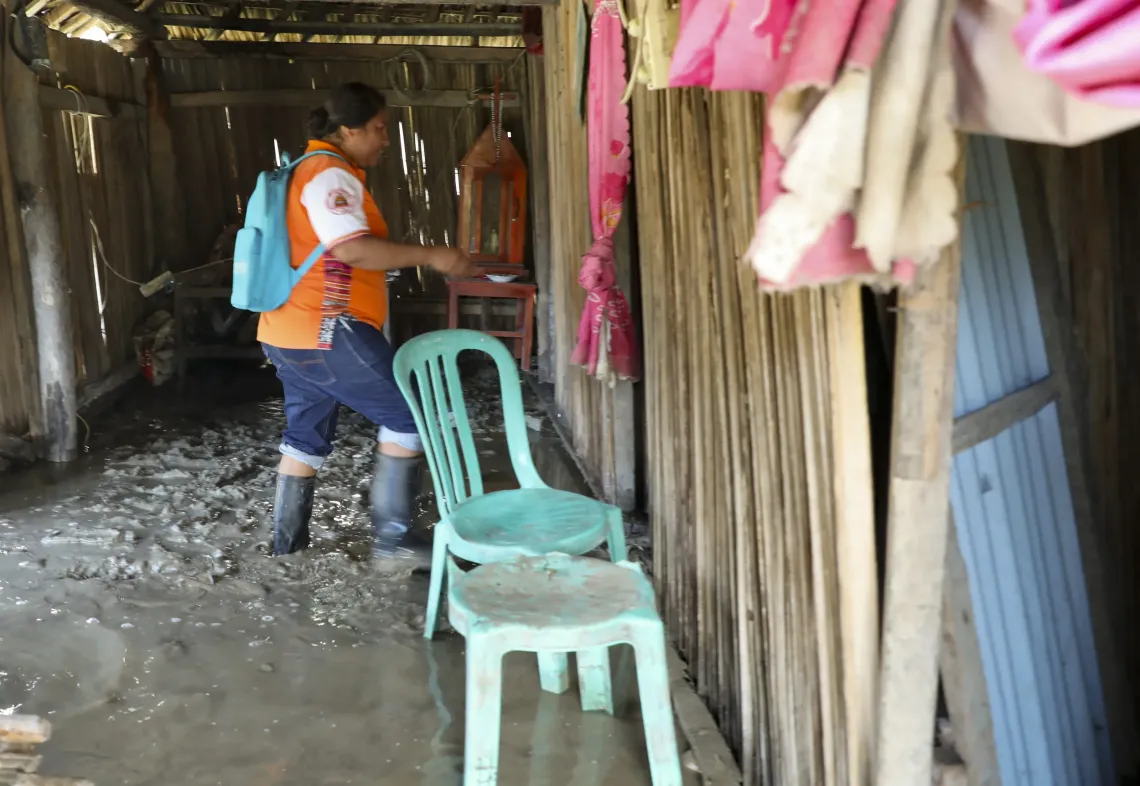
The flooding also placed pressure on Olimpia’s family. Household items were damaged, earning income became harder, and daily activities required extra effort. Family members worked tirelessly to protect their home, digging channels to divert water and mud away from the house. When resources ran short, they turned to neighbours and relatives for support.
In times of crisis, community solidarity became a lifeline. Families shared what they could, from water sources to practical assistance. Local authorities gathered information about those most affected and coordinated support for vulnerable households. Neighbours checked on one another, helping ensure that children and families were not left to face the disaster alone.
“The impacts of floods extend beyond damaged homes and disrupted livelihoods. Emergencies can expose children to greater protection risks, including stress, anxiety, violence, neglect, and other threats to their well-being. When disasters strike, protecting children becomes just as important as restoring infrastructure,” says Juliana.
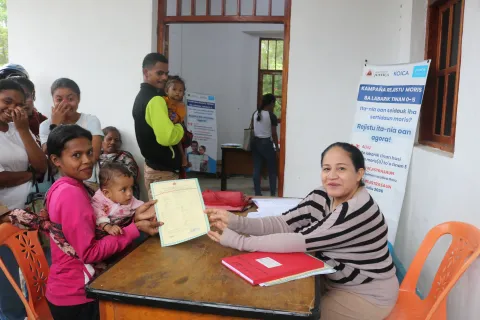
Through child protection services, with support from UNICEF Australia, vulnerable children and families in affected communities were identified and connected with support through Child Protection Officers. Working with government partners, social workers, and community networks, mothers like Olimpia received assistance to safeguard their well-being and help them recover from the disaster's impacts.
"Children need to feel safe," said Olimpia. "When emergencies happen, we must make sure children are protected, supported, and able to continue learning."
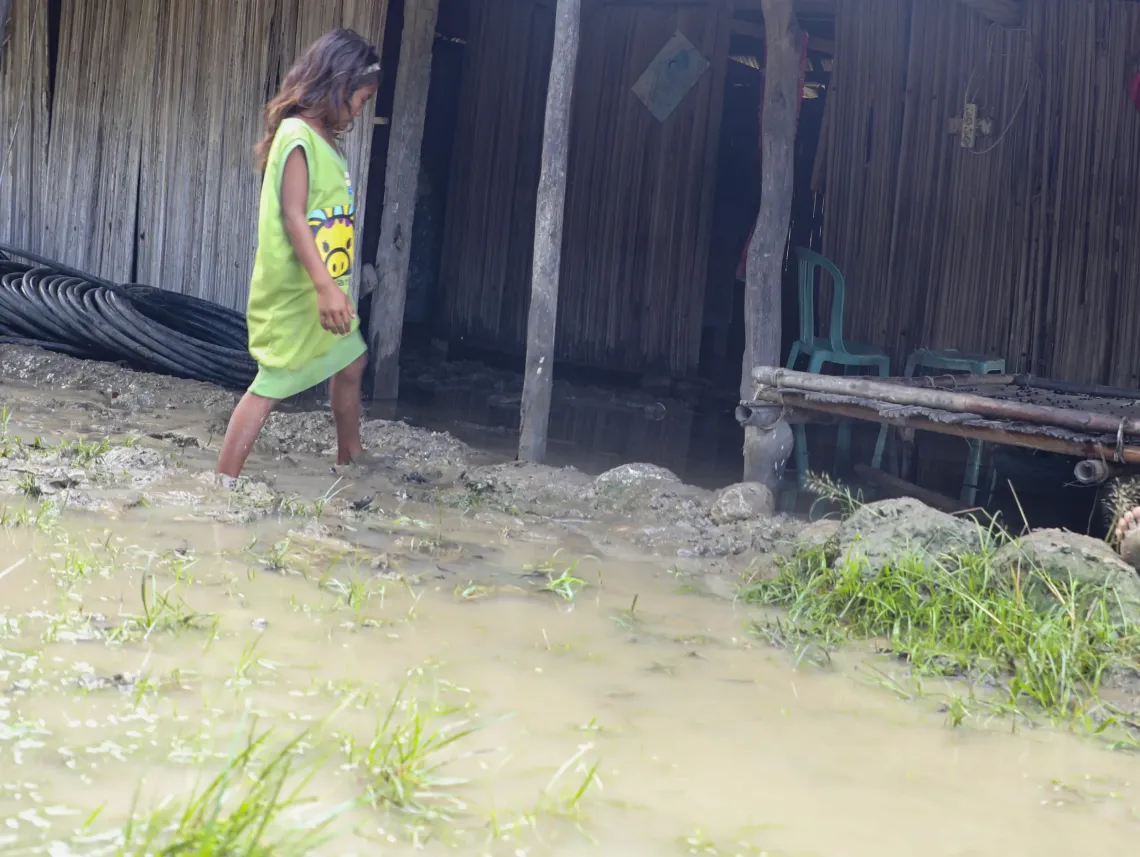
As climate-related shocks become more frequent and intense, children are often among the first and hardest affected. Floods and droughts can wash away more than homes and possessions. They can disrupt education, increase protection risks, and create lasting challenges for children's development.
By the end of 2026, El Niño is expected to affect Timor-Leste and reduce seasonal rainfall from November 2026 to April 2027, possibly leading to severe drought, extreme heat, water shortages, and erratic rainfall that could affect agriculture in the second quarter of the 2027 harvest.
For now, the floodwaters in Viqueque may have receded, but the experience reminds us that in every emergency, children need more than immediate relief. They need protection, support, and opportunities to continue learning and growing.
Looking back, it is clear that disaster preparation is crucial. As the country prepares for more severe droughts during El Niño, lessons learned are being put into action plans. Children’s safety is Juliana’s top priority.
For Olimpia, that support has helped turn a story of crisis into one of hope. "Things were difficult," she said. "But we kept helping each other." In that spirit of resilience and solidarity, the community continues to rebuild, ensuring that mothers like her can move forward toward a safer, brighter future.