

At the market, a mother’s hope for a safe place for her children
Co- designing quality and holistic childcare solutions for working parents

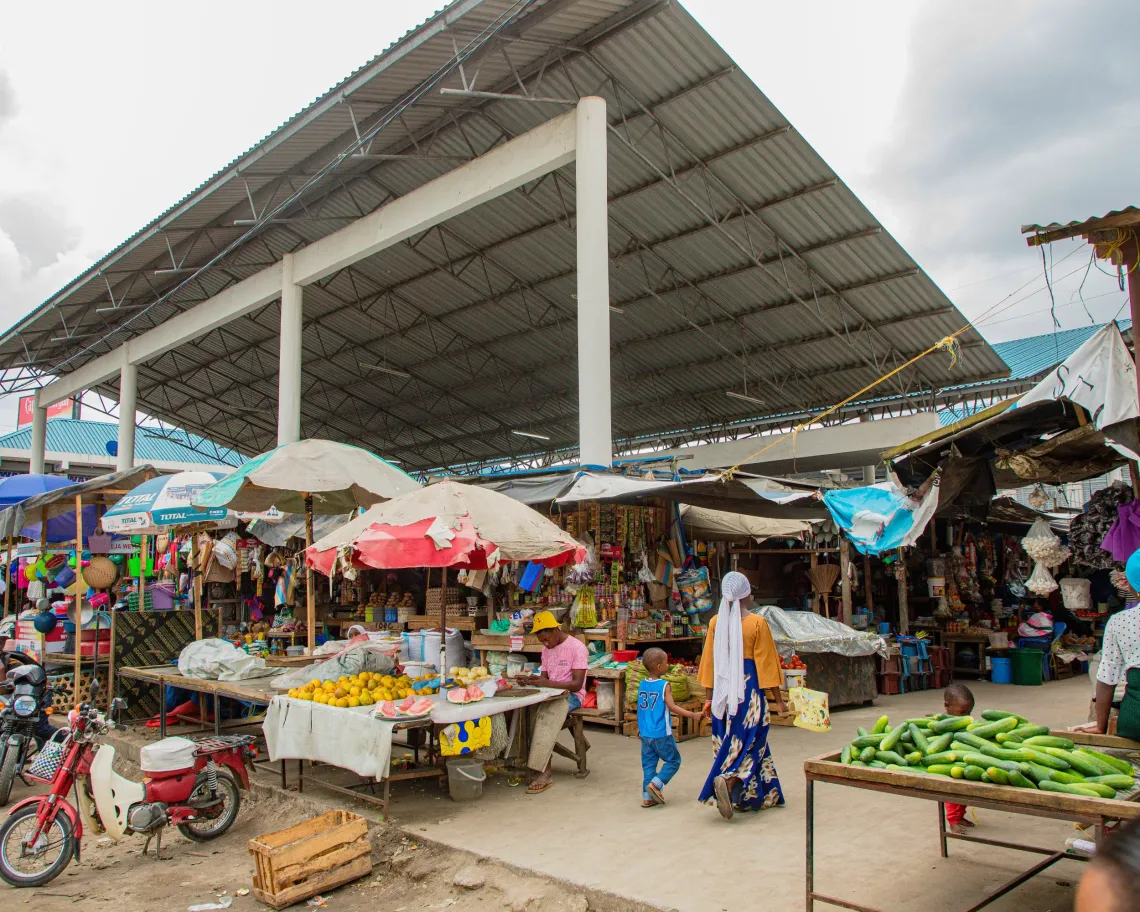
At Mbagala Zakhem Market in Dar es Salaam, one of the busiest and most crowded corners is the poultry slaughterhouse, where the air hangs heavy with dust. Soon, if the plans hold, that very space will be renovated and transformed into something entirely different: a childcare centre where young children can sleep, play and learn while their mothers work a few steps away. For Salome Raymond Kivuyo, a mother of twins who sells vegetables nearby, that change cannot come soon enough.
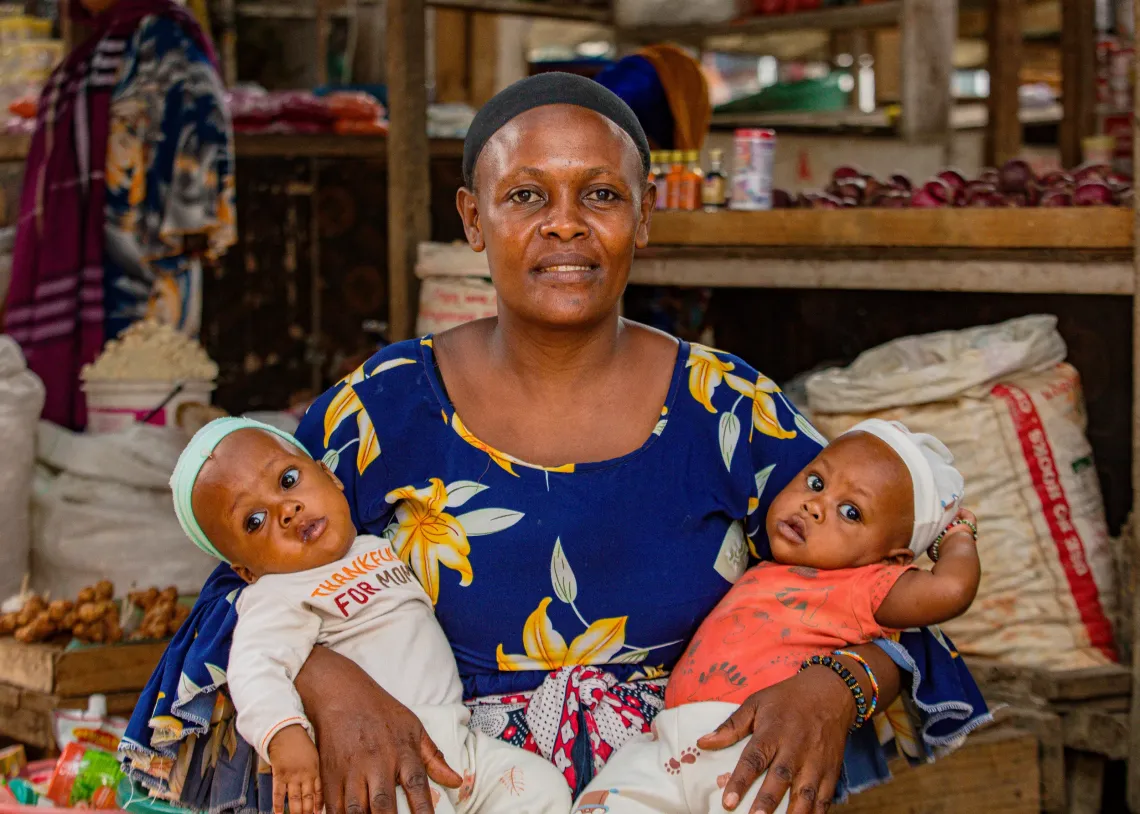
Salome is 38 years old, married, and the mother of four: a fifteen-year-old, a four-year-old, and six-month-old twins named Festo and Felis. For six years she has sold vegetables and spices at Mbagala Zakhem Market, a ten-minute walk from home.
Her day starts at five in the morning. She cleans the house and washes the babies’ clothes, then sets off to open her stall. She walks because she is too afraid to ride a motorcycle with her babies.


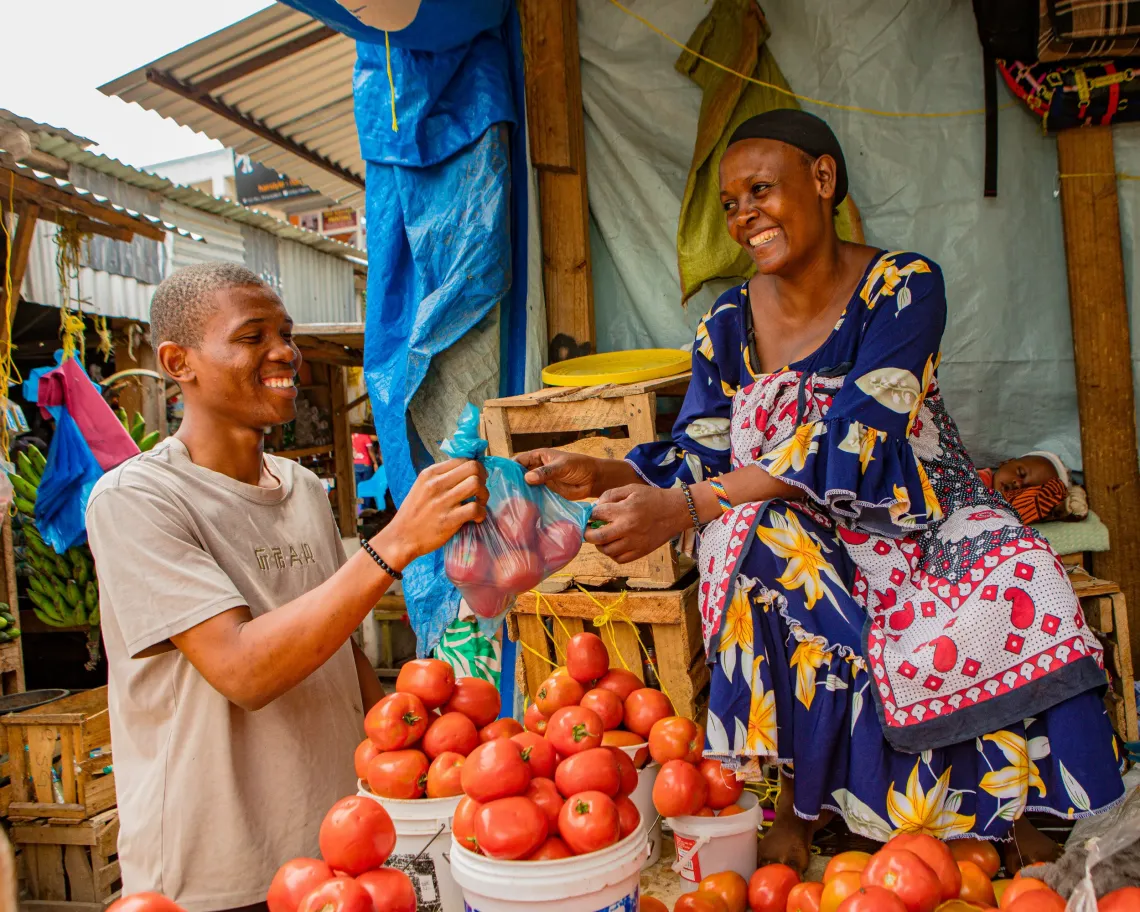
Setting up is a struggle in itself. She asks neighbours to hold one or both babies while she spreads a mat for them and lays out her goods. “I bring my children to the market because I have no one to leave them with at home,” she says. “I must bring them and be with them all the time. I have thought of other ways to raise them, but due to living conditions and my capabilities, I cannot afford to accomplish what I want.”
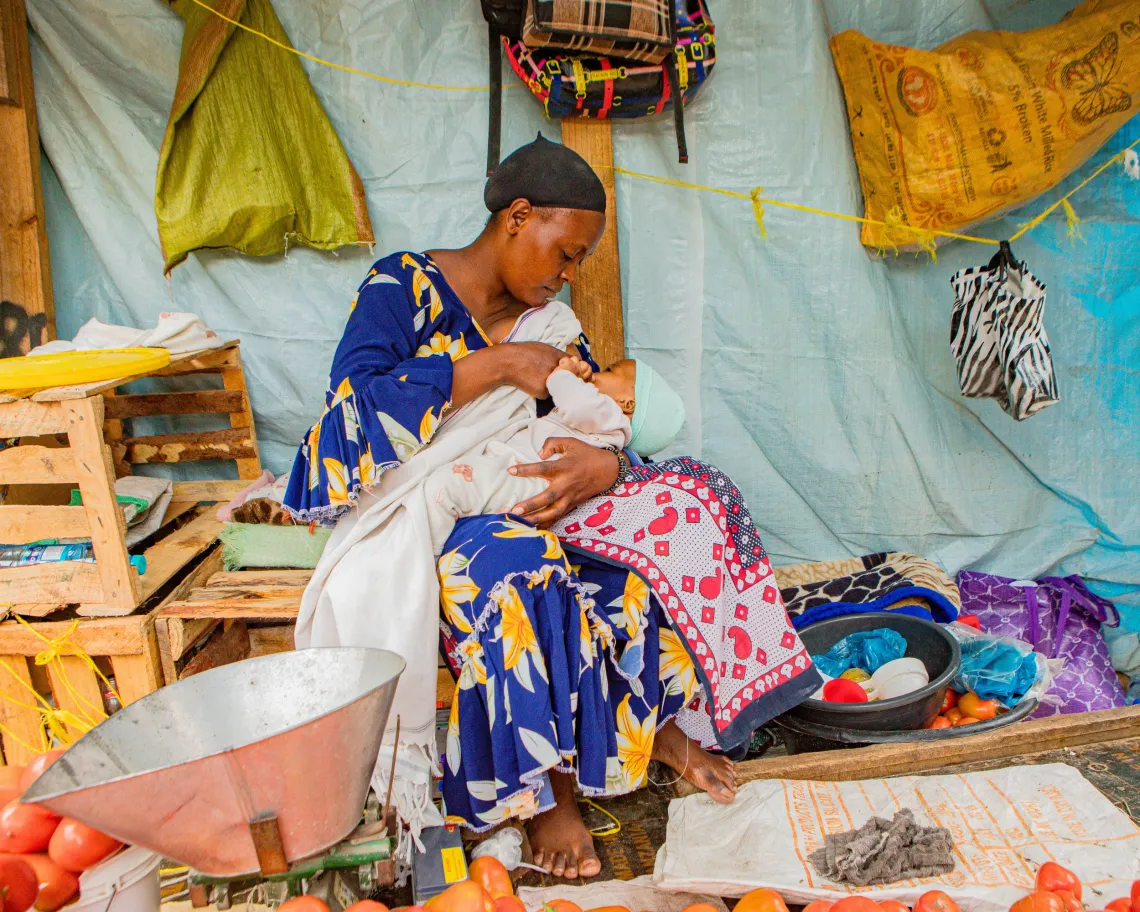
From the moment she arrives, every working hour becomes a negotiation between her business and her babies. She lays one child on a spot she has prepared, breastfeeds each of them for fifteen minutes so they are settled, and only then begins arranging her produce. Through the day she nurses them six or seven times, but rarely until they are finished.
“Not every customer is patient. Some say ‘finish first,’ others serve themselves, and others leave. Because I rely on that money to raise the children, I find myself cutting the child off, laying them down, and serving the customer,” she explains.
The market is no place for an infant.
The chicken slaughterhouse sits close to her table, and when the birds are unloaded, the dust drifts over the children. “They get the flu and fever at night, but I have no choice because it’s my workplace,” she says. “They fail to breastfeed on time, and fail to sleep on time, sleeping a broken sleep due to people’s noise.” She worries, too, about what they absorb. “I fear my child might learn bad language, dirty insults, answering people rudely,” she says.
Her deepest fear is that one of the twins will be hurt while her attention is elsewhere.
One day, it almost happened. “A customer had arrived, so I laid the child down to serve them,” she recalls. “The child rolled over and fell to the ground. Because their joints are still fragile, breaking bones is easy. Luckily they weren’t hurt, but it gave me massive fear.”

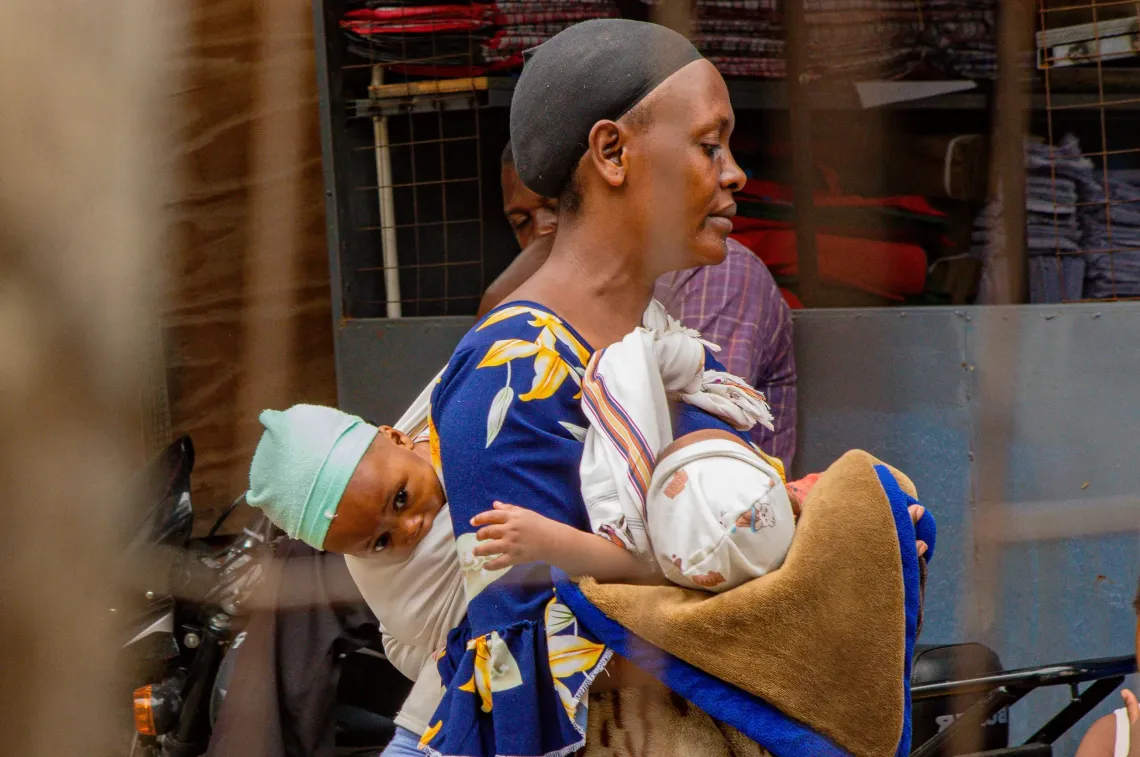

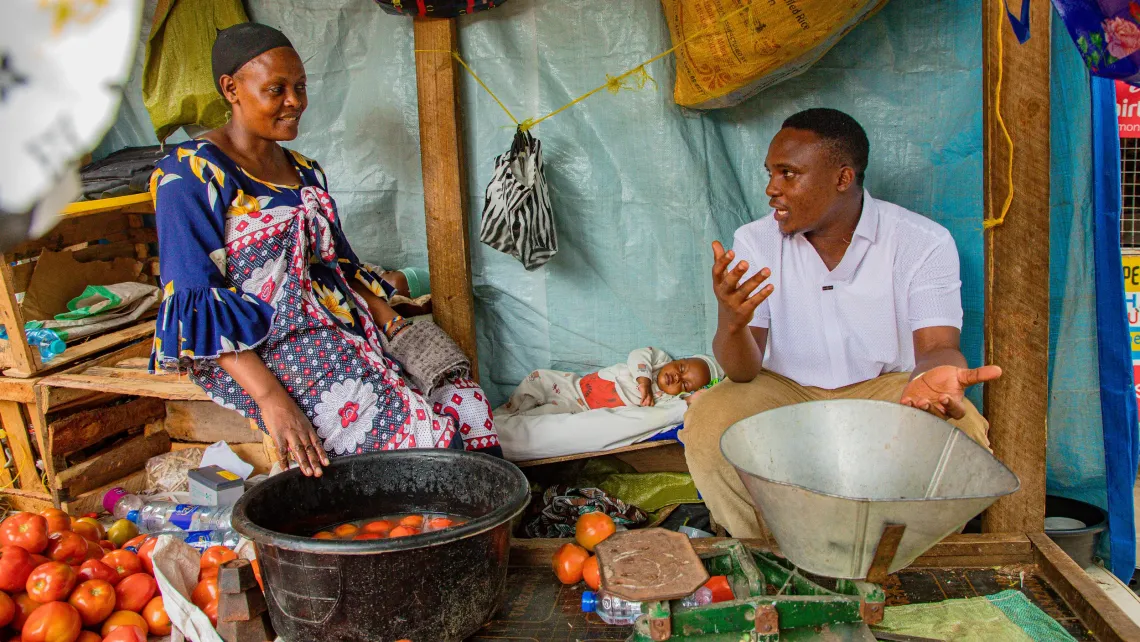
Her day does not end until around eight at night, when she packs up, ties one twin to her back, takes the four-year-old by the hand, and carries the other in her arms to make the way home. It is a fifteen-hour day.
Salome’s struggle is not hers alone. Of the roughly 1,300 traders at Zakhem Market, around 750 are women. About 20 of them bring their children every single day, and another 50 bring them from time to time. The market’s manager once snatched a child from the path of a speeding motorcycle. “I rescued a child who was almost hit by a bodaboda,” remembers Mwiga Matthew, who has managed Zakhem Market since last year.
“The child was running across the road. I grabbed him on time, but it was very dangerous. Children need to grow in a safe community environment, but here we have chicken slaughterers, sellers, and auctioneers,” says Mwiga Matthew, the manager of Zakhem Market.
For children, early years are precisely the time when environment matters most. In a child’s first 1,000 days, the brain builds the foundations of health, language, and learning, and after age 2, delays can become permanent. To thrive, children need nurturing care: good health, adequate nutrition, safety and security, responsive caregiving, and early learning. Yet across Tanzania, only 47 per cent of young children are developmentally on track.
Salome first heard the news about the day care at her own table.
“The chairman passed and said, ‘Mother of twins, I see you struggling with caring for the children, but don’t worry, we expect to open a centre,’” Salome recalls.
This changed what she thought was possible.
The centre is part of a government effort, supported by UNICEF, to bring safe and holistic childcare into eight Tanzania’s markets.
Ask her to design it, and the list comes quickly. It is the wishlist of a woman who knows exactly what her children lack. “First, I need the area to be large and open to bring in good air,” she says. “A separate section to change and breastfeed them, a good place for them to sleep, a large area to play, and water for washing hands. Toys to play with, and loving teachers for the children.”
What it would mean, she measures in peace of mind.
“Once it opens, my life will change because I’ll put the children in a safe place and be focused on business, unlike now where I give a large percentage of my attention to the children,” she says. “My child being safe means I will have the strength to do business with high efficiency because I am certain of where my child is. For my children, I believe they will be happier being with other children, getting good sleep, breastfeeding and changing on time, and the air won’t be heavy like here.”
“I want to see my children have a good destiny,” she says, “become good citizens with morals, and be self-aware.”
The same corner that now fills her days with dust and worry will soon be where that future begins.


