Investing in girls, building a nation
Dr Lauren Rumble, Associate Director for Gender Equality, on advancing adolescent girls’ empowerment in Tanzania

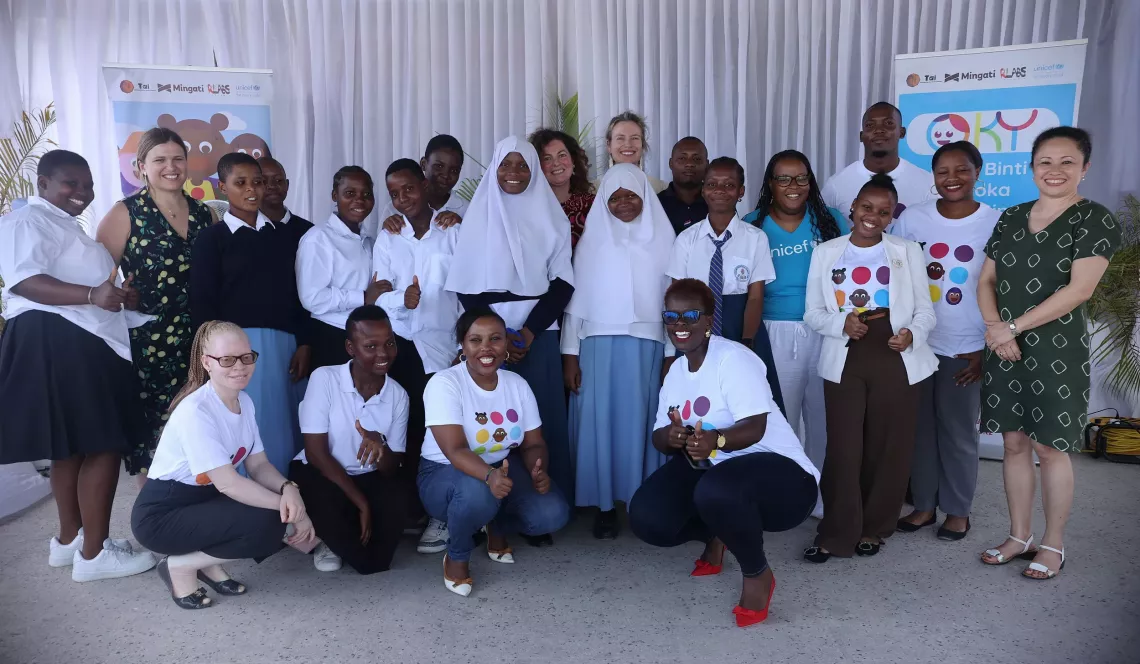
From 27 to 31 January 2025, Dr Lauren Rumble, Associate Director for Gender Equality at UNICEF Headquarters, visited Tanzania to gain insights into the country’s progress and challenges in advancing gender equality, particularly in the area of adolescent girls’ empowerment. She engaged with key stakeholders, explored innovative programmes, and examined key interventions addressing critical issues such as child marriage, teenage pregnancy, and girls’ education.
During the visit, Dr. Rumble witnessed firsthand how Tanzania is taking steps to create a more inclusive future for girls. In this interview, Dr Rumble shares her reflections on the visit, highlighting the progress, challenges, and the path forward for Tanzania in its journey toward gender equality with a focus on adolescent girls.



Q: What was the purpose of your visit to Tanzania?
Dr. Lauren Rumble: I was very excited to visit Tanzania, a country recognized globally for its gender equality efforts. I came to learn more about the work being done to advance the rights and well-being of adolescent girls with a goal to understand these initiatives so that we could share learnings and experiences with other countries facing similar challenges.
Q: What are some of the key reforms Tanzania has undertaken to promote gender equality?
Dr. Lauren Rumble: Tanzania continues to adopt progressive policies for gender equality, particularly now with its first female president, Dr Samia Suluhu Hassan, a global gender champion. Key milestones in the country include the launch of the National Gender and Women’s Development Policy (2023), the National Action Plan to End Violence Against Women and Children II (2024/25–2029/30), and reforms in education and health policies to promote gender transformation. There are significant reforms underway, including the proliferation of childcare centres, early childhood development programmes, and catch-up education initiatives for girls. These efforts align with Tanzania’s broader vision of creating an equitable society where every girl can thrive and contribute to national development.
Q: What was the highlight of your visit regarding education for adolescent girls?
Dr. Lauren Rumble: One of the most impactful moments was seeing Tanzania’s re-entry policy for adolescent mothers in action. This policy is a powerful step forward in ensuring that young mothers are not left behind in their education. I had the privilege of visiting programmes such as the Integrated Programme for Out-of-School Adolescents (IPOSA), which provides critical education pathways for young mothers, allowing them to return to school and continue their education journey.
These programmes don’t just offer education but also address the specific challenges faced by young mothers, ensuring they have the support they need to succeed—be it financial, emotional, or academic. The presence of these programmes, backed by government budgets and policies, shows a genuine commitment to the empowerment of young women.
Seeing firsthand how these initiatives are making a difference in the lives of young mothers was truly inspiring. It highlights the importance of government investment in youth programs and the long-term benefits of giving adolescent mothers the opportunity to return to school. Their stories are a testament to resilience and the transformative power of education.

Q: What progress has been made in terms of economic empowerment for girls?
Dr. Lauren Rumble: Economic empowerment is crucial. I met Beatrice, a young woman who learned how to cultivate avocados through an agricultural skills programme. She started with one seed and now has an order for 100,000 avocado plants. Stories like hers demonstrate how economic opportunities can transform lives, prevent child marriage, and help girls become active participants in Tanzania’s economy.
Beatrice’s journey is a powerful reminder of the potential within young women when given the opportunity to learn and grow. Stories like hers demonstrate how providing economic opportunities can have a ripple effect, helping to prevent early marriage and enabling young girls to thrive and become active contributors to Tanzania’s economy. Her success is a testament to the importance of investing in skills development for women and girls, which can lead to financial independence, personal growth, and the empowerment of entire communities.

Q: How is Tanzania addressing adolescent health services?
Dr. Lauren Rumble: Tanzania has made great strides in adolescent health, particularly in the human papillomavirus (HPV) vaccinations to prevent cervical cancer. The country is leading the way by integrating additional services into these programs, such as nutrition support and counselling. Programs like “Mama na Mwana” also allow adolescent mothers to provide real-time feedback to improve maternal and child health services.
Q: What challenges remain in addressing gender-based violence?
Dr. Lauren Rumble: Tanzania has made significant strides in addressing gender-based violence through policy reforms, community engagement, and multi-sectoral partnerships. The country has launched the second National Plan of Action to End Violence Against Women and Children (NPAVAWC II), which provides a structured framework to prevent and respond to cases of violence. Specialised services, such as the Police Gender and Children’s Desks and juvenile courts, provide safe spaces for survivors to report and seek justice.
The Furaha Teens programme focuses on promoting gender equality and positive parenting within communities. The initiative encourages families to adopt shared household responsibilities and actively works to challenge social norms that disproportionately affect girls. By engaging fathers, mothers, and adolescents in open discussions, Furaha Teens is helping to foster safer, more equitable environments for girls. These efforts, combined with broader national strategies, demonstrate Tanzania’s commitment to tackling gender-based violence and empowering young people.

Q: Looking ahead, what do you see as the next steps for Tanzania?
Dr. Lauren Rumble: While there has been progress, challenges persist. A third of Tanzanian girls experience violence in their lifetime, and child marriage rates remain high. As Tanzania moves toward its Vision 2050 goals, adolescent girls must be at the centre of national development strategies. If we equip girls with education, economic opportunities, and social protections, they will be the driving force behind Tanzania’s growth. We also need to see more women in leadership roles. It’s not enough to have just one female president in Tanzania’s history; we need to create a pipeline of young women leaders. That starts with investing in girls today. UNICEF remains committed to supporting Tanzania in achieving its gender equality goals, ensuring that every girl has the opportunity to thrive, contribute, and lead in the future.