Supporting the health and well-being of families and children
UNICEF, with the support of the Government of the Republic of Korea, is helping families and children in Syria access life-saving health services and build a brighter future

Bab Moussalla, Damascus - With the generous support of the Government of the Republic of Korea, UNICEF is strengthening access to essential health services for children and their caregivers at health centres across Syria, helping families cope with economic hardship and the limited number of health facilities.
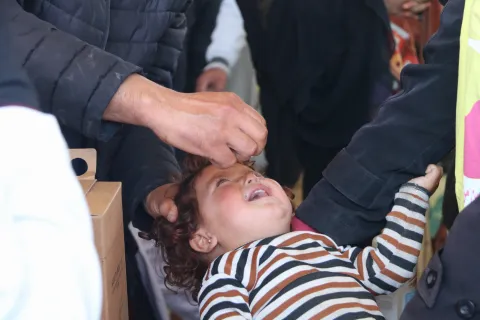
In Damascus, one UNICEF-supported health centre plays a critical role in addressing health needs through routine check-ups, growth monitoring, and treatment for childhood illnesses. The centre delivers comprehensive, free services for children and women, including consultations, prescriptions, laboratory tests, X-rays, health education, and referrals. It also provides essential medical assistive devices for children with disabilities such as eyeglasses, hearing aids, wheelchairs, crutches, and nebulizers.

Alaa, a mother of a three-year-old Abdul-Majid, brought her child for a medical check-up said:
“My husband has been jobless for a year. This centre has lifted a huge burden off our shoulders,”
Amid the difficult economic situation of the country, access to free health services help ease the financial pressure on families with limited resources.
The centre also conducts free blood tests to detect conditions like anemia and infections, with medication available on-site to ensure timely treatment without extra costs. When specialised care is required, children are referred for eye examinations, medical glasses, and assistive devices, enabling those with disabilities to participate actively in daily life.


In addition to service delivery, UNICEF supports training for health workers on newborn care, early childhood development and parenting, and the prevention of sexual exploitation and abuse (PSEA).
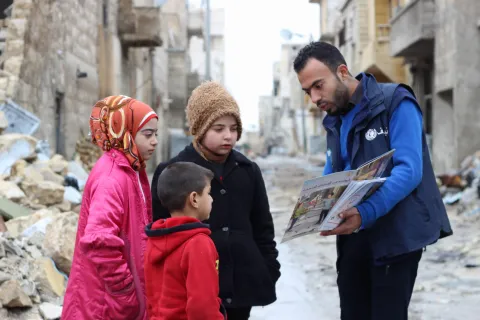
While waiting for consultations, caregivers and children participate in health education sessions focusing on immunization, hygiene promotion, prevention of communicable diseases, and outbreak-specific messages, including cholera and PSEA. Dedicated health workers create a safe and welcoming environment, engaging children through simple activities such as coloring, games, or storytelling to help ease anxiety.


“The doctors here are so kind and make me feel safe. They give me the medicine I need to get better. They’re the best!”
Jawa, 10, commenting on how welcoming the medical staff are.
In 2025, thanks to the Government of the Republic of Korea, UNICEF provided primary health care services to over 200,000 children through 86 clinics and mobile teams across Syria, helping vulnerable children grow healthy, safe, and strong.