Safe school environment bolsters education
UNICEF and UN-Habitat rehabilitation works enable more children to learn

Al-Nashabiyeh, Rural Damascus, Syria – “It’s a burden on the learning process when some 80 students are attending a lesson in one room,” said Hassan Kabboul, a construction engineer with UNICEF.
In Syria, one in three schools have been destroyed, damaged, continue to shelter displaced families or are being used for other purposes. Low numbers of rehabilitated schools further hamper children’s access to learning.
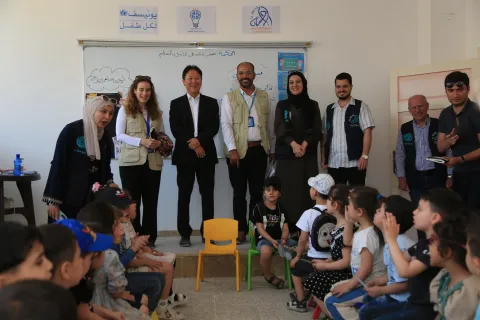
The Al-Nashabiyeh primary and secondary schools for girls in Al-Nashabiyeh town in Rural Damascus were badly damaged and out of service between 2013 and 2018. With respite in violence, the two schools reopened with a few functional classrooms. But with 60 to 85 children crammed into one classroom, learning was challenging for many of the students. Classes were constantly overcrowded; the toilets were not functioning and there was no clean drinking water available. During the freezing winter months, the cold weather and rain would trickle in.

“Our students didn’t know what a real school looks like. This school was damaged. It had no doors or windows.”


UNICEF’s support included repair works in the two schools to make them more structurally sound and restore additional classrooms for students to learn in. The rehabilitation equipped the schools with handrails in corridors, ramps in entrances, and a dedicated toilet with a ramp in the primary school, making the school more inclusive of children with physical disabilities. UNICEF also carried out water and sanitation maintenance works in both schools, including the rehabilitation of the water well in the primary school, also supplying surrounding schools with clean and safe water.
“This year, we have windows and doors in classrooms. Also, the school yard is now great for sports activities and recess. The most important improvement is the bathrooms. They are essential, especially for the young girls to access.”


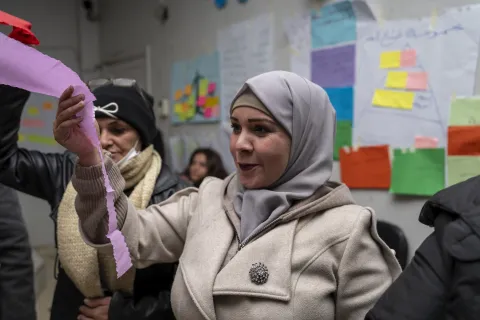
“I feel that the children are happier this year, and they all feel responsible for keeping the school clean and beautiful.”
The students in the two schools too are happy with the changes.
“The school is now way better than before. It is more beautiful and tidier. This encourages me to come to school”

Complementing UNICEF’s efforts in bringing children back to safer schools, the UN sister agency UN-Habitat installed solar system lamps in the streets surrounding the schools, repaired the sidewalks in the area, planted trees around the schools, installed shaded seats and traffic signs and placed road bumps to ensure passing vehicles slow down to enable students on foot to arrive safely to school.
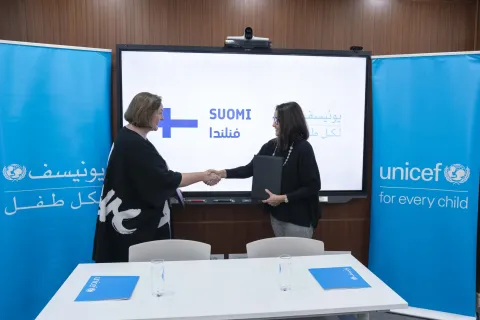
Since 2022, UNICEF has supported the light rehabilitation of 55 schools across Syria, benefitting more than 24,000 children with access to a safe education environment. The works were made possible thanks to contributions from the German Federal Ministry for Economic Cooperation and Development (BMZ) through the KFW Development Bank, Governments of Finland and Japan, the Swiss Agency for Development Cooperation. Also, these activities are part of the UN Joint Programme to Build Urban and Rural Resilience and the Conditions for Recovery in Syria, through UNICEF, and they have been implemented with support from the European Union and the Government of Norway.