Nurturing families’ resilience by improving healthcare facilities in Hama
UNICEF rehabilitates conflict-affected clinics to increase children’s access to life-saving services.

Al Daheriaya neighbourhood, Hama, west-central Syria: "In 2015, this clinic was turned into a collective shelter to receive displaced families during the conflict," Dr. Amina, the head of Al Daheriaya Health Centre in Hama, shared. Consequently, basic healthcare services were relocated to nearby prefabricated rooms. "We struggled with poor sanitation in these prefabs," she said. "Lack of proper infrastructure made it difficult for families to access our services in a safe and hygienic manner," she added.
The clinic was in a dire state due to lack of maintenance and damage caused by the displaced population. Therefore, it could not be used.

"We struggled with poor sanitation in these prefabs. Lack of proper infrastructure made it difficult for families to access our services in a safe and hygienic manner."
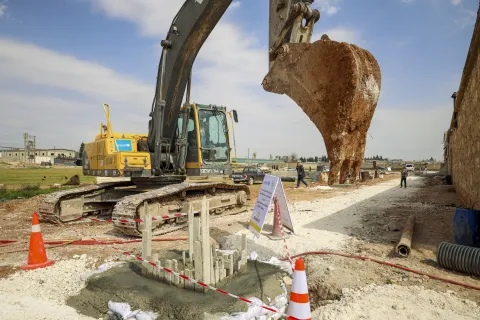
Between October 2023 and March 2024, with the support of the Government of Japan, UNICEF stepped in to rehabilitate the Al Daheriaya clinic, restoring its capacity and enhancing the quality of healthcare services in the area.


The support provided included: installing new sewer and safe water networks; rehabilitating sanitation facilities, including restrooms for people with disabilities; maintaining and renewing the electrical network, and fixing walls, floors, and doors; providing cabinets and electrical fans.


Currently, the centre, staffed by 15 health workers, offers a range of healthcare services to 18,000 people from the surrounding communities. These services include children's vaccinations and health consultations, nutrition support, as well as ambulatory, dentistry, and reproductive health services.
Reopening this centre improves families' access to quality healthcare services and has a positive impact on the wellbeing and healthy growth of their children."
"We receive over 60 people every day. The rehabilitation transformed the centre into a functional and welcoming space for both families and health workers. The improvements in infrastructure and sanitation have significantly enhanced the quality of our services and created a source of hope for the community," Dr. Amina explained. "Reopening this centre improves families' access to quality healthcare services and has a positive impact on the wellbeing and healthy growth of their children," she added.


"I am grateful for having these health services at a nearby clinic. I don’t have to worry about transportation costs, consultation fees, or medicine expenses," a father said, bringing his children for a medical consultation. "I came today to check on Mariam and Mohammad as both have sore throats."

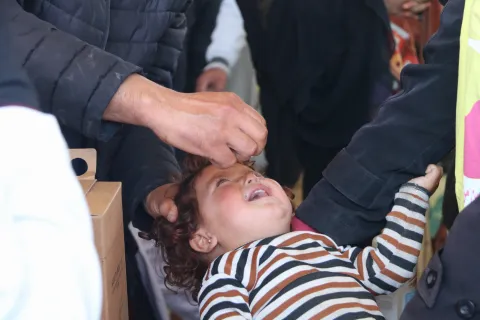
Mohammad Ali, an 8-month-old baby, was brought to the clinic to receive his routine vaccines. "Having such a good and accessible centre in this area is ideal. It meets families’ health needs," Mohammad’s father explained. "Health workers here are knowledgeable and helpful," he added.


"I had pain in my arm. The doctor treated me and gave me some medicine," said Ali, 8. Ali came to the clinic with his father seeking ambulatory support. "I know that my son is in safe hands here," Ali’s father said. "I can’t afford private hospitals. I am thankful to have this nearby clinic," he added.

In Syria, half of the primary healthcare system remains offline. Two out of five sub-districts do not have functional primary healthcare facilities, forcing families to either delay medical care or take long trips if they can afford it. UNICEF prioritizes rehabilitating damaged clinics to help caregivers and improve children’s health and nutrition conditions.
Since the beginning of 2023, UNICEF has rehabilitated 58 damaged health and nutrition centres across Syria. An additional 39 clinics are still under rehabilitation. With these centres, UNICEF will reach more than 580,000 people, providing them with access to basic health and nutrition services. Contributions from the Government of Japan and GAVI, the Vaccine Alliance, made these activities possible.