Morei’s path to health and joy: how a little boy found his smile again
A family battles malnutrition with determination to survive

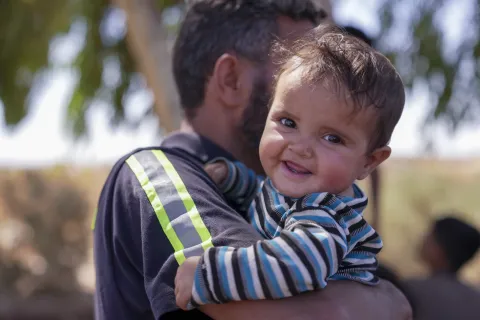
Obada village, Rural Damascus – “He was like a frozen baby, motionless, expressionless, not even crying,” Mohamed said, describing the condition of his eight-month-old son, Morei.
In the small village of Obada in rural Damascus, Mohamed, and his wife, Abeer, struggled to keep their child alive amid devastating challenges. With their village in ruins and no job opportunities, Mohamed was unable to provide for his family. “I saw my son’s body shrink before my eyes, and I felt utterly helpless to save him,” he added, reflecting on the pain of seeing Morei grow weaker.
Abeer’s attempts to feed Morei became increasingly desperate after she stopped breastfeeding him at four months due to an unexpected pregnancy. “We relied on whatever modest meals we had, but he continued to lose weight,” Abeer said.


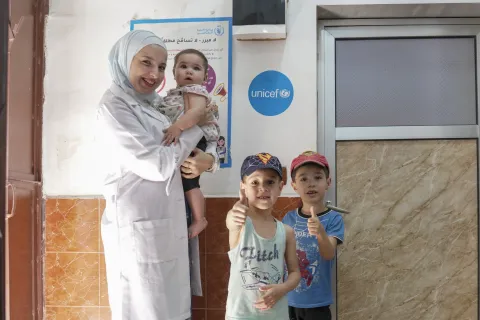
The family’s turning point came when Morei’s grandmother heard about a UNICEF-supported mobile health and nutrition team visiting their village. Abeer took Morei for a check-up. “They told me he had severe malnutrition and needed immediate treatment,” Abeer said. Despite her worries, the team’s kindness gave her hope. “I felt we were in good hands, and my son would heal sooner or later,” she shared.
The UNICEF-supported mobile team provided Morei with ready-to-use therapeutic food, vitamins, and regular check-ups. Abeer also received micronutrient supplements for her pregnancy and attended breastfeeding awareness sessions. “They taught me how to feed my son using affordable, nutritious alternatives,” Abeer added with a smile.


The dedication of the UNICEF-supported health workers made a lasting impact on Abeer and her family. “One day, I missed an appointment, and they called me, reminding me to bring Morei for follow up.,” Abeer said. “Their commitment showed how much they cared for my son’s health,” she added. After four months of treatment for severe malnutrition and two months for moderate malnutrition, Morei’s December check-up brought the long-awaited news: he was finally healthy.


“I can’t put into words the joy I felt when they told me my son was safe and healthy,” Abeer said. Today, Morei receives preventive food supplements to protect him from relapse. His father, Mohamed, proudly shared, “He’s an active little boy now, always crawling, moving, and exploring the world with open eyes and a big smile. His smile fills our days with joy.”
Since January 2024, UNICEF has reached more than 950,000 children and 1,350,000 women across Syria, with the nutritional support to help them lead a healthier life. The activities were funded by the Bureau for Humanitarian Assistance (BHA/USAID); the United Nations Central Emergency Response Fund (CERF); the Foreign, Commonwealth and Development Office (FCDO); the Swedish International Development Cooperation Agency (SIDA); the King Salman Humanitarian Aid and Relief Centre; the governments of Canada, Australia, Germany, Austria, Kuwait; and the UNICEF’s national committee for The Netherlands.