Learning to stay safe: Children participate in Explosive Ordnance Risk Education
UNICEF protects children and caregivers by strengthening community awareness of explosive risks

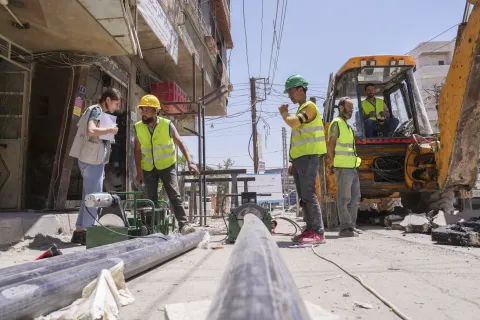
At Tall, Rural Damascus - Explosive remnants of war continue to put children across Syria at risk every day. As access increases to areas that were once active frontlines, these hidden dangers are becoming more visible. Many communities remain contaminated with explosive hazards, posing ongoing threats to families and children returning to rebuild their lives. UNICEF is supporting efforts to help children and caregivers recognise, avoid, and safely report unexploded items to the relevant authorities.
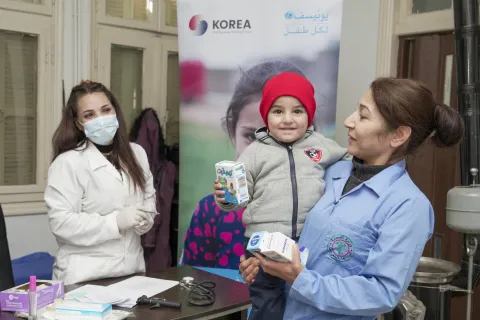
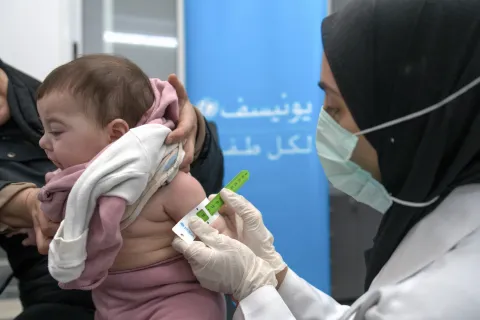
In At Tall city in Rural Damascus, UNICEF and its partner are supporting children and caregivers with essential protection services, case management, mental health and psychosocial support, parenting programmes for caregivers, and awareness-raising on child protection risks, and Explosive Ordnance Risk Education (EORE).
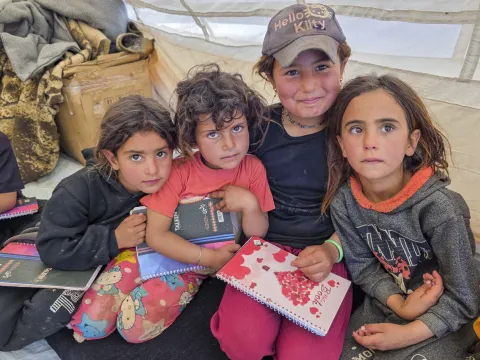
As part of this wider protection programme, EORE sessions provide children with life‑saving knowledge on how to identify dangerous items and what steps to take if they encounter them. Delivered through interactive discussions, visual materials and play-based activities, these sessions help children understand risks in a way that is safe, engaging and appropriate to their age. These life-saving activities are delivered by trained workers in UNICEF-supported child-friendly spaces, schools, and community platforms, ensuring children not only receive critical safety messages but also benefit from safe, supportive environments for learning and play.

“I received training on explosive remnants of war before starting my work. From that moment, I felt a strong responsibility for the children in my community and understood that it is my role to help keep them safe.”


Between January 2025 and February 2026, UNICEF provided life-saving explosive ordnance risk education to nearly 900,000 people including children and adults, in addition to providing parenting skills sessions to more than 70,000 caregivers, and over 130,000 children with psychosocial support helping communities stay safe and resilient in conflict-affected areas. This vital work was made possible through generous contributions from the Government of US; the German Federal Ministry for Economic Cooperation and Development (BMZ) through the KfW Development Bank; Governments of Australia, Italy, Japan, Norway and New Zealand; the Foreign Commonwealth and Development Office (FCDO); Government of the Republic of Korea; the Global Humanitarian Thematic Fund; the United Nations Central Emergency Response Fund (CERF); The Swiss Agency for Development and Cooperation (SDC); and UNICEF National Committees for Ireland, Japan, Spain, Norway.
UNICEF works with partners to ensure that children can live, learn, and play in a safe environment, free from the danger that can threaten their lives.