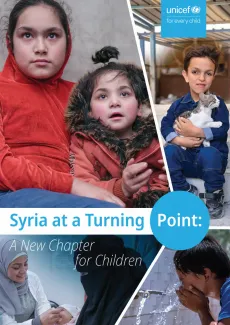
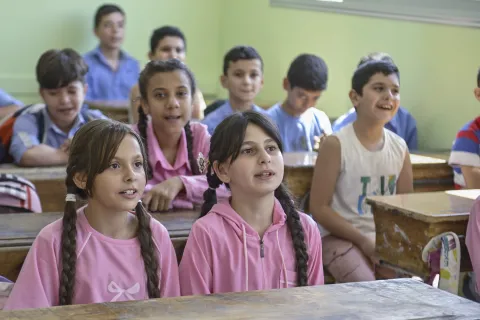
Syria at a turning point: A new chapter for children
Annual report 2025
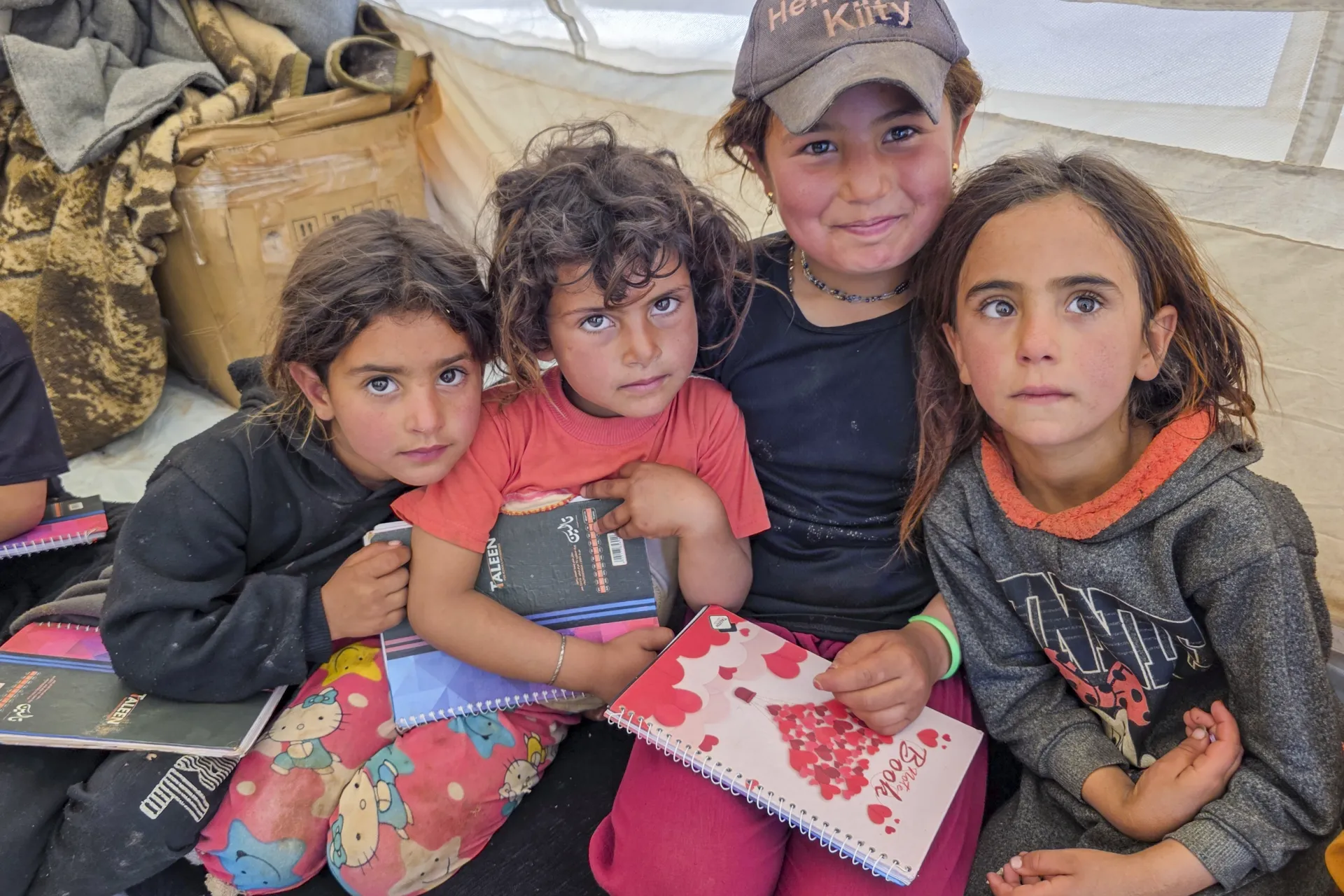
After 14 years of conflict, 2025 marked a turning point for Syria, bringing renewed hope for recovery while millions of children continued to face immense challenges.
Amid this transition, UNICEF worked alongside the Government of Syria and partners to deliver life-saving services while strengthening national systems for the future.
__
Foreword by Meritxell Relaño Arana, UNICEF Representative in Syria
The situation of children | UNICEF response in 2025 | The circle of support
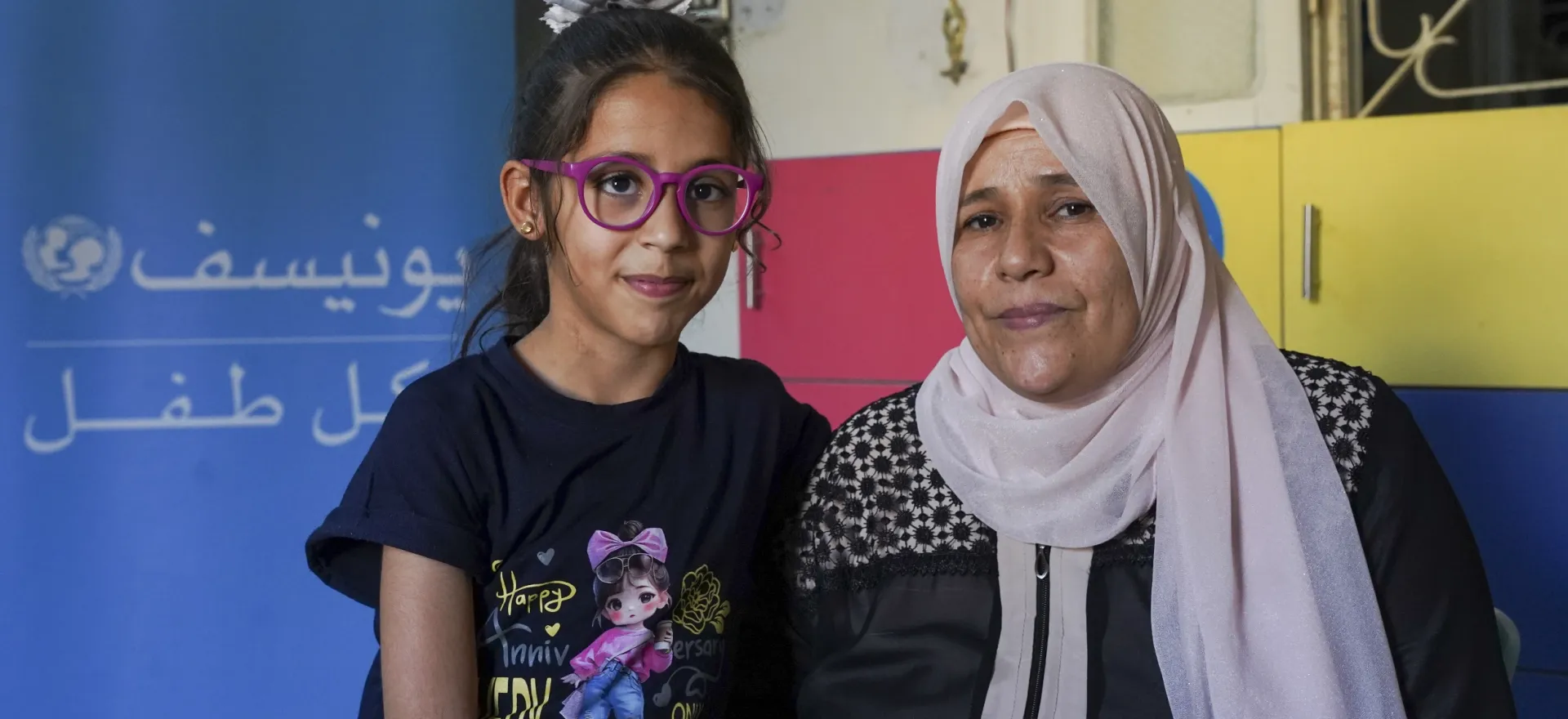
UNICEF/UNI844307/Youssef Aljumaa
“We came back with nothing but the clothes we wore. I stood there, heartbroken and lost.”
- Khadijeh, 47 Khadijeh (with her daughter Ghuson, 10), Deir-ez-Zor.
Syria's children
A generation shaped by war
- Nearly 14,700 children killed or injured since 2011.
- 1,600+ children killed by explosive ordnance since 2020.
- 7.5 million children need humanitarian assistance (up from 7 million in 2024).
- 90% of the population lives below the poverty line.
Coming home…but to difficult circumstances
- Over 3.2 million Syrians returned home (as of November 2025).
- Over 7 million internally displaced people remain displaced inside Syria.
- 57% of returnees since December 2024 are children (+410,000)
- 1.9 million internally displaced people returned to places of origin.
- 1.2 million refugees returned from neighbouring countries (Turkey, Lebanon, Jordan).
Children still waiting for safety
- 5 million children at risk from nearly 300,000 unexploded ordnance devices.
- 1,521 casualties from explosive ordnance (January to September 2025); one third of them children.
A crisis of basics
- 5.7 million people, including 3.7 million children, need nutrition support.
- 500,000 children under 5 affected by life-threatening malnutrition.
- 13.6 million people need safe water and sanitation services.
- 2.45 million children are out of school.
Always there for Syria’s children
For nearly 60 years, UNICEF has stood by Syria's children, and through 14 years of war, it stayed to deliver life-saving assistance.

UNICEF/UNI953710/Johnny Shahan
That enduring presence, guided by the United Nations Convention on the Rights of the Child, has forged deep, trusting relationships with the communities, families and children UNICEF serves.
Today, UNICEF operates across all 14 governorates through six field offices and 260 dedicated staff, 43 per cent of them women, supporting the efforts of government counterparts and Syrian civil society and grassroots organizations who know their communities best.
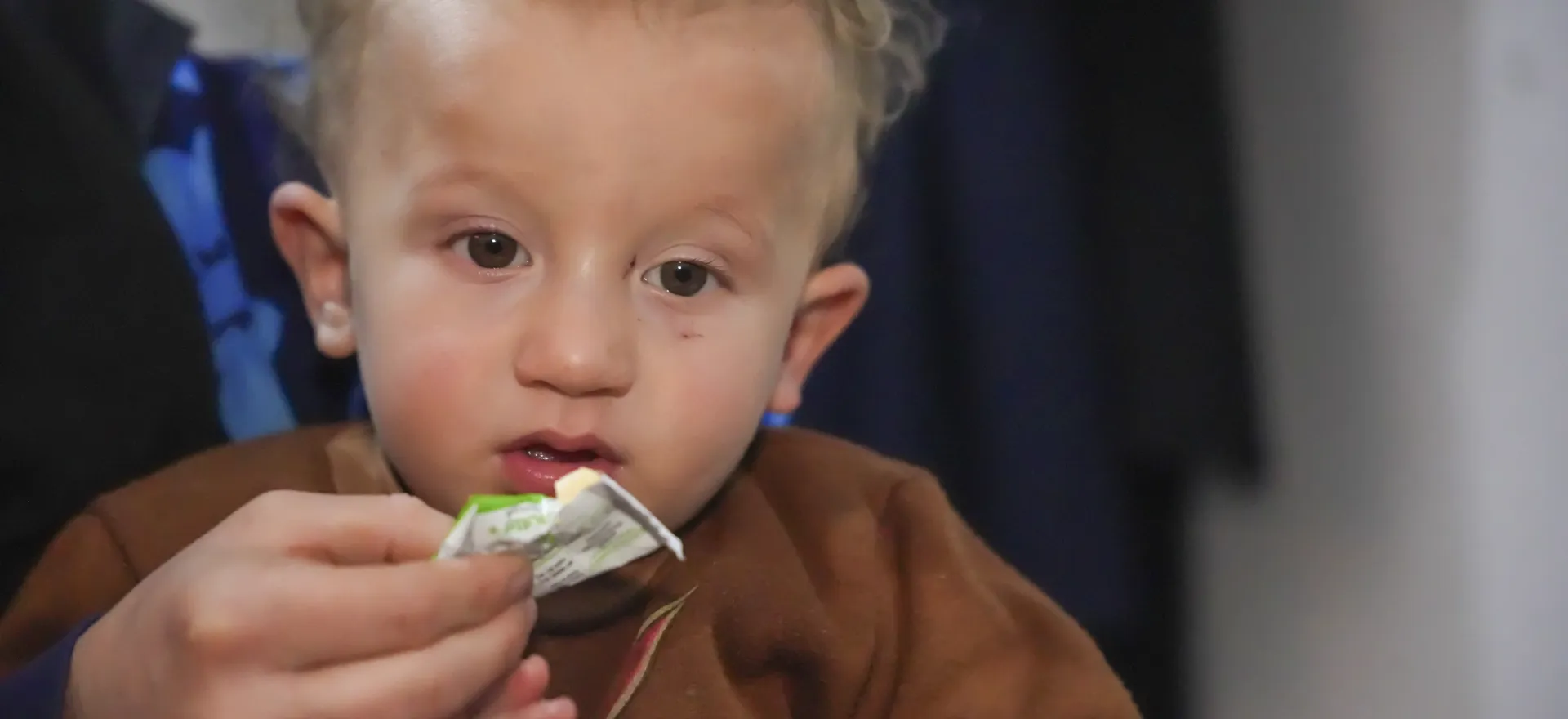
UNICEF/UNI947516/Bayan Kseibi
Abdulrahman, one year old, eats a fortified small-quantity lipid-based nutrient supplement, provided by UNICEF to boost young children’s diets and help prevent malnutrition, fed by his mother in Kafr Zeita, Hama.
Cash assistance and nutrition counselling gave Walaa (Abdulrahman's mother) the means and knowledge to feed all five of her children adequately and eventually the confidence to support other mothers in her community.


UNICEF/UNI733335/Johnny Shahan
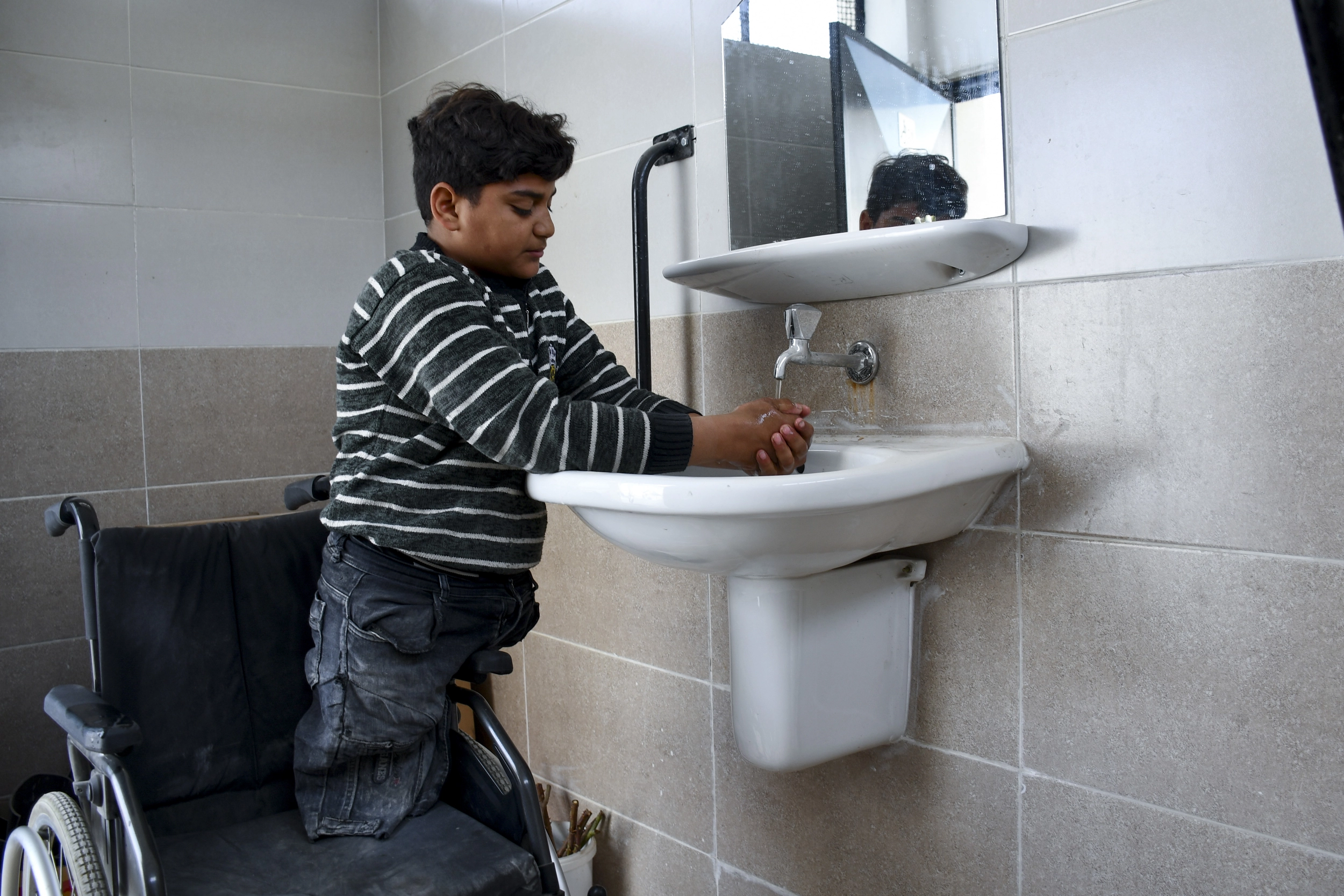
“I can move around on my own now. There’s even a bathroom I can use without help!”
- Yahia, 13, from Zabadin village in Rural Damascus washes his hands in the bathroom of his school. The school was rehabilitated by UNICEF to improve learning conditions for children. For the first time, he can move around independently and use the school’s WASH facilities without assistance.
UNICEF/UNI865866/Hanna Asmar
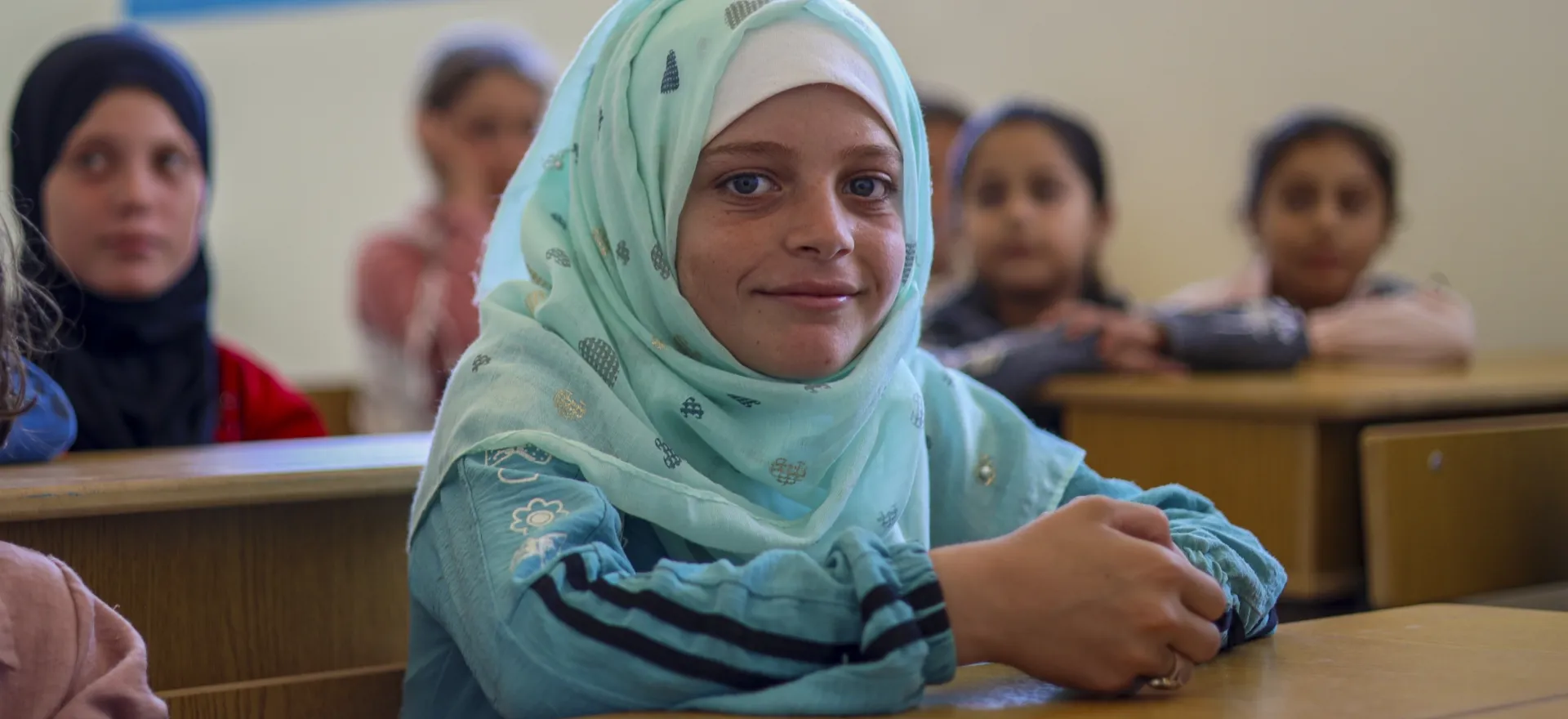
" I love the new school! There are drawings, colouring activities, and fans to help with the heat. I returned to my village and my school, which were both destroyed. My family and I had been living in a camp, but now we've returned to our home in Alhota."
- Samar, 11, in her remedial classroom, in the UNICEF- rehabilitated Mazraet Alhota school in rural Aleppo


UNICEF/UNI882906/Wissam Bashour
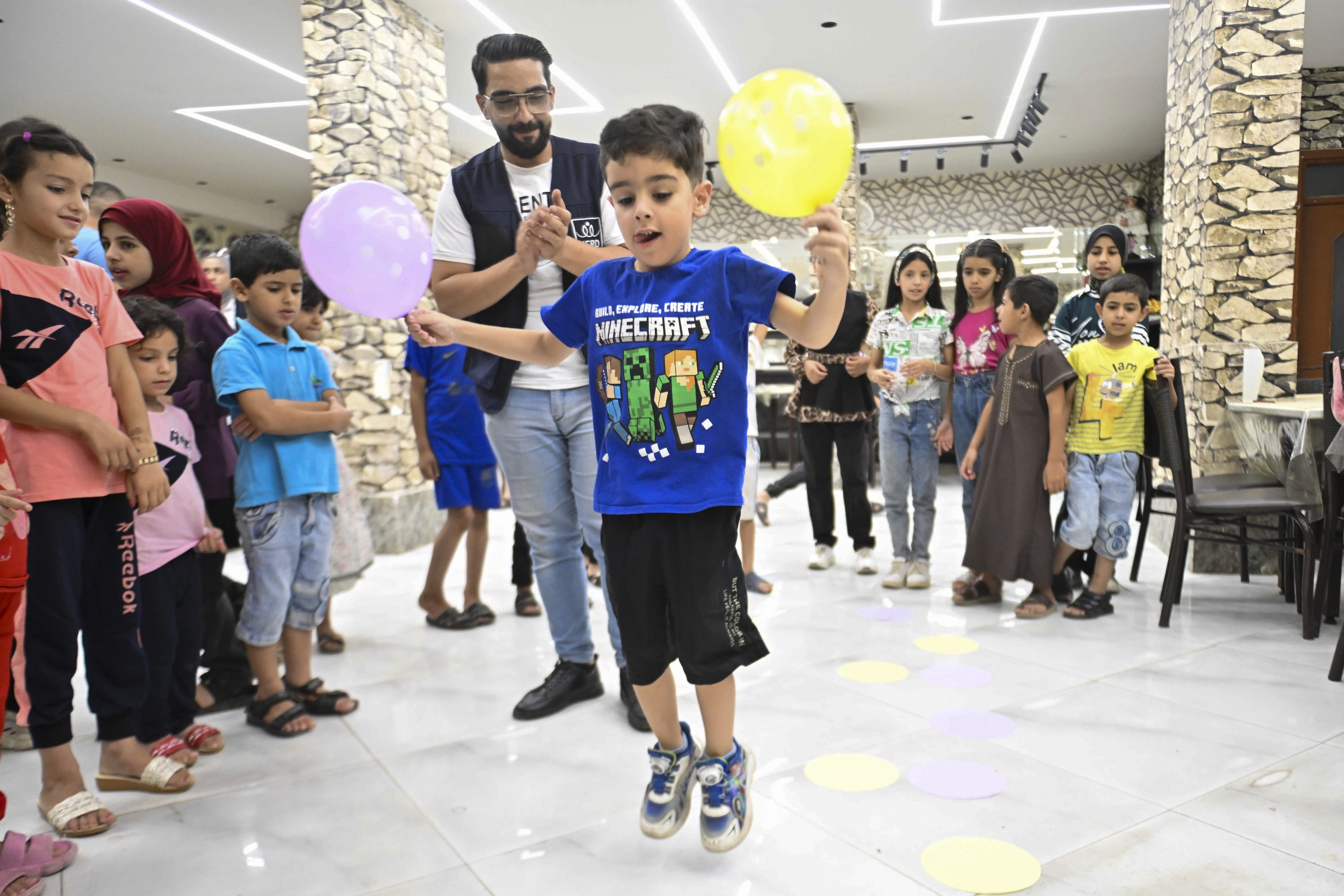
“The thing I miss most about home is my drawings. My mother used to hang them all over the house because she said they were beautiful.”
- Majd, 6, from As-Sweida participates in a group activity provided by a UNICEF-supported child protection mobile team. He stopped drawing after his family fled to a shelter in Rural Damascus, a small but telling sign of the trauma displacement inflicts on children.
UNICEF/UNI893660/Wissam Bashour
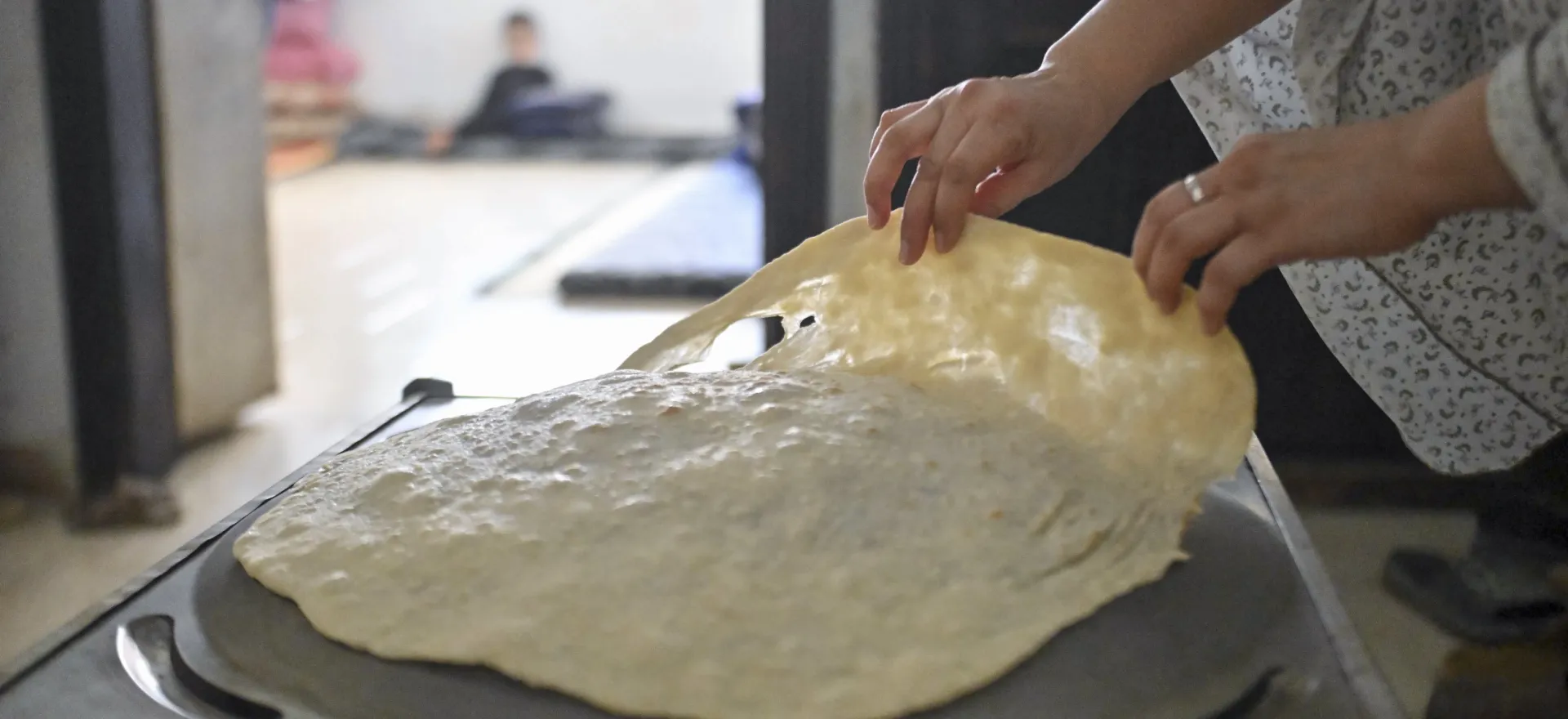
“When I started receiving the cash assistance, the nightmares began to ease. But the most important thing, I finally bought an oven so I can bake bread at home, especially maize bread for my children.”
- Manal, a mother of three from Deir-ez-Zor in eastern Syria, spent years moving her family across Syria, sleeping in the desert, under tents, and in damaged buildings, before settling in Shabaa four years ago.
UNICEF/UNI816684/Eiad Al-Akrad
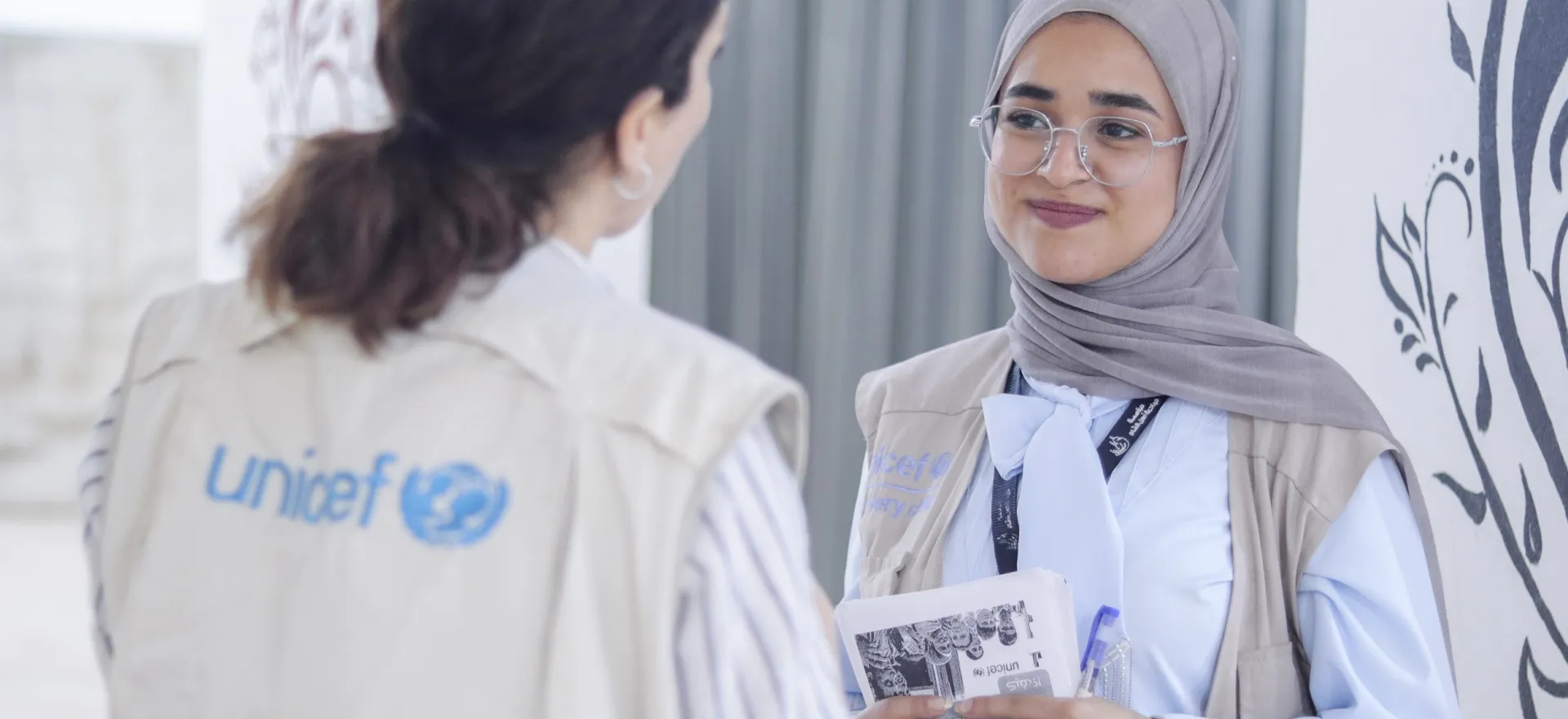
“Those courses helped me understand myself. During the life skills sessions, I discovered the roots of my fears.”
- Farah, 21, from Dar’a in southwestern Syria, grew up cocooned by an overprotective family, a childhood she now recognises left her socially ill-equipped and isolated. Today, Farah delivers child protection and protection from sexual exploitation and abuse awareness sessions at the same centre where her own recovery began.
From health and nutrition to education, water and sanitation, child protection and social protection, UNICEF collaborates with the Syrian government and other national and international partners, using a twin-track approach to its programming. This means scaling up humanitarian assistance in newly accessible areas while driving recovery and development by strengthening national systems and institutional capacity, shaping sector-wide policies, improving coordination, and helping rehabilitate critical social infrastructure.
The results belong to the Government of Syria and every partner, donor, civil society organization, community, and family that has put in immense dedication, effort and passion to protect the country’s children.
Together, we made sure children survived, learned, healed, and found reasons to hope.
Achieving results together in 2025
Results achieved together in 2025
The long war in Syria has compromised the health system. Half of all primary health-care facilities are not operational, and a severe brain drain has left just 20,000 doctors in the country, barely half the international standard.
In 2025, UNICEF worked closely with the Ministry of Health and partners to tackle Syria’s health crisis from different angles, responding to urgent needs while also addressing the deeper structural barriers undermining the health system and its services for children and women.
The numbers behind the impact in 2025
2.1 million children vaccinated through major immunization campaigns, backed by 14.9 million doses procured.
93,674 zero-dose children identified and reached with vaccines for the first time.
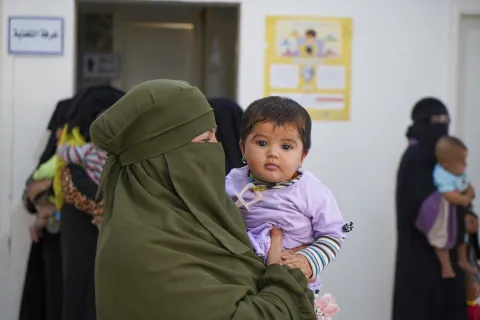
2.6 million children and 589,000 women able to access health care through 122 health centres and 87 mobile teams.
24 health centres rehabilitated; 2,744 health workers trained.
ECD services integrated into 79 primary health centres.
1.36 million children screened for malnutrition; 19,679 treated for severe wasting.
799,000 children reached with home food fortification.
658,000 pregnant and lactating women received anaemia prevention support.
2.3 million children reached through national vitamin A campaigns.
8,373 vulnerable households received nutrition-sensitive cash transfers.
98,000+ children reached by mobile health teams during emergencies (coastal violence, Lattakia wildfires, southern Syria hostilities).
For Syrian children already weakened by malnutrition and illness, drinking contaminated water can be fatal. With 13.6 million people in need of water and sanitation services, water systems running at less than half their capacity, and over 70 per cent of sewage discharged untreated, Syria is facing a water, sanitation and hygiene (WASH) crisis layered on top of every other crisis. UNICEF WASH programming in 2025 worked at every level of the system simultaneously.
The numbers behind the impact in 2025
4.1 million people provided with safe water through 60 rehabilitation projects.
2 million people in Aleppo, Deir-ez-Zor, Idleb, and Hama had water services restored.
15.4 million people protected from waterborne disease through sodium hypochlorite supply.
1.6 million people reached with sanitation services.
501,624 people in camps for internally displaced people and collective shelters received water and hygiene supplies and benefitted from facility maintenance.
1.5 million people-maintained access to safe water during March violence.
385,000 displaced people and residents reached during As-Sweida escalation.
The war has taken a heavy toll on Syria’s education system. Some 2.45 million children are out of school entirely, and over a million more are on the edge of dropping out School functionality remains a major challenge with nearly 8,000 schools are non-functional.
The longer a child stays out of school, the harder it is to come back, and the higher the risk of child labour, early marriage, or recruitment into armed groups.
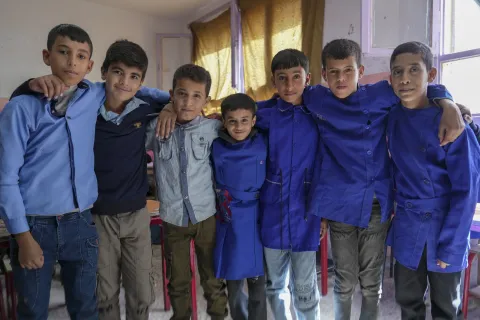
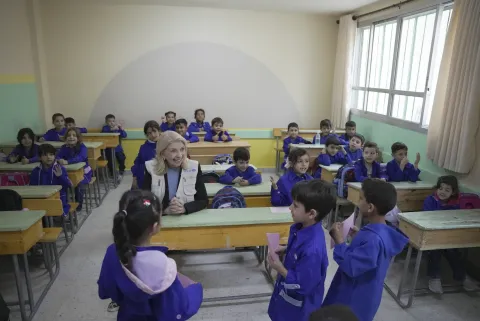
In 2025, UNICEF supported the Ministry of Education to get children back into classrooms while also building the systems that will keep them there. Across 14 governorates, girls and boys were reached through formal and nonformal education services in a massive push to keep learning continuous for children who have already lost years of their education. Schools were rehabilitated, prefabricated classrooms installed, and textbooks distributed.
The numbers behind the impact in 2025
3.7 million children, including over 1.8 million girls, reached with education services.
14,598 children reached through digital and distance learning.
717,669 students sat national examinations.
78 schools rehabilitated; 126 prefabricated classrooms installed; furniture provided for 225,859 children.
Nearly 2 million textbooks distributed.
20,353 education staff trained in psychosocial support, early childhood education, and safe school approaches.
41,000 children reached with temporary learning spaces following coastal violence.
73,163 children reached with emergency education services in As-Sweida.
After 14 years of war, trauma is prevalent among Syria’s children, according to a household survey carried out in northern Syria, with over a third of girls and nearly a third of boys reporting significant emotional distress. At the same time, nearly 300,000 unexploded ordnance devices lie scattered across fields, roadsides, and playgrounds, making Syria the second highest country in the world for ordnance casualties in 2025; one in three of them are children. According to United Nations figures, over 1,000 grave violations against children have been documented.
UNICEF’s child protection programming in 2025 was comprehensive.
The numbers behind the impact in 2025
918,484 girls and boys reached with child protection services.
68,274 caregivers participated in structured parenting programmes.
707,199 children received life-saving explosive ordinance risk education (EORE).
14,768 children received individual case management from 323 trained caseworkers.
1,157 humanitarian workers supported through well-being programmes.
4,276 frontline workers trained across child protection disciplines
178,965 children received community-based mental and psycosocial suport services (MHPSS).
214,899 children and 55,927 women reached with gender-based violence prevention programming.
In Syria today, there is almost no safety net for the most vulnerable families and children. Ninety per cent of the population lives in poverty, 1 in 4 adults is unemployed, and over a decade of conflict has gutted the social protection systems that families once relied on. For millions of households, a single setback such as a sick child or a sudden displacement is enough to tip a family into destitution.
In 2025, UNICEF’s social protection work focused on delivering cash to vulnerable families to cover their basic needs such as food, and hygiene, while also helping build sustainable national social protection systems.
The numbers behind the impact in 2025
86,708 people reached across 11 governorates through the Integrated Social Protection Programme.
6,367 children with disabilities received cash and referrals support.
80,341 people received cash transfers for basic needs.
41,274 people supported through nutrition-linked cash targeting children under the age of one and pregnant and lactating women.
Syria has a large and energized youth population, and in 2025, UNICEF partnered with the government to invest in their energy, ideas, and voices.
The numbers behind the impact in 2025
156,662 young people, including 6,095 with disabilities, reached with skills-building programmes.
140 young people trained in digital content creation and cultural documentation.
200 youths gained on-the-job training; 100 transitioned to full-time employment.
69,109 young people mobilized during emergencies.
221,587 young people engaged through 400+ civic initiatives.
In Syria, where needs are great and resources limited, UNICEF’s cross-sectoral work ensures that every intervention is amplified by communication, evidence, accountability, and coordination, reaching more children, more effectively, and leaving stronger systems behind.
The numbers behind the impact in 2025
Social and behaviour change
5.2 million people reached through health messaging and community dialogue.
2.4 million people reached through Back-to-School mass media campaign.
941 frontline workers trained on community engagement.
Advocacy and visibility
16 press releases, 50 stories, 90 photo albums, 44 videos published.
60,000 students enabled to sit national examinations through advocacy.
Accountability and protection
1.6 million beneficiaries, including 808,595 children, reached with PSEA awareness.
5,325 complaints and feedback cases managed; 99% resolution rate.
774 individuals trained on Accountability to Affected Populations.
Emergency preparedness
100% compliance with Emergency Preparedness Plan across all six field offices.
5 emergency response plans activated, including inter-agency drought response.
The circle of support
Governments
Australia, Austria, Bulgaria, Canada, Denmark, European Union, Estonia, Finland, France, Germany, Greece, Japan, New Zealand, Kingdom of the Netherlands, Norway, Republic of Korea, Spain, Sweden, Switzerland, United Kingdom, United States.
Private sector
LEGO Foundation
Multilateral
Global Partnership for Education (GPE), GAVI the Vaccine Alliance
UNICEF National Committees
Australia, Austria, Belgium, Canada, Denmark, Germany, Iceland, Ireland Italy, Japan, Republic of Korea, the Kingdom of the Netherlands, Spain, Sweden, Switzerland & Liechtenstein, and the United States.
Pooled funds
Central Emergency Response Fund (CERF) and the Syria Humanitarian Fund
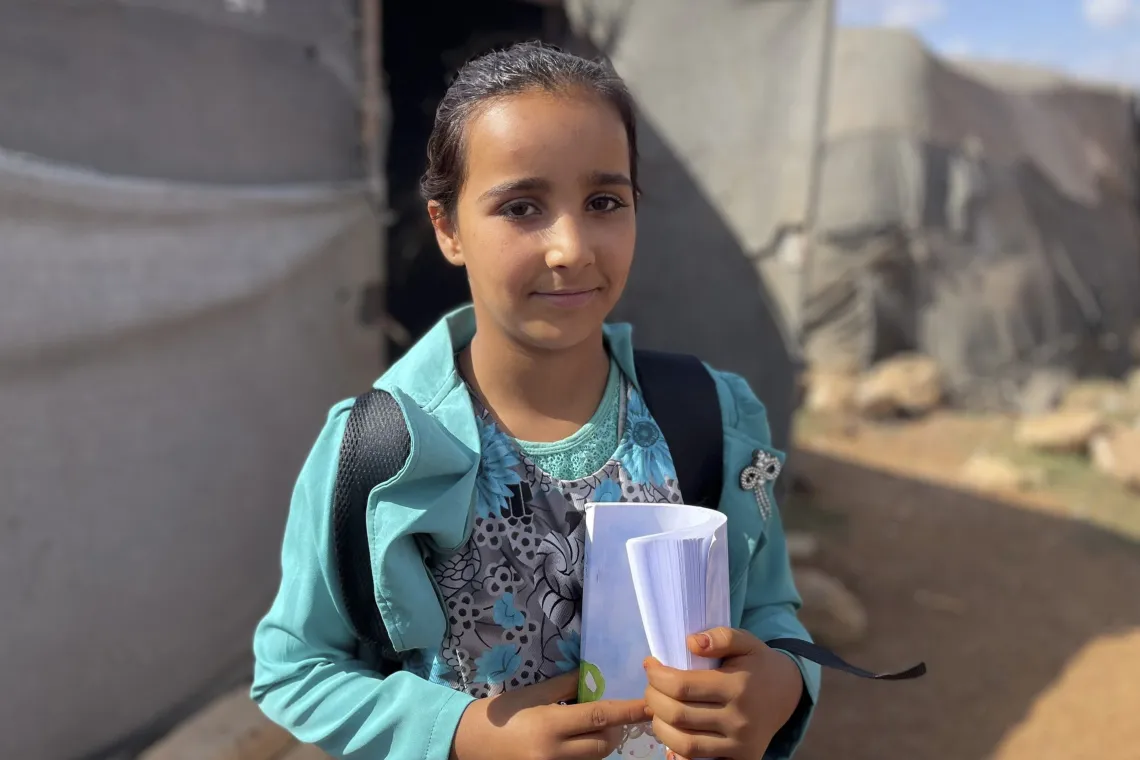
Join our circle of support
Help keep UNICEF delivering for the millions of vulnerable children and their families in Syria.
Make a donation or reach out to become part of our circle of support.
Highlights
After 14 years of conflict, 2025 marked a turning point for Syria, bringing renewed hope for recovery while millions of children continued to face immense challenges. Amid this transition, UNICEF worked alongside the Government of Syria and partners to deliver life-saving services while strengthening national systems for the future.
In 2025, 2.1 million children were vaccinated, 1.36 million children were screened for malnutrition, 4.1 million people regained access to safe water, 3.7 million children accessed education services, over 1.5 million people received child protection services and more than 80,000 vulnerable people received cash assistance.
This report showcases UNICEF's impact across health, nutrition, education, water and sanitation, child protection and social protection, while highlighting the partnerships and investments helping children survive, learn and thrive during a pivotal year for Syria.