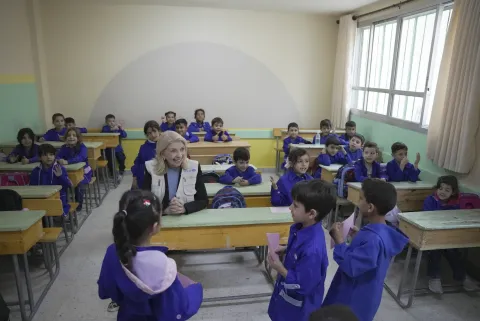
A better place to learn, return and rebuild

Through the PROSPECTS partnership, UNICEF is supporting children and communities with better access to safer and more inclusive education and opportunities as families return and rebuild their lives.

By: UNICEF Syria
Two girls sitting the front of a classroom filled students, take notes in their books on their desk.
UNICEF/UNI1033115/
09 November 2026

Al-Razi school, Al-Bahluniyah, rural Homs - In Homs Governorate, UNICEF’s rehabilitation of schools is helping children learn in safer, more inclusive and better-equipped environments.

Al-Razi Secondary School in Al-Bahluniyah village is one of the schools rehabilitated by UNICEF with support from the PROSPECTS Partnership. Serving students from Grades 7 to 12, the school had faced years of limited maintenance, water leakage and earthquake-related damage. Classrooms had damaged walls and ceilings, sanitation facilities were in poor condition, and frequent electricity cuts disrupted the school day. For children with disabilities, the lack of accessible facilities created additional barriers. 

“Before the rehabilitation, the school faced serious challenges. Damaged classrooms, insufficient student seating and muddy access pathways during winter made it difficult to provide a suitable learning environment for our students,” said Ahmad, the School Principal. 

With support from the PROSPECTS Partnership, UNICEF repaired and repainted classrooms, waterproofed roofs and refurbished desks and other school furniture. Water and sanitation facilities were improved and expanded, while accessible facilities and ramps are making the school easier to navigate for children with disabilities.

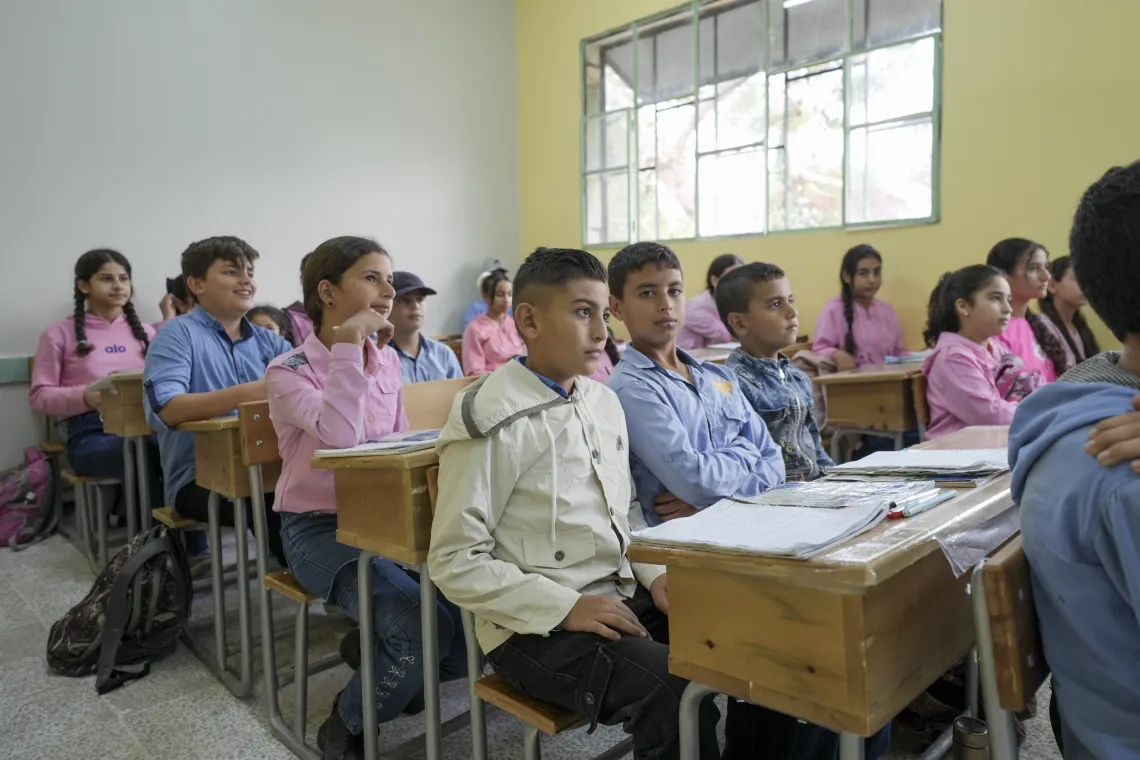
A classroom filled with young students sitting at their desks laden with open books. A classroom filled with young students sitting at their desks laden with open books.
UNICEF/UNI1033119/ Grade 7 students attend an Arabic lesson in their classroom at Al-Razi School in Al-Bahluniyah village, rural Homs. “Now our classrooms are in much better condition. It feels good to learn in a clean and colourful environment,” said Hassan, 13, one of the students.
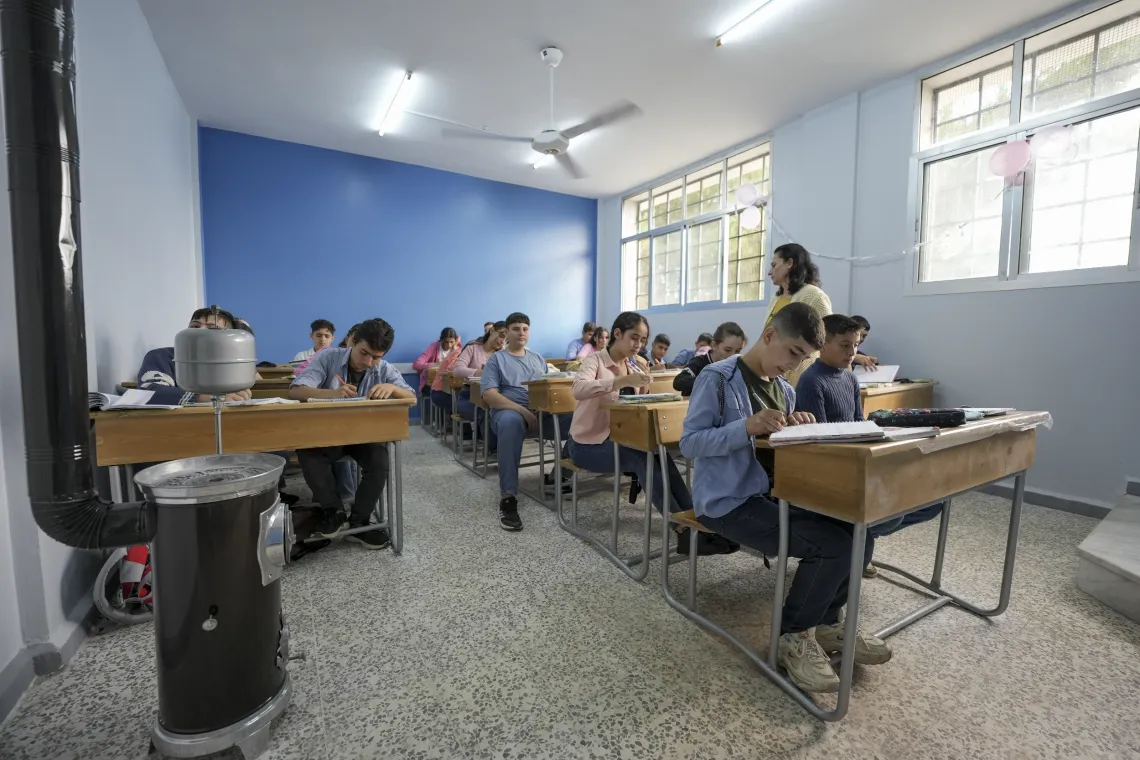
A classroom filled with students sitting at desks and a teacher standing between them. The front of the class has a stove to heat it. A classroom filled with students sitting at desks and a teacher standing between them. The front of the class has a stove to heat it.
UNICEF/UNI1033147/ Grade 9 students attend a science lesson in their classroom at Al-Razi School in Al-Bahluniyah village, rural Homs. “The school is now in its finest state. It really lifts one’s spirits. Before, conditions were difficult, with students without desks, overcrowded classrooms and no heating. It was a very poor learning environment,” said their teacher, Etab.

A solar energy system provides a more reliable source of electricity, while improvements to lighting, ventilation and the school grounds are creating a more welcoming environment for learning.

The improvements extend beyond the classroom. A new entrance and improved access pathways make it easier for students to reach the school, while a new basketball court gives them more space to play, interact and take part in physical activities.

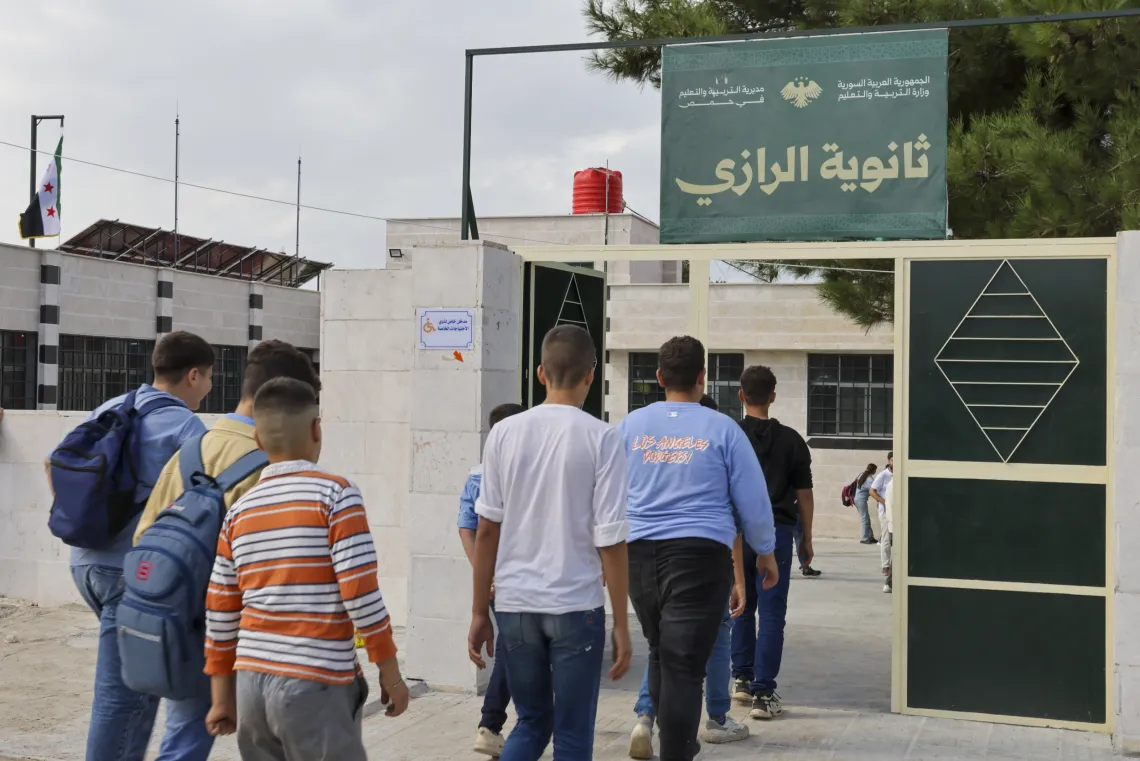
Boys and youth walk through the gates of a school. Boys and youth walk through the gates of a school.
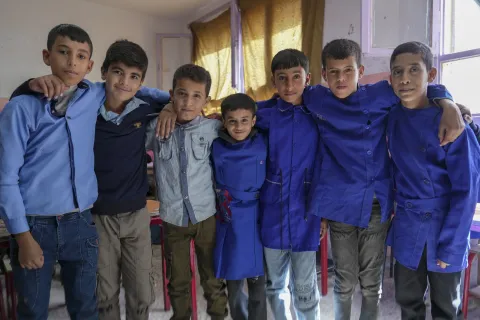
UNICEF/UNI1033149/ Students arrive at Al-Razi School in Al-Bahluniyah village, rural Homs.
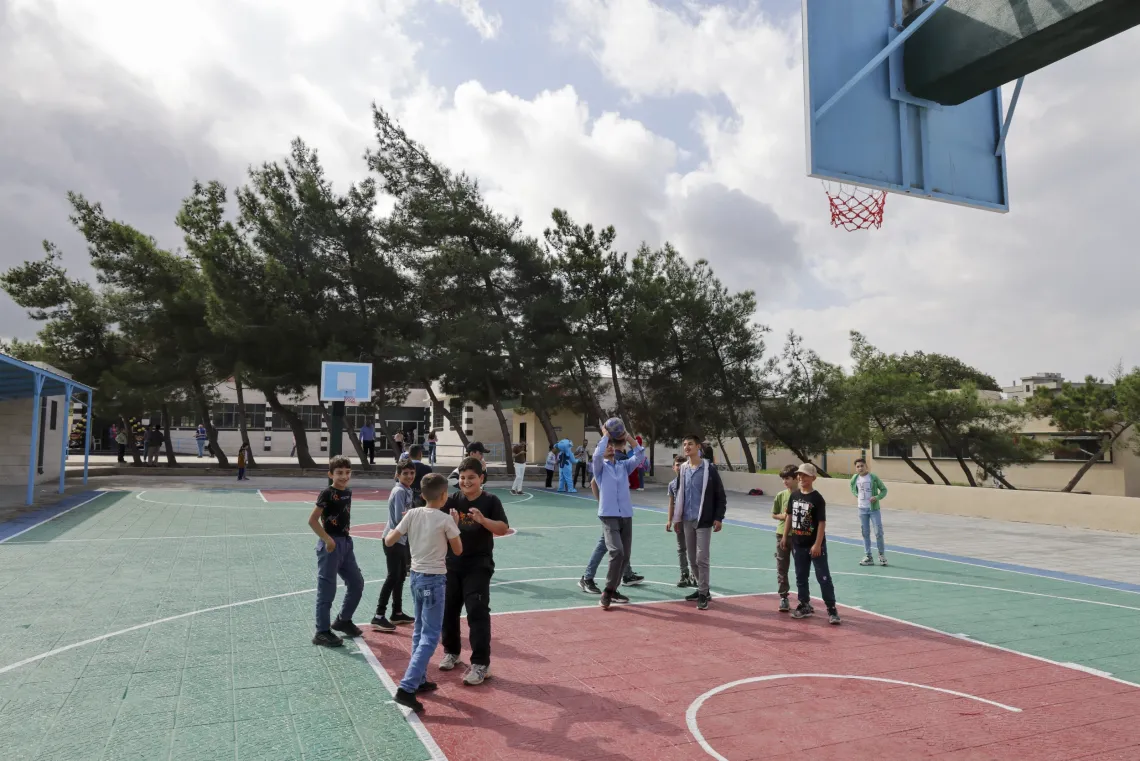
Children play on a basketball court in a schoolyard. Children play on a basketball court in a schoolyard.
UNICEF/UNI1033118/ Students play on the basketball court at Al-Razi School in Al-Bahluniyah village, rural Homs. “The improvements have made a real difference to our school. Our students now have a more welcoming environment, and we have seen greater enthusiasm for learning,” said Ahmad, the school principal.

“The improvements have made a huge difference to our school. Our students now have better classrooms, adequate seating, improved sanitation facilities and a more welcoming environment. We have also seen greater enthusiasm among students and a more positive atmosphere for teaching and learning,” said Ahmad.

The improvements come as the school welcomes more children. Enrolment has increased from around 260 students before the intervention to approximately 338 today, including children who have returned to Syria or arrived from other areas, particularly from Lebanon.

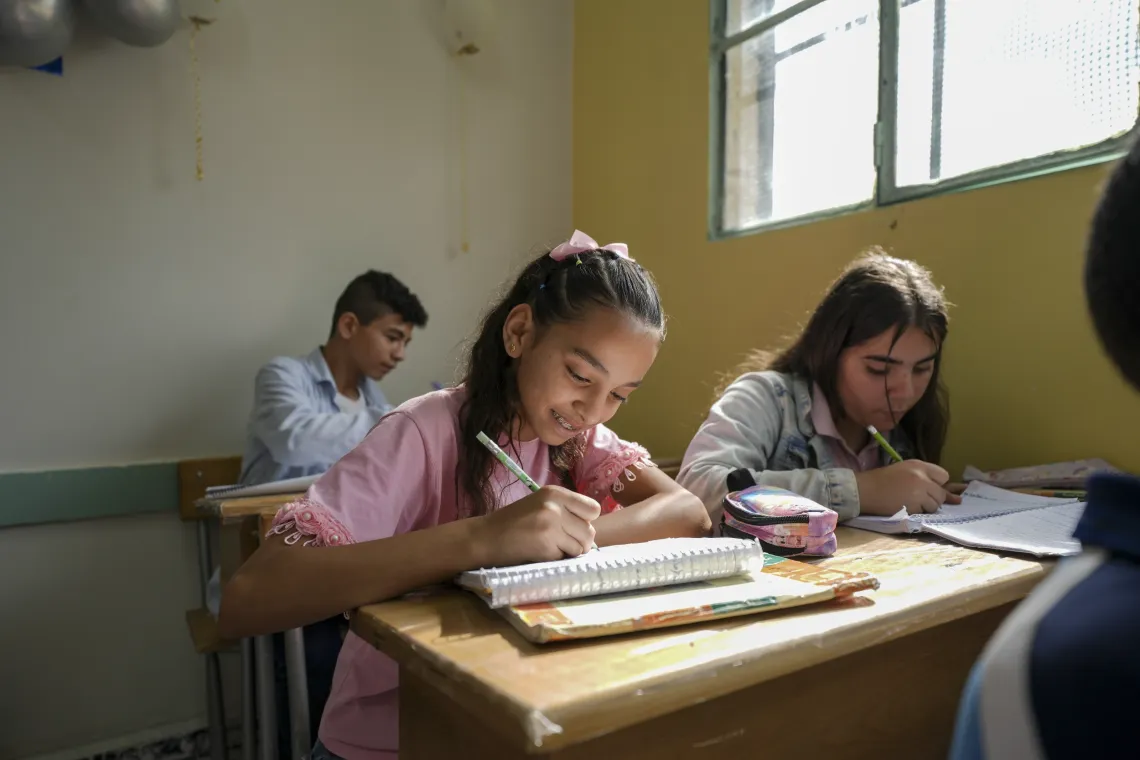
Two girls sit next to each other at a desk in class, with a boy sitting behind them. The children are writing in books on the desk and sun shines brightly through a window on the girls. Two girls sit next to each other at a desk in class, with a boy sitting behind them. The children are writing in books on the desk and sun shines brightly through a window on the girls.
UNICEF/UNI1033146/ Celena, 13, attends an Arabic lesson in her classroom at Al-Razi School in Al-Bahluniyah village, rural Homs. “I want to become a teacher in the future and teach children at this school. For me, it has become the best school in the world,” she said.
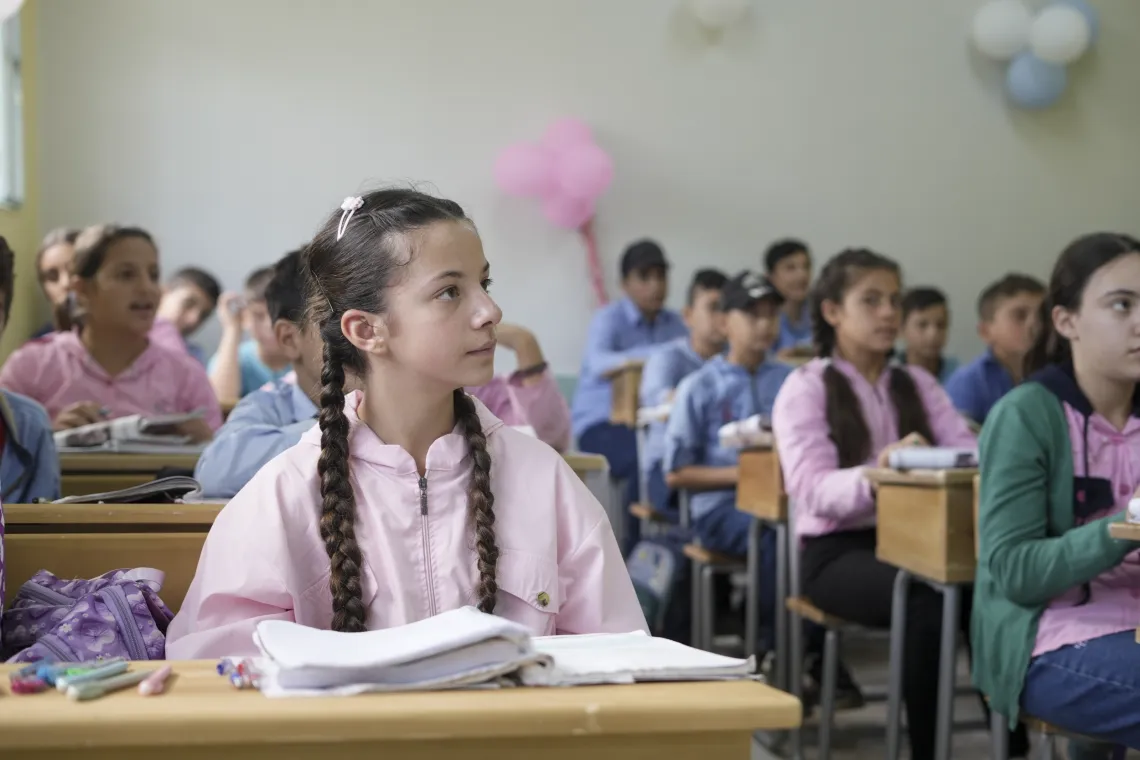
A girl with long braids and wearing a pink sweater, sitting in the front of a class filled with learners, looks to side with a smile. A girl with long braids and wearing a pink sweater, sitting in the front of a class filled with learners, looks to side with a smile.
UNICEF/UNI1033152/ Lamar, 13, attends an Arabic lesson in her classroom at Al-Razi School in Al-Bahluniyah village, rural Homs. “I have the school of my dreams. For me, it has become the best school in town,” she said.
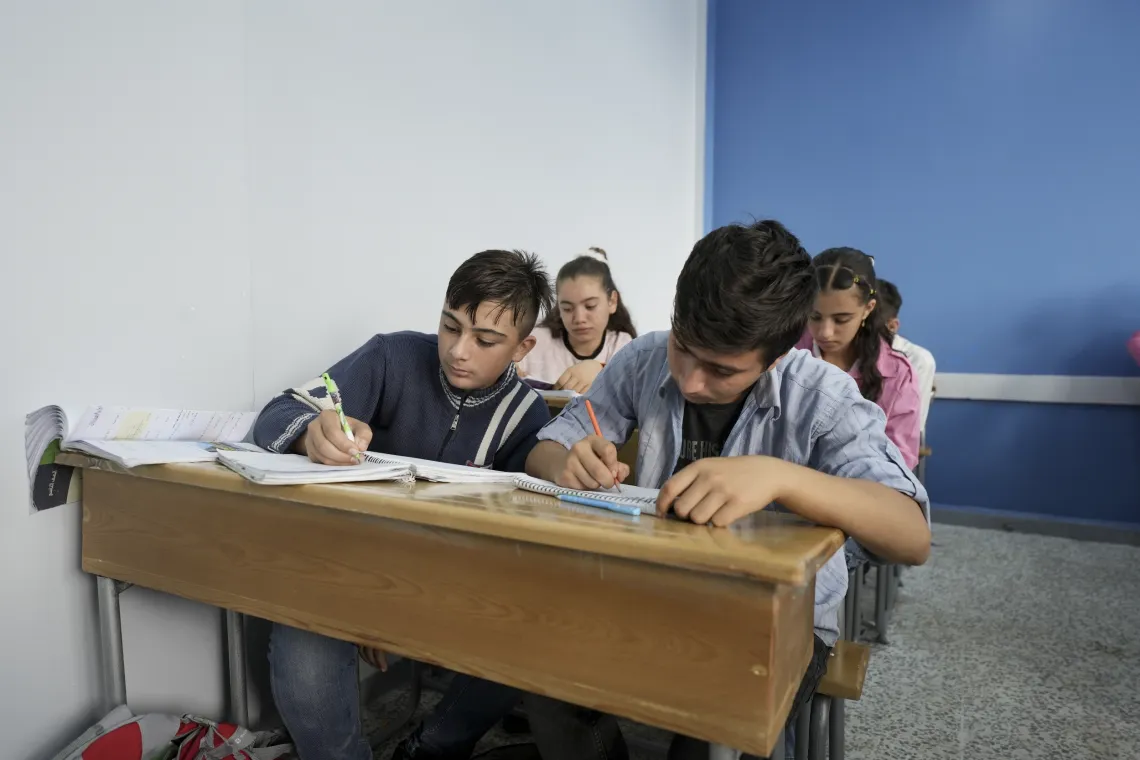
Two boys sit at a desk in class writing in their books. Two girls sit behind them at a desk. Two boys sit at a desk in class writing in their books. Two girls sit behind them at a desk.
UNICEF/UNI1033117/ From right to left: Rabee, 15, and Raoul, 15, attend a science lesson in their classroom at Al-Razi School in Al-Bahluniyah village, rural Homs. “I feel supported at school this year. The lighting has improved, the desks are comfortable and the class sizes are manageable, all of which help me focus better on my studies,” Rabee said.
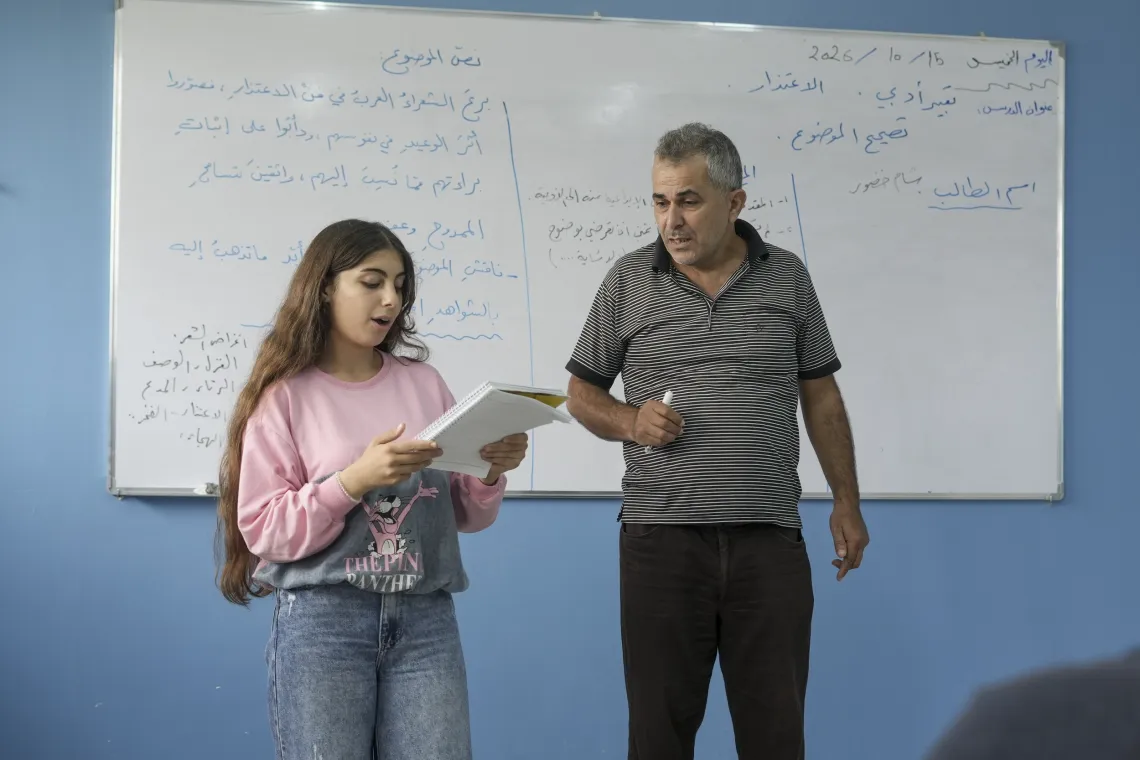
A girl wearing a pink sweater and jeans, with long loose hair stands in front of a white board in a classroom, with a teacher standing slightly behind her, looking at what she is reading for a large sheet of paper. A girl wearing a pink sweater and jeans, with long loose hair stands in front of a white board in a classroom, with a teacher standing slightly behind her, looking at what she is reading for a large sheet of paper.
UNICEF/UNI1033114/ Sham reads her Arabic essay in front of her teacher and her classmates at Al-Razi School in Al-Bahluniyah village, rural Homs. “Everything about school is special this year, and both students and teachers are encouraged to give our best,” she said.

For students, teachers and the wider community, the rehabilitation of Al-Razi Secondary School is about more than repairing a building. With UNICEF’s support, the school is once again a place where children can learn, build friendships and regain a sense of stability and belonging.

Through the PROSPECTS partnership, supported by the Government of the Netherlands, UNICEF is helping children and young people in Syria, particularly returnees and vulnerable communities, rebuild their lives and look towards the future. By improving learning environments and expanding access to education and skills, the invaluable partnership is creating opportunities for children and young people while strengthening social cohesion and community resilience.