Syrian Arab Republic launches coordinated public health response following poliovirus detection in Deir-ez-Zor
Joint press release by the Ministry of Health, World Health Organization and UNICEF
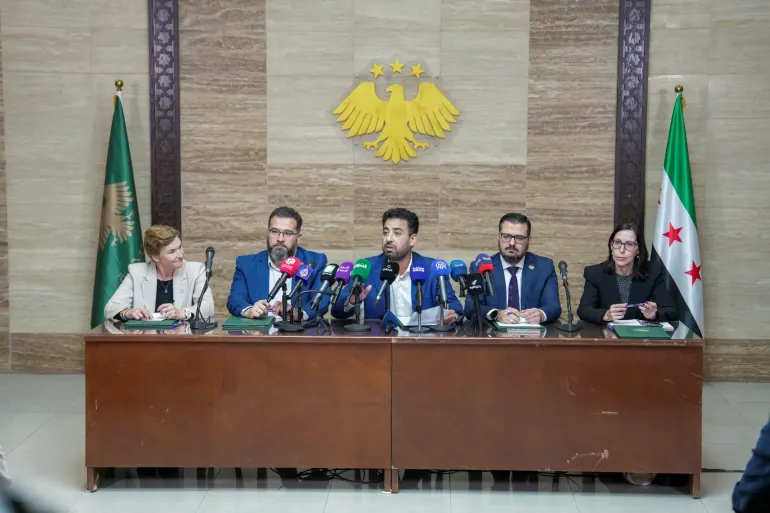
- English
- العربية
9 November 2026, Damascus, Syrian Arab Republic – The Ministry of Health is strengthening vaccination and surveillance activities to protect children following the detection of poliovirus type 1 (VDPV1) in two children aged between 6 and 13 months who developed paralysis in Deir-ez-Zor Governorate.
The Ministry, supported by the World Health Organization (WHO), the United Nations Children’s Fund (UNICEF) and other partners, has already begun vaccination activities in affected areas and is preparing further campaigns. Families are encouraged to check their children’s vaccination records, complete all recommended doses and participate in campaigns targeting their children.
Polio can cause permanent paralysis, but it can be prevented through vaccination. Completing the recommended doses helps protect children, and high vaccination coverage helps stop the virus from spreading. Additional doses offered during campaigns strengthen protection; they do not replace routine childhood vaccinations.
Disruptions to health services and difficulties accessing routine immunization have left gaps in protection in some communities. The response focuses on reaching children who have missed vaccinations and on helping families access reliable information and essential health services.
Following initial reports of suspected cases on 11 October 2026, health teams conducted a vaccination campaign on 18 October, reaching more than 34 000 children under five in affected areas of Deir-ez-Zor. A further campaign is planned for next week, with additional rounds and locations to be determined through ongoing assessments. The Ministry will announce the areas covered, eligible age groups and how families can access vaccination services.
“Vaccination is one of the most important steps families can take to protect their children from polio. We encourage parents and caregivers to complete their children’s recommended vaccinations and cooperate with health teams during upcoming campaigns. Our responsibility is to reach children who need protection and keep the public informed. We will provide regular updates on the situation and our response. The awareness and cooperation of our communities is essential to these efforts.”
The Ministry, with support from WHO, UNICEF and partners, is strengthening surveillance and conducting field investigations to identify any further cases, assess the risk of transmission and guide vaccination activities.
Alongside this response, efforts continue to restore essential health services.
The number of operational primary health care centres in Deir-ez-Zor has increased from 40 to 87, and the plan is to increase the number to 124 to help more families access routine immunization and primary care. Particular attention is being given to communities that have faced prolonged difficulties accessing services so that children can receive care regardless of where they live.
Syria’s experience in stopping poliovirus outbreaks in the past, including during years of conflict, underscores the value of coordinated health action and community participation in protecting children.
“Polio can be stopped, but we must close immunity gaps and reach every child. WHO is working with the Ministry of Health and partners to support a rapid, coordinated response.”
“Every child deserves protection from preventable diseases, including polio. UNICEF remains committed to supporting the Ministry of Health and partners in strengthening immunization services and ensuring that no child is left behind.”
The Ministry will provide regular public updates on the epidemiological situation, response activities and upcoming vaccination campaigns. Updates will distinguish confirmed findings from information still under investigation and explain any changes to the response as assessments progress.
Parents and caregivers are encouraged to:
- visit their nearest health centre to check their children’s vaccination status and complete any missed doses;
- participate in upcoming vaccination campaigns according to the announced age groups and health team guidance, including when children have previously received polio vaccines;
- seek medical attention immediately if a child develops sudden weakness or paralysis in a limb; and
- ask health workers about vaccination and follow updates from the Ministry of Health and trusted health authorities.
Media and community leaders can support these efforts by sharing accurate information, publicizing vaccination arrangements and helping answer families’ questions.
The Ministry of Health, WHO, UNICEF and partners will continue working together to stop poliovirus transmission, strengthen routine immunization and support sustained access to essential health services across Syria.
Media contacts
About UNICEF
UNICEF, the United Nations agency for children, works to protect the rights of every child, everywhere, especially the most disadvantaged children and in the toughest places to reach. Across more than 190 countries and territories, we do whatever it takes to help children survive, thrive, and fulfil their potential.
Follow UNICEF Syria on Facebook, Instagram, LinkedIn X, and YouTube.