Working to build classrooms for IDP children in South Darfur
Children living in El-Serif IDP camp want to learn; UNICEF is helping them get a better learning environment.

- English
- العربية
El Serif IDP camp is one of the many IDP camps in South Darfur state. Located on the outskirts of Nyala, the state’s capital, El Serif IDP camp has become home to approximately 33,000 IDPs. The IDP community has 15,834 children under the age of 17 who escaped their homes during different bouts of violence insecurity in the state.
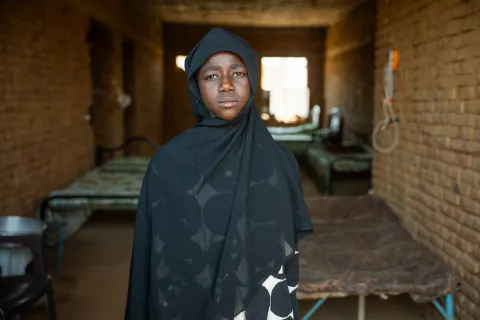
Muna Ishaq Abdalla, now 14 years old, has not known any other home.
“I was born here in El Serif IDP camp. All my family members are now here. I studied here from pre-school and now I am in Grade 8 waiting to do my exams this year,” she says.
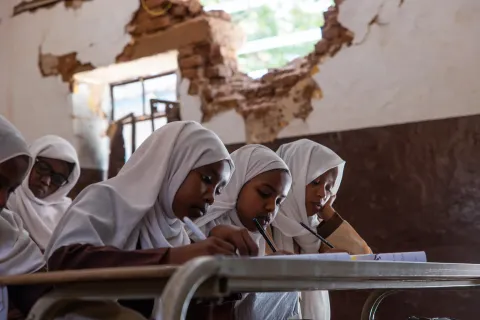
Muna attends El Serif A primary school, one of the primary schools in the IDP camp. The school was established in 2003 to cater for the educational needs of IDP children arriving with their families due to conflict-related displacement. The school is host to 1,200 school children, including 620 girls, and 28 teachers.
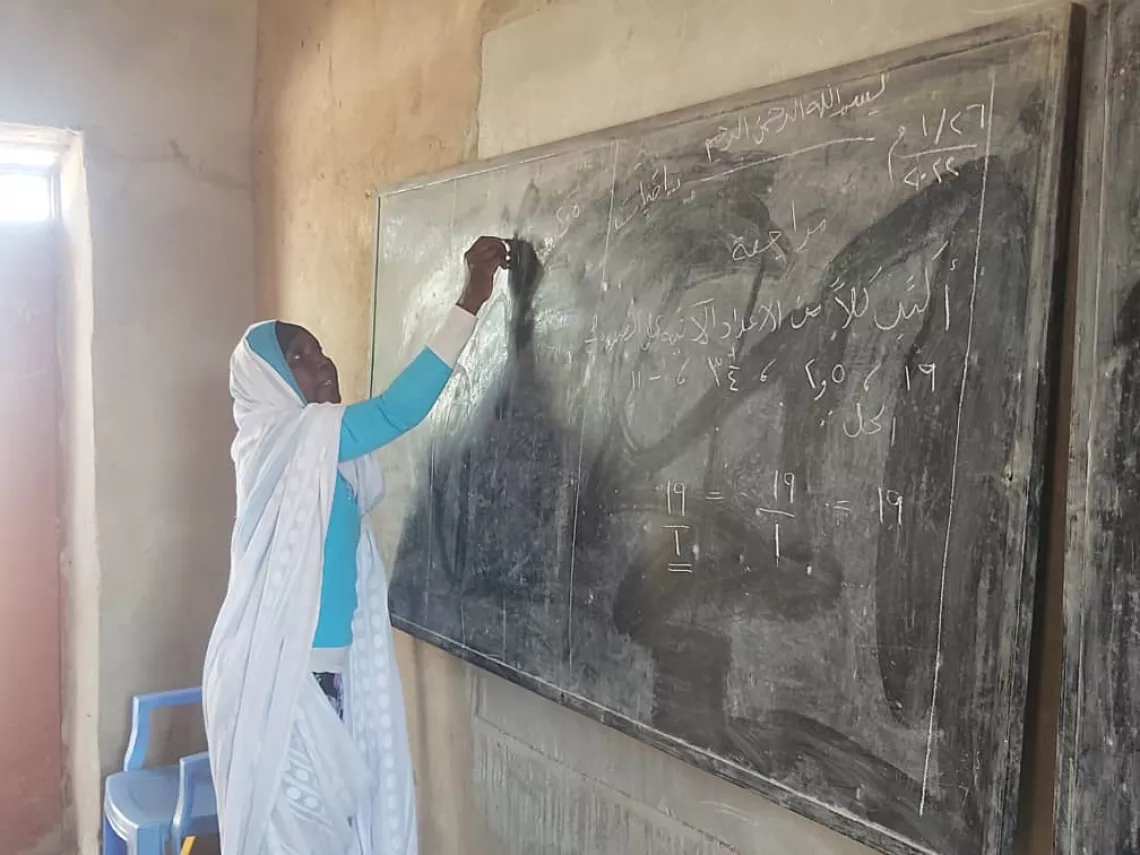
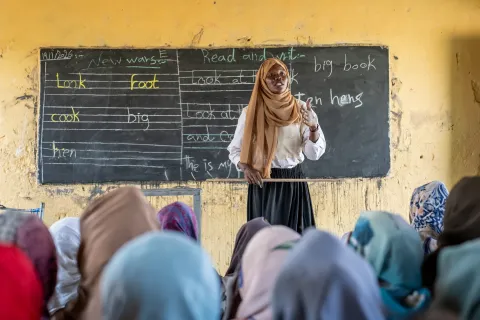
Khadija Daud Ahmed is the school principal, and she has been teaching in this school for over ten years. “The first classrooms were under trees, with no desks. Then well-wishers and the community pooled resources to construct traditional structures which we used as classrooms. They were not very good, but better than under the trees.” she adds.
“Lessons end when it gets too hot. Or when it starts to rain. The dust would get into the classrooms, resulting in irritation and breathing problems,” explains Elfadil Mohamed Ibrahim, another student who is now in eighth grade at El Serif Primary School.
Through advocacy and support from UNICEF and the State Ministry of Education, the school is gradually phasing out the temporary learning structures and replacing them with permanent ones. With funding from Muslim World League, UNICEF in partnership with the Ministry of Education has supported the construction of an additional two classrooms and a block of ten ventilated improved pit (VIP) latrines. In addition, UNICEF has provided the school with supplies including chalk, chairs, seating mats, filing cabinets and other teaching, and learning material. The UN World Food Programme (WFP) has also supported with the construction of four new permanent classrooms.
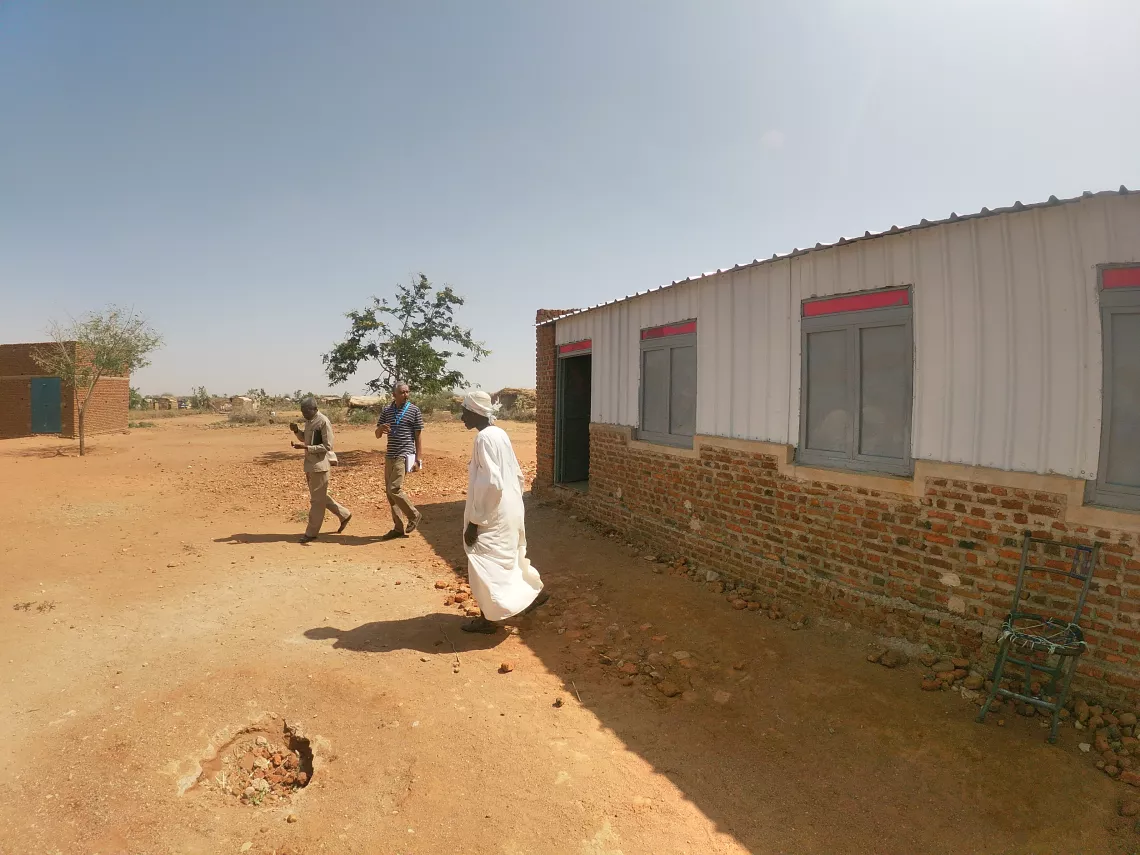
“We are really grateful. We are now able to learn in better, safe and dignified environment,” says Muna. “With the improved school environment and quality of teaching and learning, I am confident I will pass my grade eight exams. I want to become a doctor when I grow up, and I know that education will help me achieve that. There are so many sick people in my community with few doctors. I want to one day come back and treat them,” she concludes. Although the school has seen changes, there are still areas that need improvement.

“There are still four temporary classrooms in the school. Some learners still sit on the floor due to shortage of desks. We hope this will be addressed soon. We promise to make this school a center of excellence in South Darfur. Maybe even in the whole of Sudan,” said Khadija, confidently.
We are grateful to Muslim World League for their partnership which enables UNICEF to reach out to more than 90,000 IDP children and their families in South Darfur state.