Restoring school and learning in Sudan
“I like learning here because the teachers are patient and supportive,” Manahil.
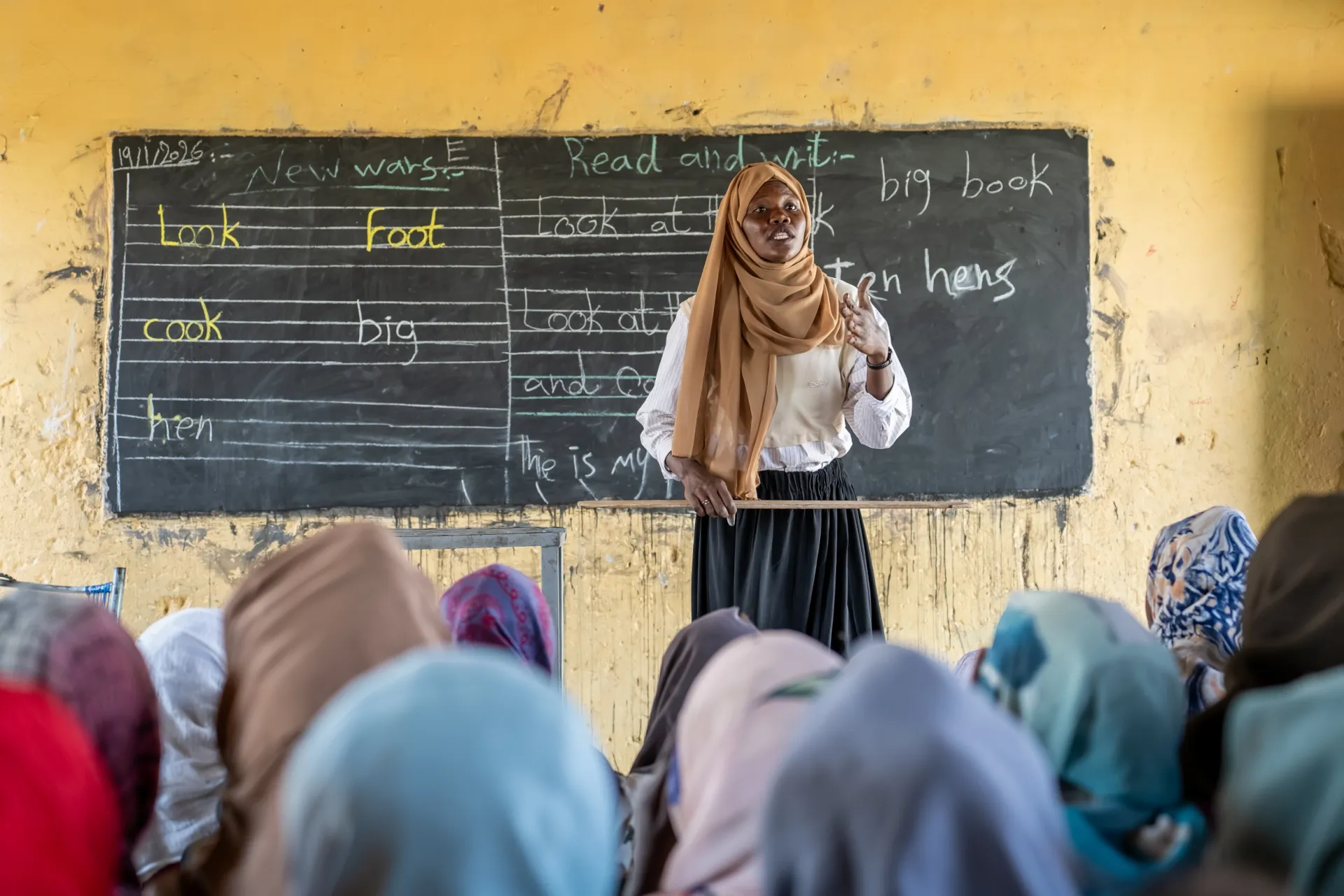
In Gedaref State, school grants under the Sudan Primary Education Emergency Support Project (SPEEP) are transforming classrooms and giving children a reason to return to school.
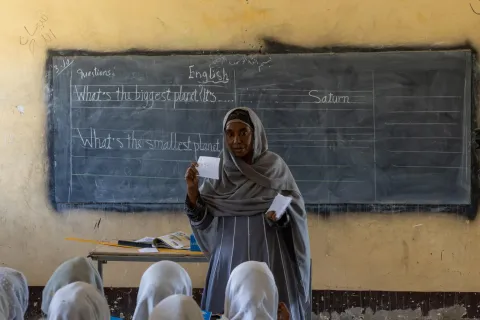
In a modest Grade 3 classroom at Alban Jadeed Mixed Primary School in Gedaref, about 50 students repeat English words in chorus.
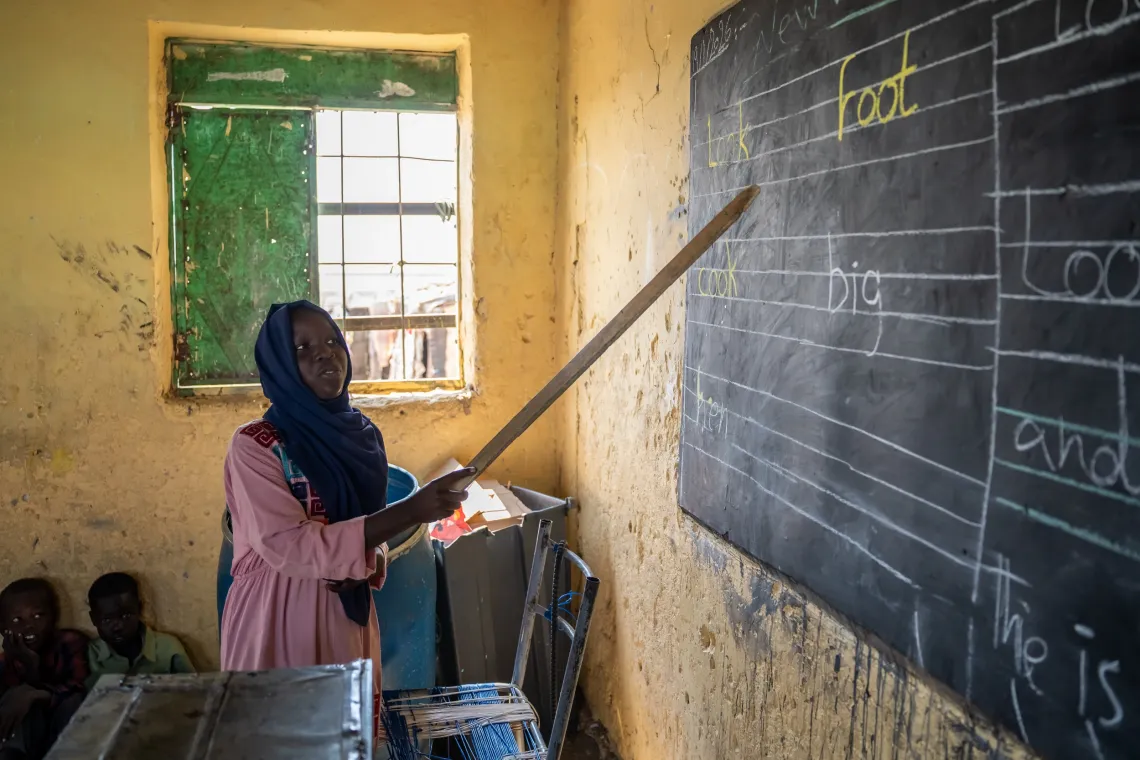
“Look, book, cook, foot,” teacher Reem calls out, her voice steady and encouraging.
Fourteen-year-old Reem, who shares her teacher’s name, walks to the front holding a long stick. She points to each word on the blackboard as her classmates follow along, then moves on to simple sentences.
For children who have lived through repeated disruptions to their education since conflict erupted nearly three years ago, moments like this matter. Today, they are catching up on what they lost – one lesson at a time.
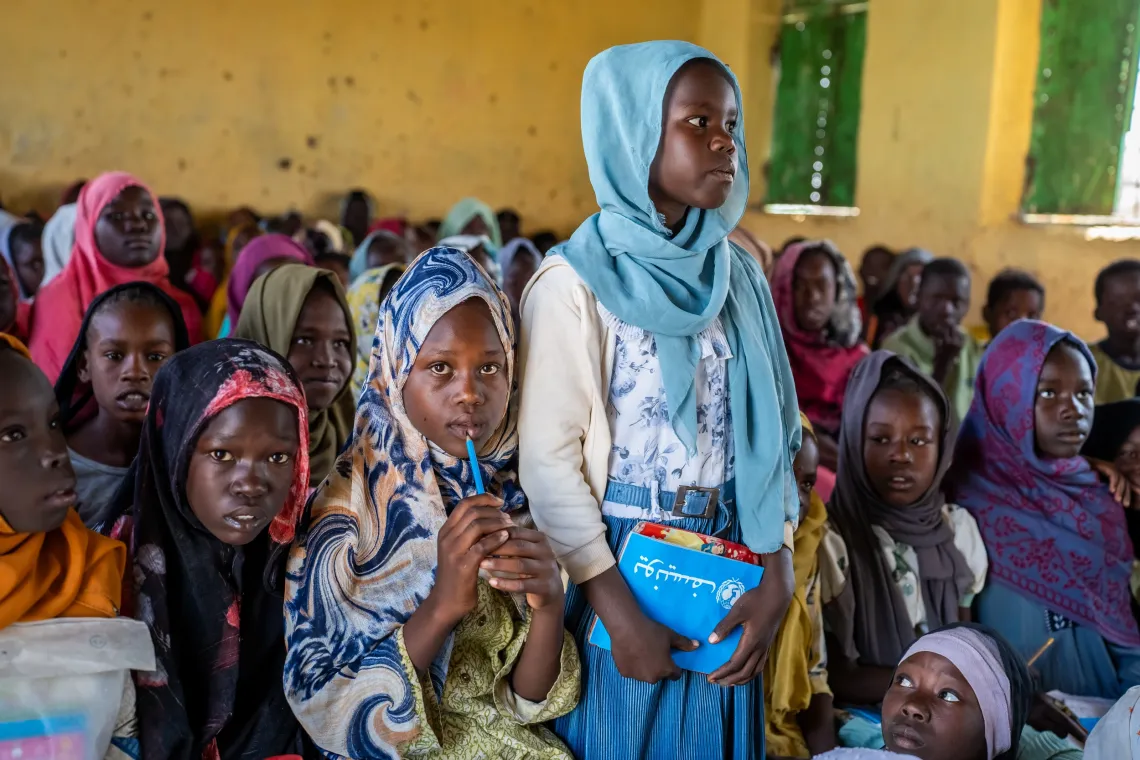
Catching up after years of disruption
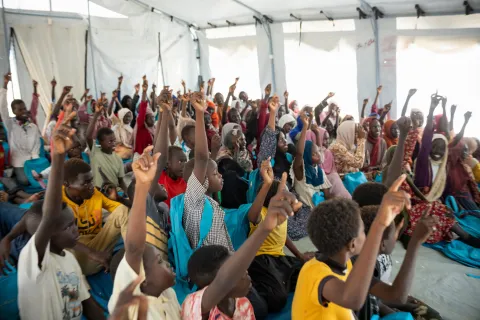
Across the school compound, other classrooms are also full. It is officially the holiday season, but learning has not stopped.
Under the UNICEF-supported Alternative Learning Programme (ALP) catch-up classes, teachers continue working with children who missed months or years of schooling because of displacement, insecurity or damaged schools.
“They are now comfortable with the alphabet, so today we are learning how to build words and simple sentences,” Reem explains, smiling at her students.
The demand is high. In many neighbourhoods across Gedaref, large numbers of children remain out of school, making accelerated learning programmes essential to prevent a generation from falling permanently behind.
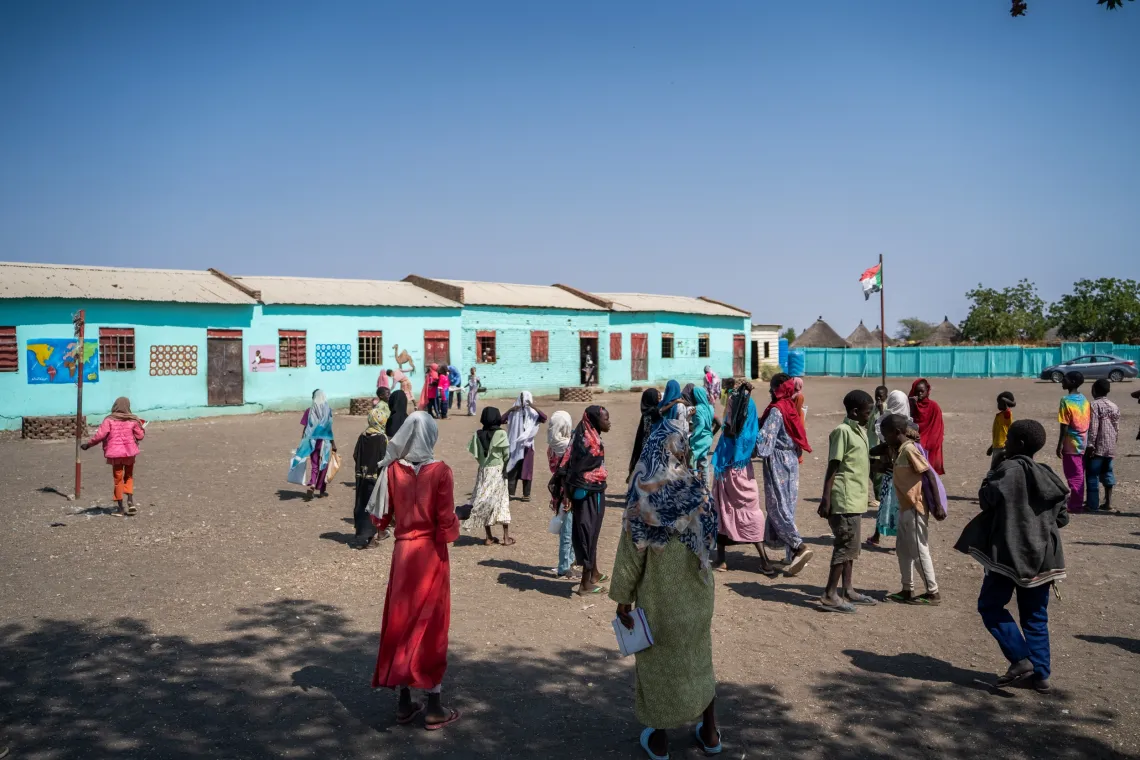
When schools became shelters for displaced families
Three years ago, Alban Jadeed school offered a very different environment.
“We had enough desks, chairs and fans,” recalls school principal Wati Aldin. “The enrolment was smaller, and classrooms were in good condition.”
Then war broke out. As families fled violence in other parts of the country, the school like many across Sudan, became a shelter for displaced people seeking safety.
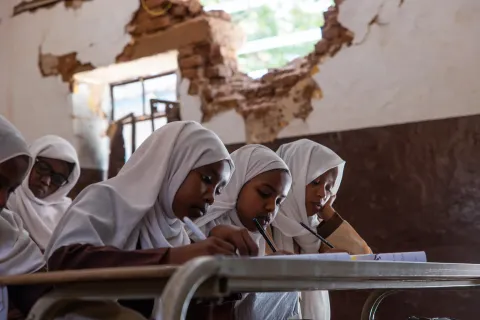
“The families cooked inside classrooms,” Wati Aldin says. “The walls, floors, windows and doors were badly damaged.”
When lessons eventually resumed, many rooms were barely usable.
“We sat on the floor, sometimes on mats,” remembers Rajabiya, a Grade 3 student. “The ground was very hard. It hurt.”
Some children never returned. Others dropped out after only a few weeks.
A children’s crisis and a learning crisis
The crisis in Sudan is first and foremost a children’s crisis.
After almost three years of conflict, millions of boys and girls have been deprived of education, protection and basic services. An estimated eight million school-aged children are currently out of school, while hundreds of classrooms across the country have been damaged, looted or used as shelters for displaced families.
Yet even modest investments can make a powerful difference.
In 2025, Alban Jadeed received a school grant through the Sudan Primary Education Emergency Support Project (SPEEP) – funded by the Global Partnership for Education (GPE), managed by the World Bank, and implemented by UNICEF.
The project supports reopened schools by providing school grants and strengthening school management committees to effectively manage school grants, develop School Improvement Plans, and prioritize urgent needs that improve the school environment, enhance teaching and learning, and ensure that children affected by the conflict can continue their education.
“That grant helped us change the school completely,” Wati Aldin says.
Small grants, big impact
Following the training of the school improvement committee – made up of school headmaster and parent–teacher representatives – they developed their school improvement plans identifying the most urgent priorities.
The committee agreed to focus on the following actions:
- Minor rehabilitation and repainting of classrooms.
- Repairing doors and windows.
- Procuring benches.
- Constructing a protective fence around the school compound.
- Purchasing teaching and learning materials.
- Providing incentive payments for teachers
The results were immediate.
Enrolment climbed from about 600 to more than 900 students, including children from displaced families, now accounting for around 20 per cent of learners.
“Before the grant, only 20 per cent of children sat on benches,” Wati Aldin says proudly. “Today it is more than 80 per cent.”
“Children who left because the environment was poor have come back. Retention has improved because the school is safer and more attractive.”
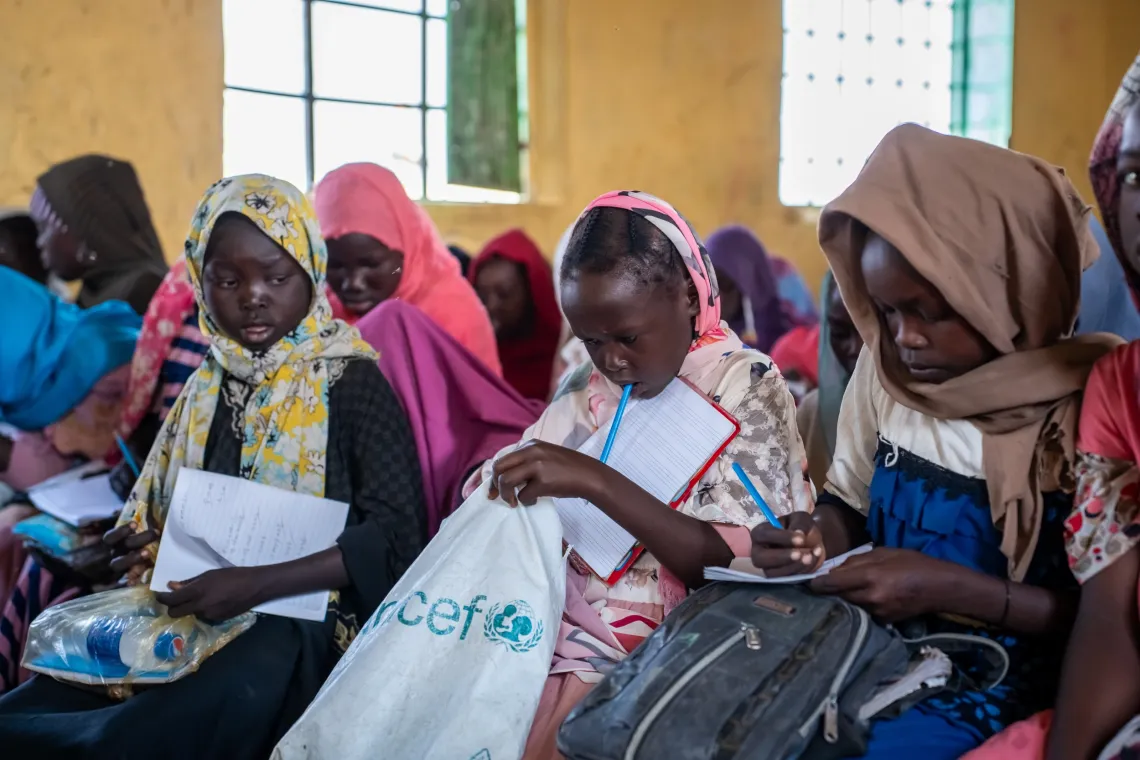
Classrooms that welcome children back
For the students, the changes are tangible.
“I am happy we now have benches, but we still need more,” says Reem, who was displaced from Khartoum with her family.
Manahil, another student, values something less visible. “I like learning here because the teachers are patient and supportive,” she says. “They take time to explain when we don’t understand.”
Rajabiya, who dreams of becoming an engineer, sees school as a bridge to a better future.
“Education is important to me because it will help me achieve my dreams,” she says. “I could become an engineer, a doctor or a teacher.”
Nearby, Khadija leans forward shyly and whispers, “I can now read and write.”
Alongside school minor rehabilitation to improve the school environment, through the school grant is also providing teaching and learning material, exercise books, pencils, pens and chalk to help teachers run engaging lessons.
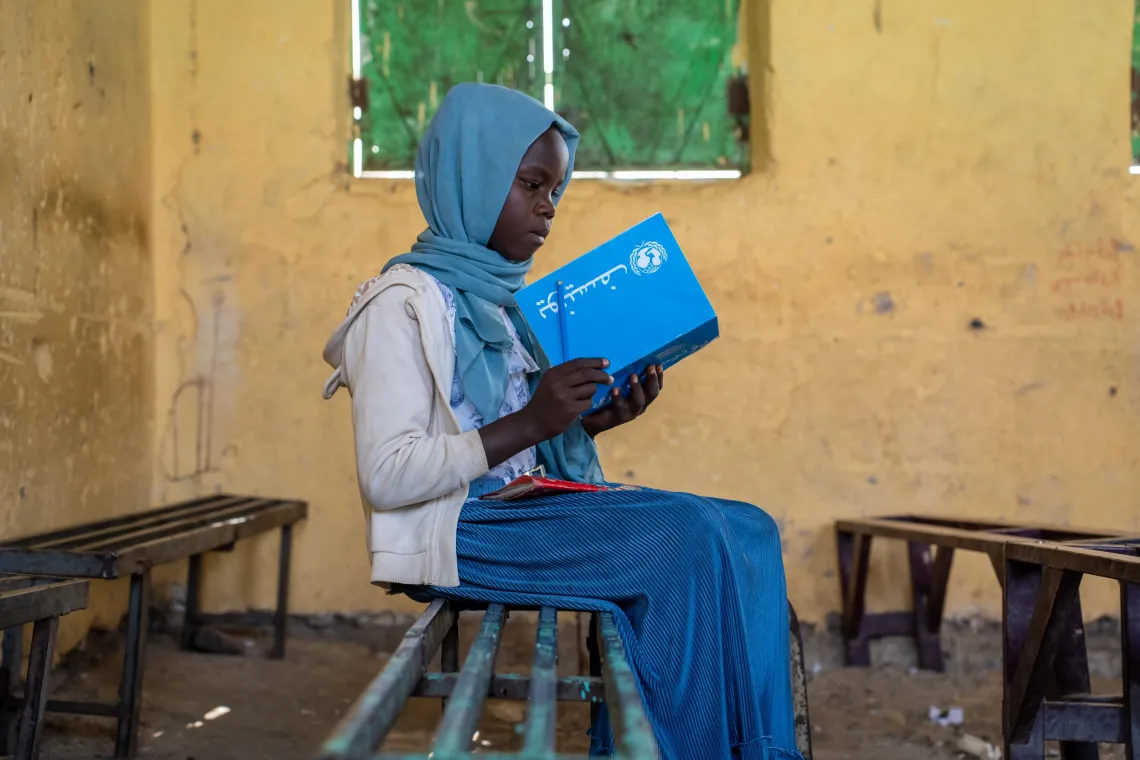
“I like learning here because the teachers are patient and supportive,” Manahil.
Restoring hope through education
Reem, Manahil, Rajabiya and Khadija are just four out of hundreds of children now attending Alban Jadeed every day.
Thanks to targeted investments through the SPEEP and the support of the GPE, their classrooms are once again places of safety, dignity and possibility.
In a country where conflict has stripped so many children from normal childhoods, restoring schools is about more than bricks and benches.
It is about protecting futures – and giving children the chance to learn, to stay in school, and to dream again.