The people behind the reach
Five UNICEF colleagues share the people, moments and purpose behind their humanitarian work in Sudan

- English
- العربية
Humanitarian work if often measured in what reaches a child: a vaccine, a learning opportunity, safe water, health care or protection.
Behind every service is a person helping make it possible.
In Sudan, where conflict has made reaching children and families harder and, at times, dangerous, humanitarian workers continue to find ways to deliver. Some work directly with communities. Others keep teams safe, manage resources, solve operational challenges or make sure colleagues can reach where they are needed most.
For World Humanitarian Day, we meet five UNICEF colleagues and hear, in their own words, what brought them to this work – and what keeps them going.
"One day, I will join UNICEF," Hind Elbaqir, Health Officer, Darfur
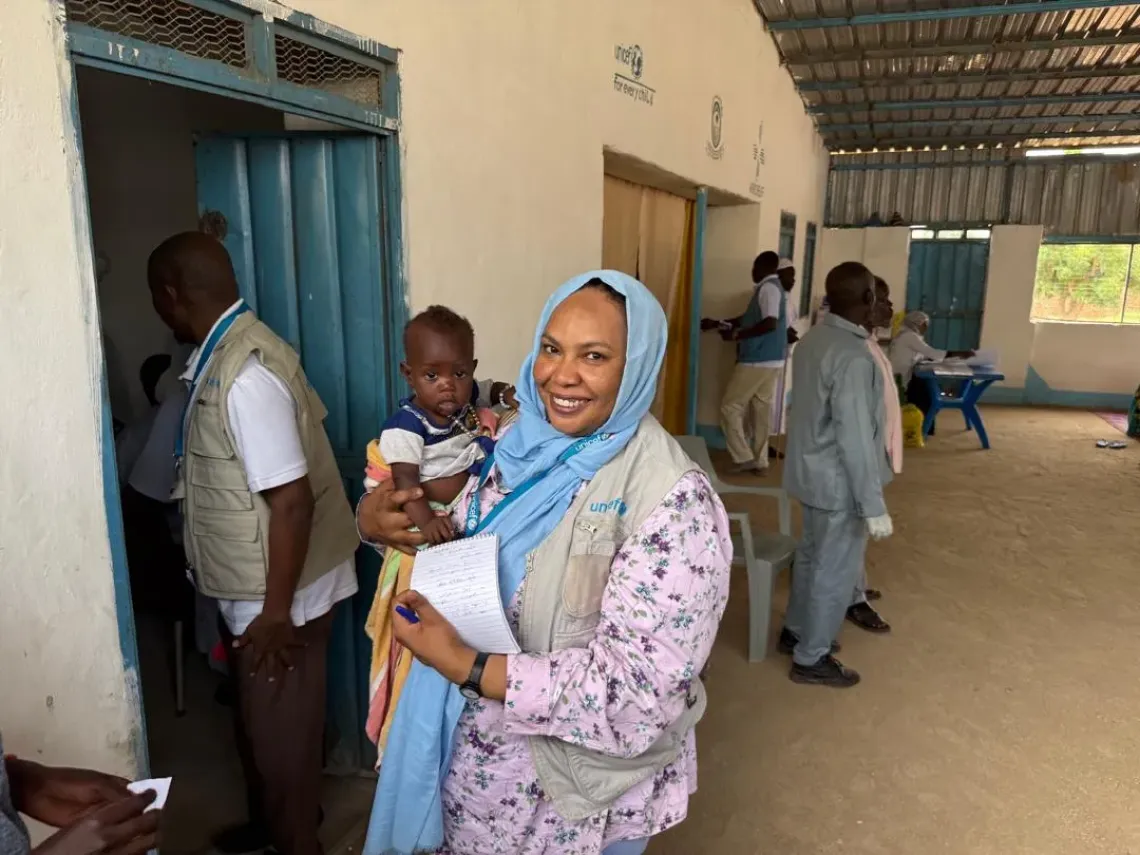
Hind remembers watching UNICEF staff work with women and children in her community when she was a university student.
She remembers telling her classmates that one day, she would work for UNICEF.
Years later, that dream became reality.
Today, Hind works in Darfur, supporting the delivery of life-saving health services to children and families. Her work includes supporting immunization campaigns, responding to disease outbreaks and helping ensure essential health supplies reach communities, including some of the hardest-to-reach areas.
For Hind, the most meaningful moments are often the ones that show what this work can mean for a child.
“When there is a measles outbreak and immunization campaigns are conducted to save children’s lives, I feel happy.”
In a conflict-affected setting, getting a vaccine to a child can take determination, coordination and many journeys. For Hind, every successful effort is a reminder of why the work matters.
“Seeing a child smile makes me very happy,” Muhsin Mohamed, Project Officer
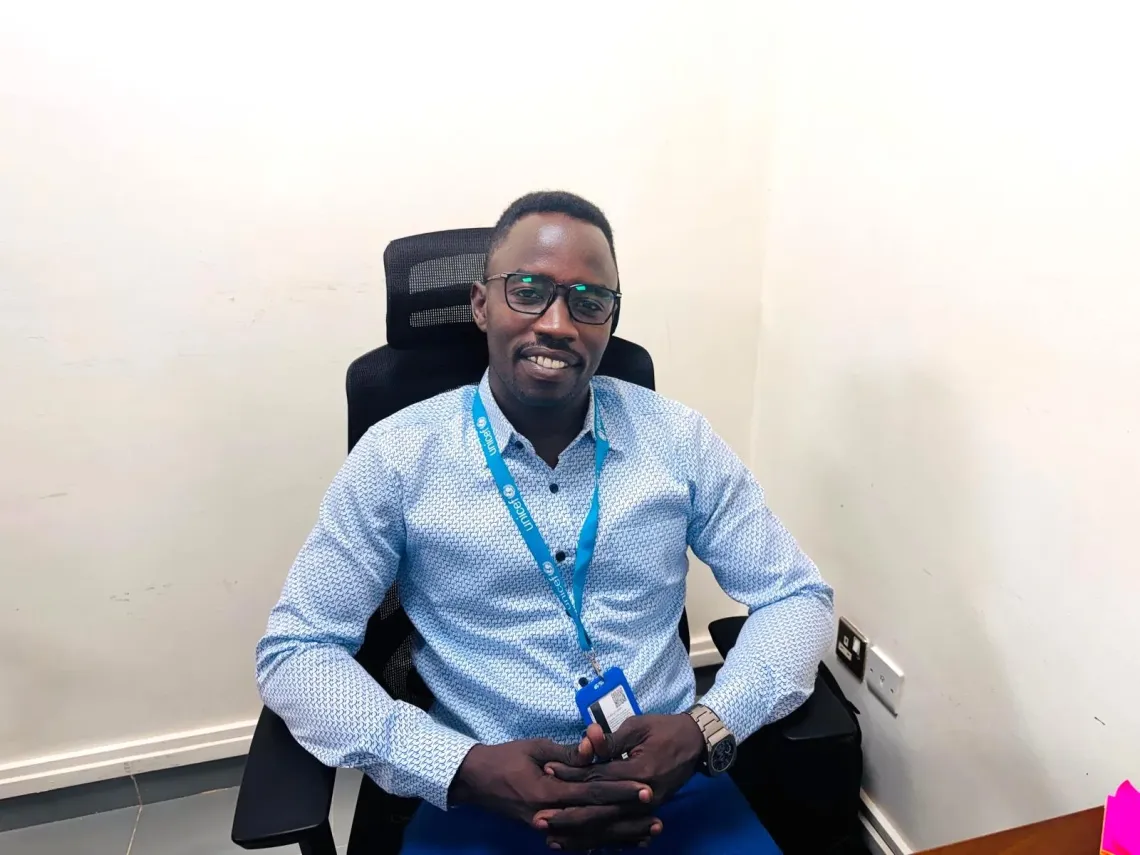
Muhsin has spent years working in humanitarian settings, with international and national organizations and UN agencies.
But when he talks about what motivates him, he does not start with a programme or a project.
He starts with a child.
“I noticed how small something as simple as stopping to chat with a child would make them happy for the rest of the day."
“Seeing a child smile makes me very happy.”
For Muhsin, that simple connection has stayed with him throughout his humanitarian career.
Today, he works knowing that in some of the hardest-to-reach places, children are waiting for support. Reaching them is not always easy. But when assistance gets through, the impact can be seen in small moments- a child feeling seen, supported and, sometimes, simply happy.
“It means that somewhere at the end of that journey, children receive the services they needed,” Eltayeb Hassan, Security Officer, West Darfur
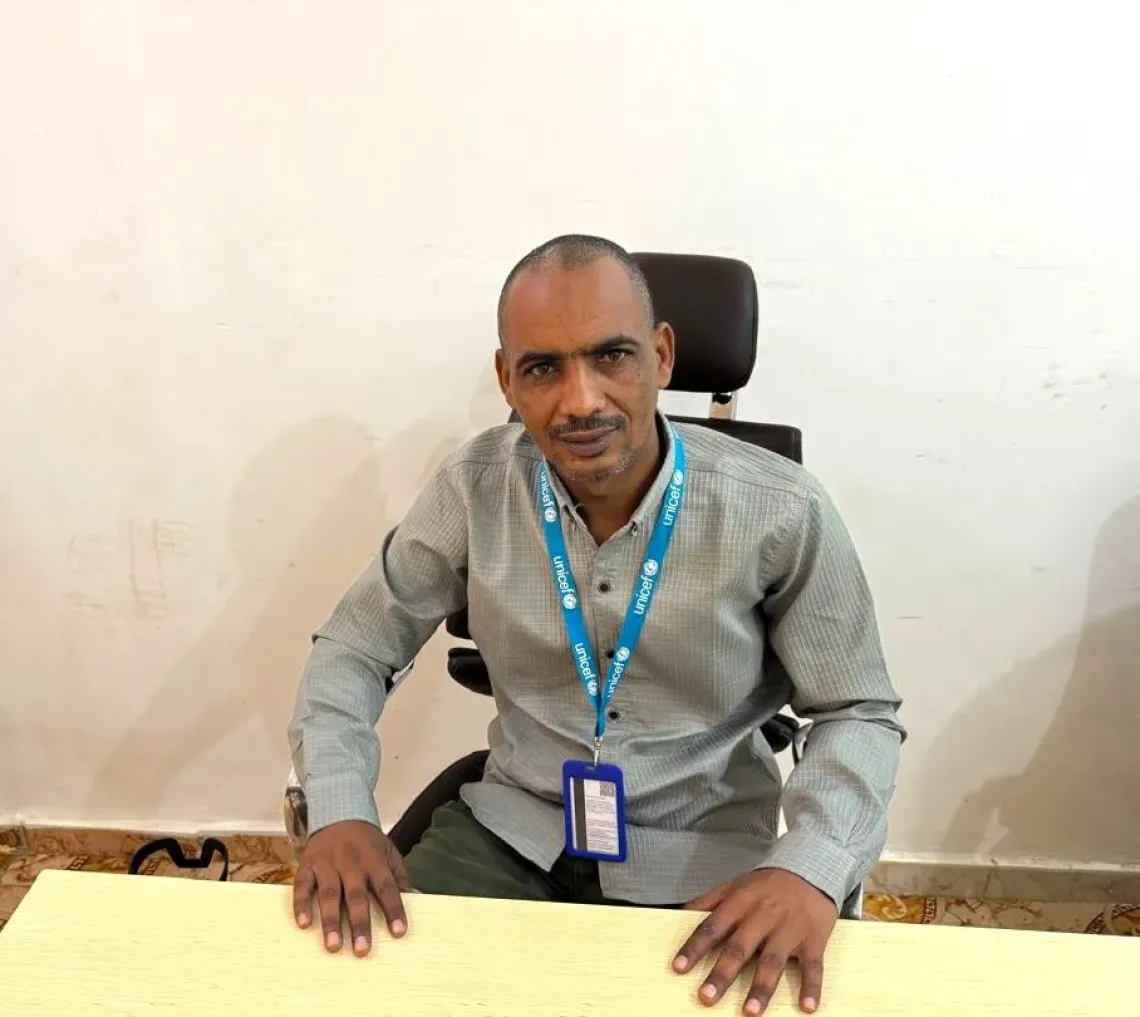
Eltayeb was born and raised in El Geneina. He started his career as a teacher before moving into humanitarian work.
Today, as a Security Officer, part of his role is helping humanitarian teams reach children and families safely.
For him, security is not simply about the journey.
“It is not simply about getting from one place to another safely. It means that somewhere at the end of that journey, children and families received the services they needed.”
In Sudan, where insecurity and violence can make humanitarian movement difficult, safe access is essential. Without it, assistance cannot reach the children who need it.
"Every mission successfully concluded means that more vulnerable children and families were reached with the services they need.”
And sometimes, the impact is visible in the places and children that humanitarian workers are able to reach.
“When I see children going to school carrying UNICEF-branded bags and hospitals functioning, I feel proud.”
For Eltayeb, helping teams reach their destination is ultimately about helping children reach theirs.
"Even if you help one person, that still counts,”Mahmoud Esmat, Operations
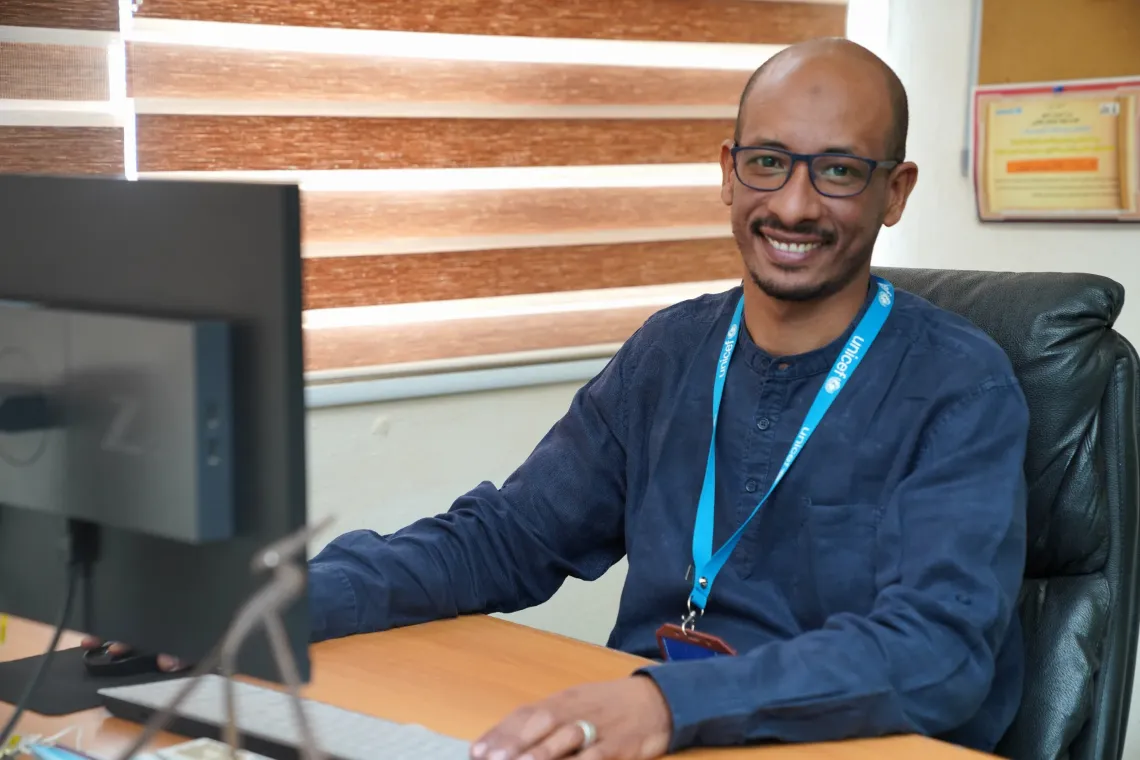
Mahmoud’s work has taken him across different parts of UNICEF- between administration, programme support, and Finance.
Much of what he does happens away from the spotlight.
But over the years, he has seen how decisions made behind the scenes can change what is possible for children.
One example is UNICEF’s digital learning initiative. Mahmoud watched it grow from an idea into a pilot and eventually into a multi-million-dollar project reaching millions of children with opportunities to continue learning despite the conflict.
For him that experience reinforced a simple belief:
“If you have something to offer, do it. Even if you help one person, that still counts.”
Humanitarian action is often made up of hundreds of decisions and tasks that may never be visible to the child who benefits from them.
“Sometimes supporting children starts with supporting staff," Nahid Argouf, Operations Officer, Atbara
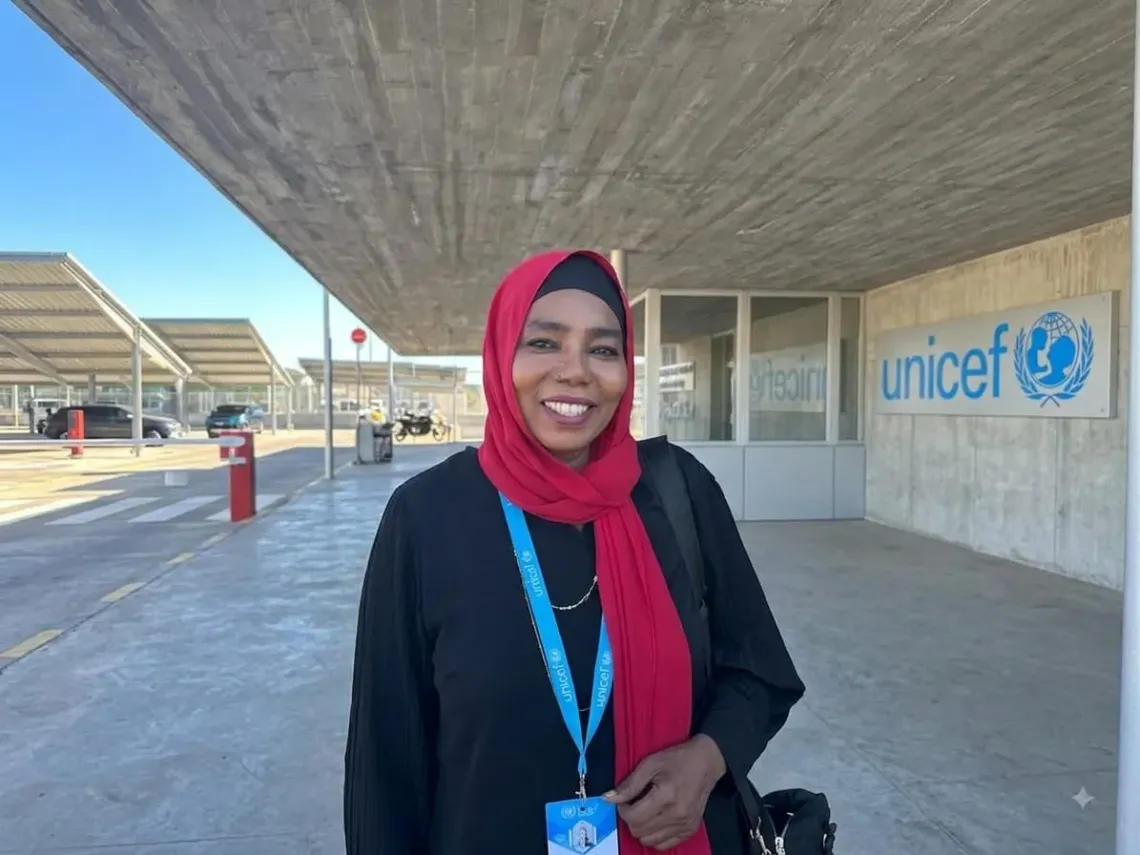
Nahid first encountered UNICEF long before she imagined becoming part of it.
During family visits to her hometown, she remembers seeing UNICEF vehicles, school bags and water pumps.
The early encounters made her curious about the organization and the work behind what she saw.
Today, Nahid helps run a field office, supporting the systems and working environment that allow humanitarian teams to do their jobs.
“Sometimes supporting children starts with supporting staff,” she says.
For Nahid, that can mean improving administrative processes or finding practical ways to make daily life easier for colleagues—from establishing a cafeteria with healthy, affordable meals to creating a more supportive working environment.
When humanitarian workers are supported, they are better able to support children.
The people behind the work
The work of health officer, project officer, security officer or operations colleague may look very different.
Together, these roles form a chain.
A vaccine must move safely. A team must reach a community. Supplies must arrive. Staff need systems and support to keep working. And at the end of all these efforts is a child who needs a service.
For humanitarian workers in Sudan, that work also comes with personal challenges. They also navigate the realities of working and living through the conflict - uncertainty, difficult conditions, frequent power cuts and, for many, families separated across Sudan and beyond.
Still, they continue to show up.
Their stories are a reminder that humanitarian workers are not separate from the communities they serve. They are people navigating many of the same realities while working to ensure children are not left without support.
Humanitarian workers can only reach children if they can work safely.
That means protecting humanitarian workers and the life-saving assistance they deliver.
It means upholding international humanitarian law and ensuring safe, timely and unimpeded access to children and families in need.
It also means ending attacks against humanitarian workers and ensuring accountability for violations.
Every time a humanitarian worker safely reaches a child, a service has reached its destination.
Behind that moment are people who made it possible.
Each in their own role, but united by one mission :delivering for every child.