No matter what
Reaching children with lifesaving vaccines in war-torn Sudan

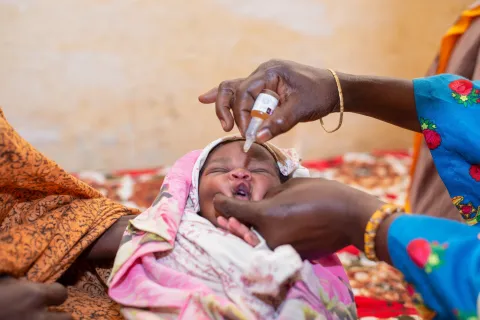
Sabrine delivered her baby, Nashwa, in the midst of conflict. Since then, she has never missed a single routine vaccination appointment for her daughter. She has seen firsthand how vital immunization is for protecting her child from preventable diseases.
“My daughter is now one and a half years old, and I’m here today to give her the next vaccine shot,” Sabrine says.
“Immunization protects her from diseases like yellow fever and polio.”
Routine immunization is one of the simplest and most effective ways to save lives. But without consistent access, preventable diseases like measles, polio, and diphtheria remain a deadly threat. A sad reality for children in Sudan.

UNICEF/UNI827428/Mohammed Abdulmajid
“When one child has polio or measles, all children in Sudan are at risk,” Intesar says.
Protecting children, one dose at a time
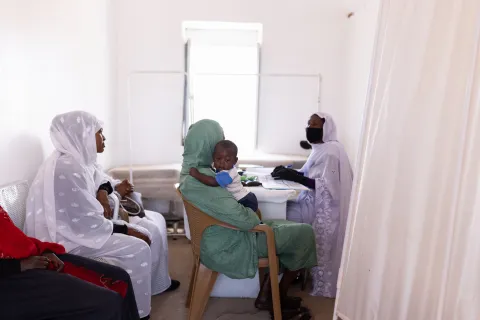
It’s another vaccination day at Al Thorwa Health Centre.
Mothers and caregivers start arriving as early as 7:00 a.m. so they can return home in time for household chores. But health workers like Intesar arrive even earlier to prepare vaccines and registers.
Sabrine is among the mothers waiting patiently on the benches outside the immunization room. Every seat is full. Inside this small room, Intesar sits, protecting thousands of children from disease, one vaccine at a time. Her days are often long, but she takes pride in her work. Not even the scorching heat will distract her until the last child is vaccinated.
“Vaccines are crucial for protecting children from disease and reducing mortality rates for those under five. Increasing vaccination rates will save more young lives,” Intesar explains.
Every day, vaccinators like Intesar immunize children in Sudan against life-threatening diseases — polio, measles, diphtheria, yellow fever, and more — that continue to put young lives at risk. Yet these diseases are preventable if children receive all their vaccinations on time.
Due to the ongoing conflict, routine vaccinations for millions of children have been disrupted. Millions trapped in conflict zones remain unvaccinated or under-vaccinated. Before the war, about 9 in 10 children were vaccinated. Today, that number has dropped to 5 in 10 — and even lower in areas of active fighting.
Constant displacement and access challenges make it harder to deliver vaccines, reversing years of progress. The number of under-vaccinated and zero-dose children — those who have never received a single vaccine — is rising. In some areas, health systems have collapsed and clinics are no longer functional. Centres like Al Thorwa remain lifelines, delivering routine immunizations and supporting emergency vaccination campaigns during outbreaks.


Vaccinating children, no matter what
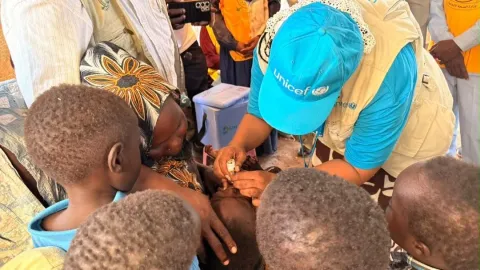
Despite enormous challenges, Intesar and her team, like so many frontline health workers, press on — vaccinating children both at health facilities and in remote communities. With UNICEF’s support, they organize monthly outreach campaigns that bring routine vaccines directly to children — including those trapped by conflict. Sometimes they walk for hours under the blazing sun or through muddy, impassable roads during the rainy season to reach children who might otherwise be forgotten.
“When one child has polio or measles, all children in Sudan are at risk,” Intesar says.
As Sudan faces one of the world’s largest humanitarian crises, frontline health workers like Intesar continue striving to keep children safe — one child, one vaccine, one life at a time. But for Sudan’s children to truly be safe, every child must be reached.