My Makanna, my space
UNICEF safe spaces help children in Sudan learn, heal, and rebuild their lives

The guns may have gone silent, but the scars remain.
The learning loss from prolonged school closures, the trauma, the silence, and the anxiety are still part of children’s lives in Sudan.
But UNICEF’s Makanna programme – Arabic for “my space” – is helping them rebuild, one day at a time.
A day at the Makanna
The sun blazes above 40 degrees. Yet, groups of children stroll into Alzaka School in Atbara locality.
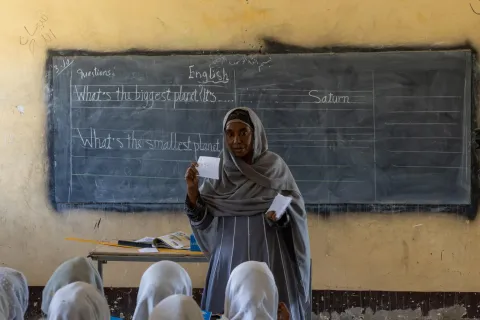
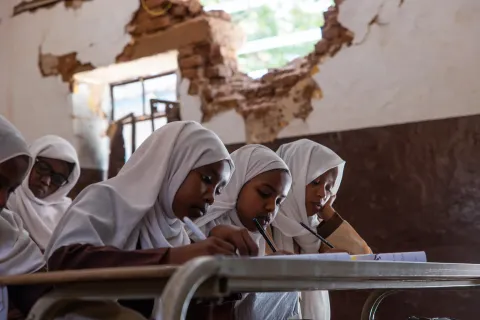
The refurbished school also doubles as a UNICEF Makanna — a safe space for displaced children. Strategically located, it has attracted hundreds of out-of-school children since its opening in 2024.
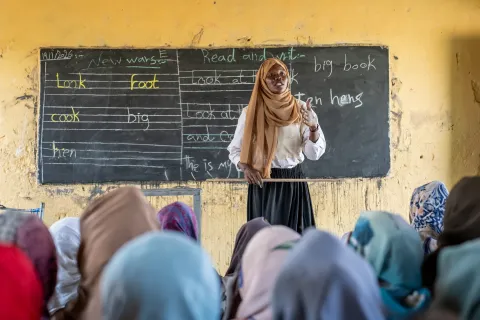
Today, enrolment has soared to 300 children, most displaced from Khartoum. A team of trained teachers and social workers supports them daily.
Every day is full of energy — children learn, play, paint, dance, and create new friendships. Each activity is a small but powerful step toward healing and reclaiming their future.

Khalid’s lonely healing journey
Ten-year-old Khalid has been separated from his parents for more than two years. He doesn’t speak much — but through art, he has found a way to express his emotions.
“The first thing I did when I came here was draw,” Khalid recalls.
Since then, drawing has become his path to healing.
“Before, he drew armoured vehicles filled with soldiers and blood. Seeing him draw flowers and hearts today is great progress,” says Menad, a social worker.
In a small art room, Khalid and his peers sketch, paint, and shade their feelings — transforming pain into colour. With psychosocial support from trained counsellors, every stroke becomes a step toward recovery.


Sports for peace
Sports and play at the Makanna are more than just games — they are tools for unity and wellbeing.
At Alzaka, football, volleyball, and skipping are part of the daily routine, bringing children together.
“This is not just play — it’s fun, learning, and bonding,” says Mutwakil, the sports teacher.
Sixteen-year-old Sufyan adds, “Before, there was a lot of bullying between displaced and host children. Now, we play together. I enjoy volleyball — it makes me want to come to school every day.”

Catching up on lost learning
The opening of the Makanna brought hope to out-of-school children in the neighbourhood.
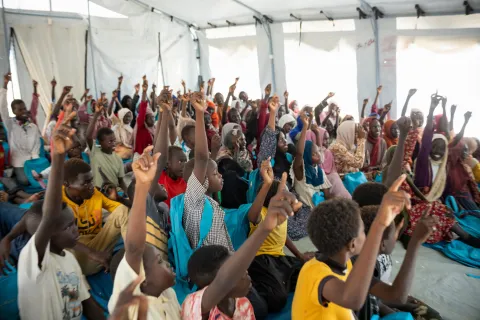
Some children have re-enrolled in formal classes, while others have joined UNICEF’s Accelerated Learning Programme. In a large UNICEF tent, they learn under the shade, catching up after years of disruption.
The programme offers them a second chance — helping them learn quickly and reintegrate into formal schooling within weeks.

Digital learning for a digital future
Even before the conflict, many children were out of school. Today, the number who cannot read or write is alarmingly high.
“Back home, I didn’t go to school. When I came here, I couldn’t read or write,” says 13-year-old Jawaher from Khartoum.
Now, she is an eager participant in the e-learning class.
Mowahib, a trained facilitator, supports 120 children like Jawaher through self-paced digital lessons in Arabic, English, Maths, Science, and mental health.
“I have now learnt some letters and spellings,” Jawaher smiles.
UNICEF’s e-learning and Accelerated Learning Programmes are bridging the learning gap — and are now integrated into the national education system.

Skills, confidence, and creativity
Needle and yarn in hand, Tartil carefully crochets a table mat. When the war forced her from home, she found not only safety at the Makanna — but also a skill.
“I love crocheting the most,” she says. “When I first came from Khartoum, I did nothing in my free time. Now I make lots of things.”
Through school clubs in art, theatre, sports, and handcraft, children are discovering talents and finding empowerment through creativity.
“We use simple but meaningful activities that keep the children engaged and help them open up,” says Manal, a social worker.
Makannas, a lifeline for children
Across River Nile State, more Makannas are being established — reaching hundreds of conflict-affected children.
With support from the German Cooperation through KfW Development Bank, UNICEF is improving learning environments by rehabilitating classrooms and sanitation facilities, training teachers and facilitators, providing safe water, and offering mental health and psychosocial support through trained counsellors.
These child-centered Makannas are a lifeline — nurturing resilience, confidence, and hope for Sudan’s children after years of conflict.