Mariam’s journey back to the classroom
Separated from her mother by conflict, 14-year-old Mariam has returned to learning and is holding on to her dream of becoming a doctor

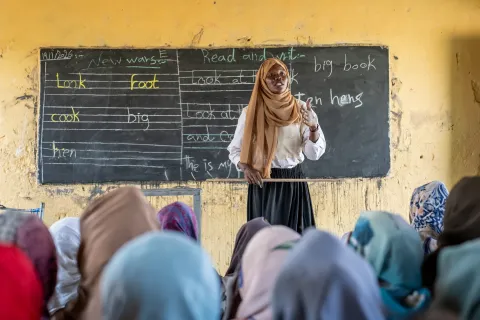
In a large UNICEF tent, about 30 girls and boys attend a session at the Heglig Alternative Learning Centre in Goz Al Salam camp.
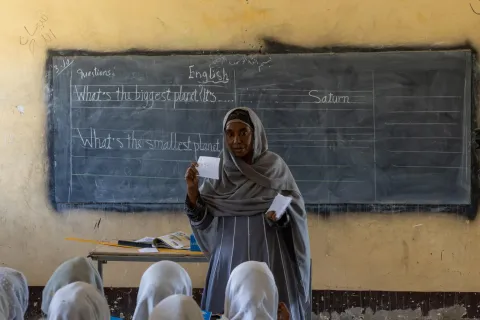
Ezz, the facilitator, helps them settle down as they pull out their pencils and notebooks to start the day.
Today’s session starts with a discussion about the people and places children turn to for safety and support.
“Who provides you with protection?” she asks.
Within seconds, hands go up across the tent. A few children whisper among themselves. In a country where conflict has displaced millions of children and families, conversations about safety and protection are especially relevant for children facing ongoing uncertainty.
“I feel safe when I have my mother with me,” 14-year-old Mariam says.
A year ago, fighting intensified in Heglig in South Kordofan, the place Mariam called home. She lived there with her mother and three siblings. Her father had passed away.
Her mother became her protector and confidant.
“My life was beautiful because my mother was always with me,” she says.
At school, Mariam was a grade four pupil. She looked forward to seeing her friends Ibtisam, Ola and Amina every day. Together, they walked to school and played in the neighbourhood. Under the trees at their school, they shared meals, completed homework, revised their lessons and imagined their futures together. Mariam dreamed of becoming a doctor, Ola a teacher and Amina a nurse.
Her teacher, Layla, was one of her favourite people at school.
“She made sure we understood what she taught, even if she had to repeat it over and over,” she explains.
Today, these are memories Mariam carries with her as she starts a new life in Goz Al Salam in White Nile State, far from home.
When the situation in Heglig worsened, families began to flee.
“I left with my grandmother and grandfather to a safe place near our home.”
“When the situation deteriorated, we were forced to move further away until we reached here.”
By the time she reached Goz Al Salam, Mariam had already lost her father and had been forced away from her home and school.
Most difficult of all was being separated from her mother, the person she turned to for protection and comfort.
Life away from home
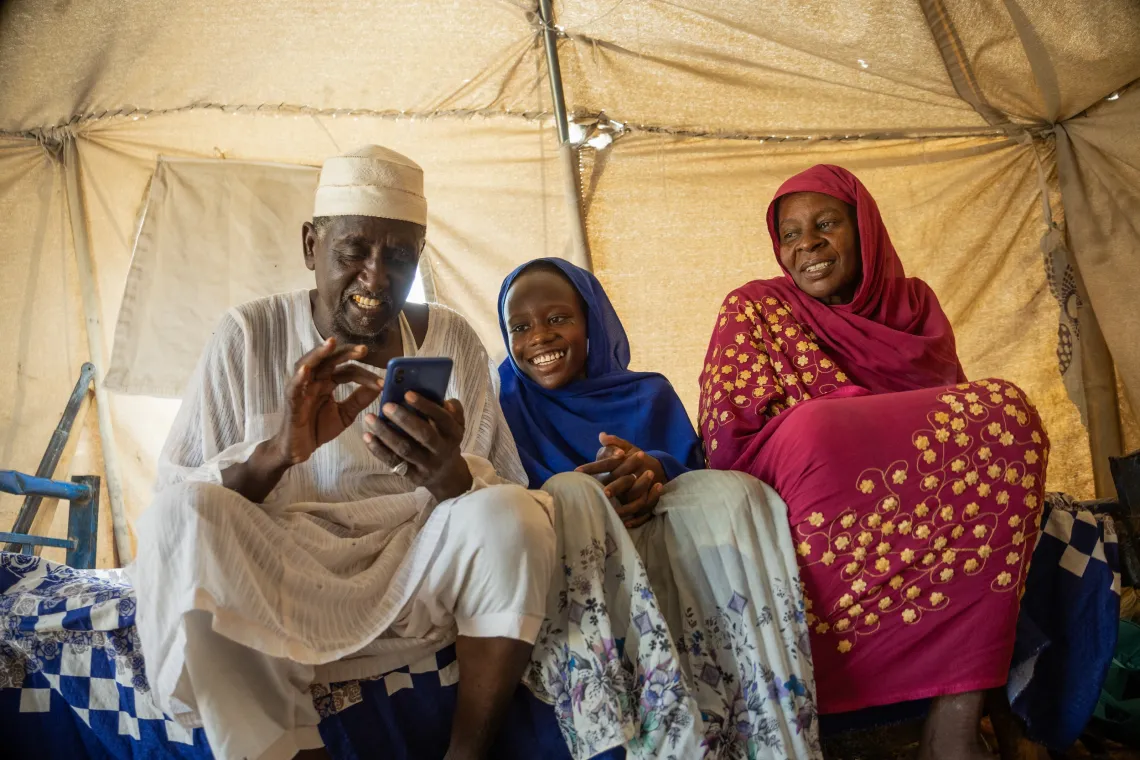
In a camp that continues to grow as fighting affects Sudan’s Kordofan region, Mariam lives in a small white tent with her grandparents, who are now caring for her.
Life here is different.
Her thoughts often turn to her mother and siblings. Whenever network connectivity allows, she speaks with them.
“I hear news about my mother every now and then.”
“I last talked to my mother 13 days ago. I miss everything about my mother.”
As she continues to adjust to life away from home, Mariam has returned to school after more than two years. In Heglig, schools closed because of the fighting.
One day, while sitting with her grandmother, Mariam heard about a newly opened Alternative Learning Programme centre close to their shelter.
Even before the conflict, Sudan had one of the world’s largest learning crises. Today, as the conflict continues, millions of children like Mariam continue to experience disruption to their learning.
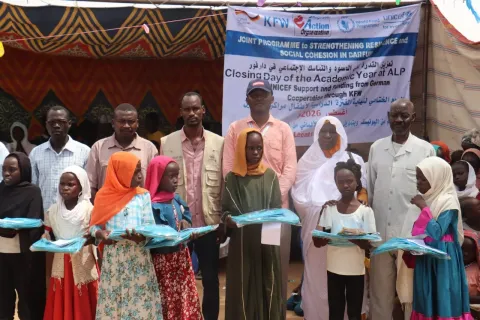
UNICEF and partners are helping restore access to learning. Where possible, they are reopening schools and establishing ALP centres that provide a specialized curriculum and catch-up classes for children who have been out of school for prolonged periods.
To date, 3 ALP centres have been established in Goz Al Salam, providing learning opportunities for hundreds of children from displaced and host communities.

Mariam is learning again
Mariam waited two years to resume learning.
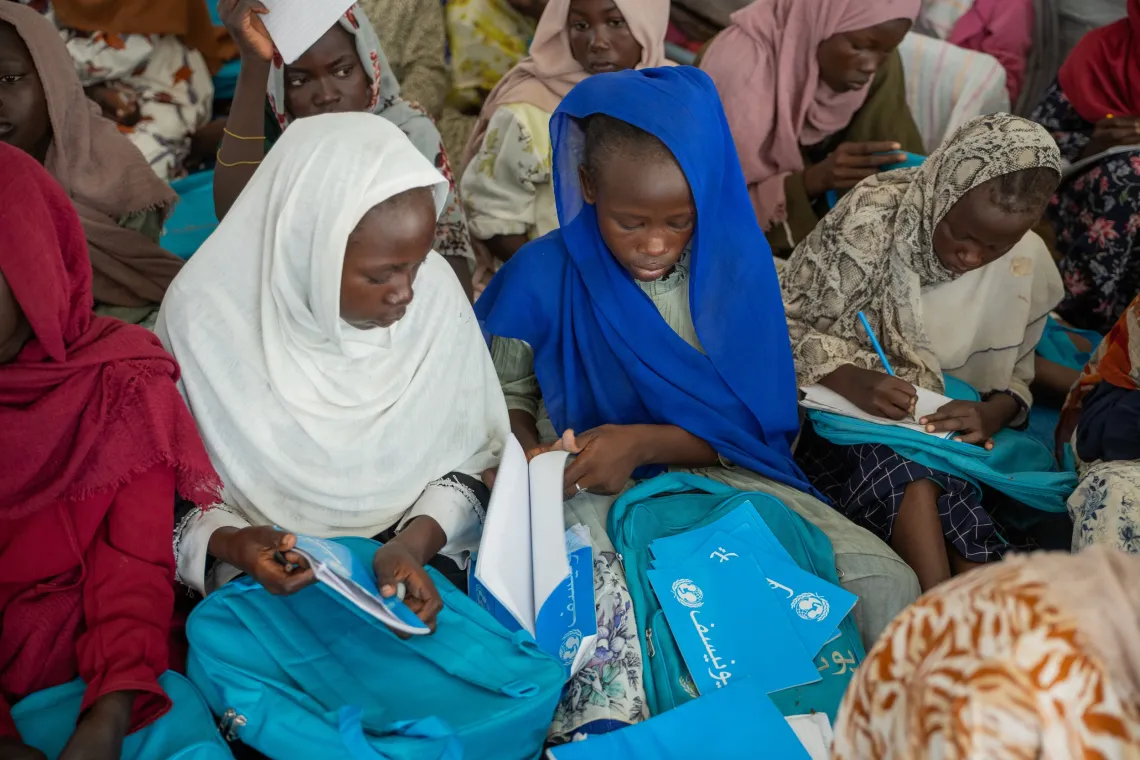
Last year, she finally joined the centre, where she is catching up on English, Arabic and Mathematics.
Her day starts early. After helping her grandparents with household chores, she heads to school carrying a blue backpack filled with notebooks, pens and pencils provided by UNICEF.
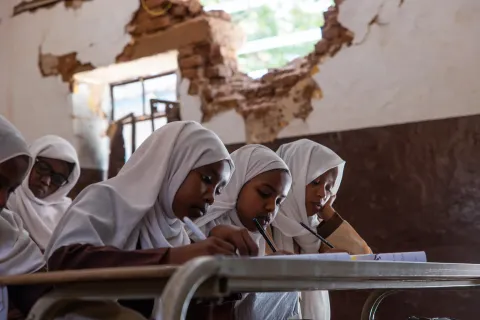
Mariam takes her studies seriously. Her notebooks are carefully completed, and she makes sure her homework is finished and marked. Her hard work is paying off.
“My grades last month were excellent.”
With limited lighting in the camp after sunset, Mariam uses her grandfather’s solar lamp to study and revise before bed.
“I use it to read during the night inside the tent.”
“Then I put it outside in the morning to charge while I am at school.”
A new ALP centre creates more space to learn
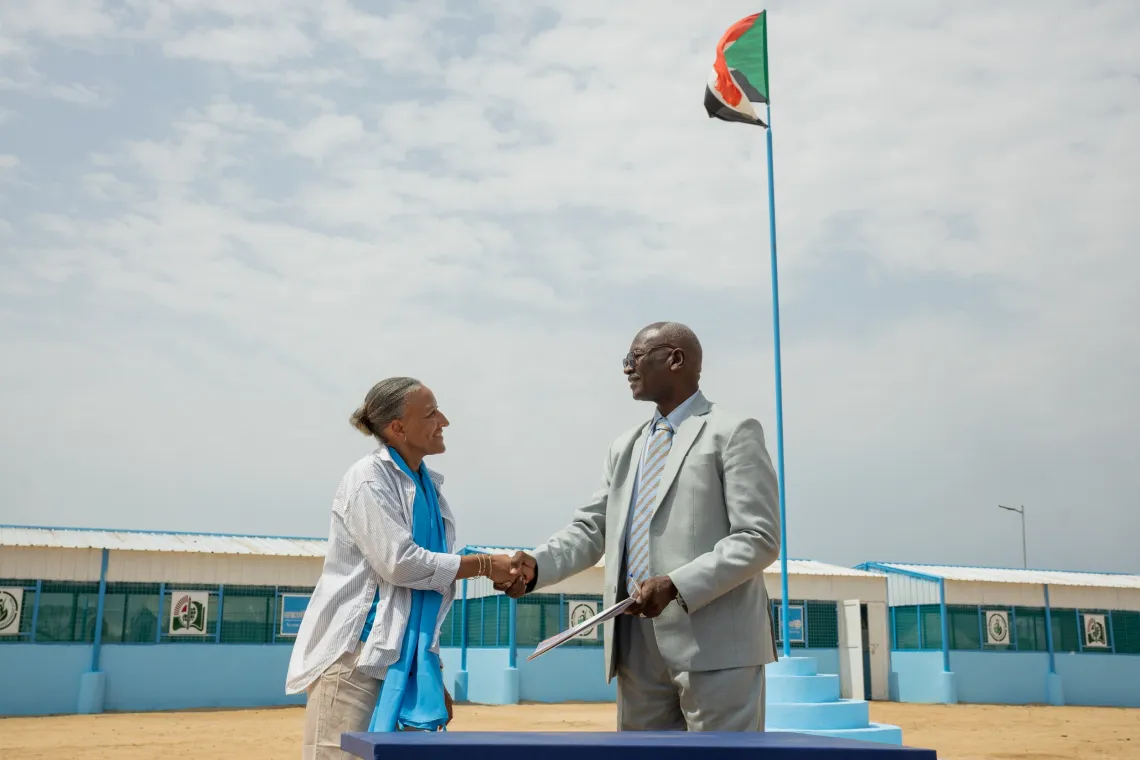
In Goz Al Salam, UNICEF and partners have constructed a permanent ALP centre that will accommodate about 900 children in nine classroom blocks. With more children and families arriving, the centre will provide additional space for children to learn, play and pursue their goals.
During emergencies, children can lose connection with loved ones, homes, schools and friends, as well as access to healthcare, water, protection and other essential services. When education is interrupted, they can also lose important opportunities to learn, develop and plan for the future.
Continuing her education is important to Mariam’s dream of becoming a doctor.
It is a dream she continues to work towards amid the uncertainty of conflict and displacement, while waiting for the day she can reunite with her mother and tell her about the progress she has made at school.
“When I see my mother, the first thing I will do is hug her.”
“What worries me most is that the war might drag on and I won’t be able to return to my mother.”
For now, Mariam continues to attend classes and work towards her goal of becoming a doctor, while hoping to be reunited with her mother.
......................................................................
The construction of the ALP centre and its continued support have been made possible through UNICEF’s flexible and thematic funding. Today, the centre serves hundreds of children from displaced and host communities, providing learning opportunities, scholastic materials and psychosocial support. Facilitators are also trained and equipped with the skills needed to support children.