Every day matters
UNICEF is responding to the urgent needs of children and families during the ongoing conflict

Sudan is facing one of the largest humanitarian crises in the world, with over 30 million people in need- half of them children. Millions of children and families have been forced to flee their homes in search of safety, living in shelters and difficult places and conditions.
The delivery of critical services like health, nutrition, immunization, and water has been severely affected, with infrastructure damaged in many parts of the country. Without functioning hospitals, water systems, and schools, the lives of millions of children and families are at risk.
During crises like this, every day matters. Responding quickly to the urgent needs of affected children is critical to saving lives. For nearly two years, UNICEF, with the support of flexible funding, has been responding rapidly and addressing challenges in a constantly evolving context. UNICEF is achieving real, lasting results both in conflict hotspots and safer locations with high displacements. UNICEF is also scaling up its response to reach more children and families with much-needed assistance.
And this is how:
Digital learning
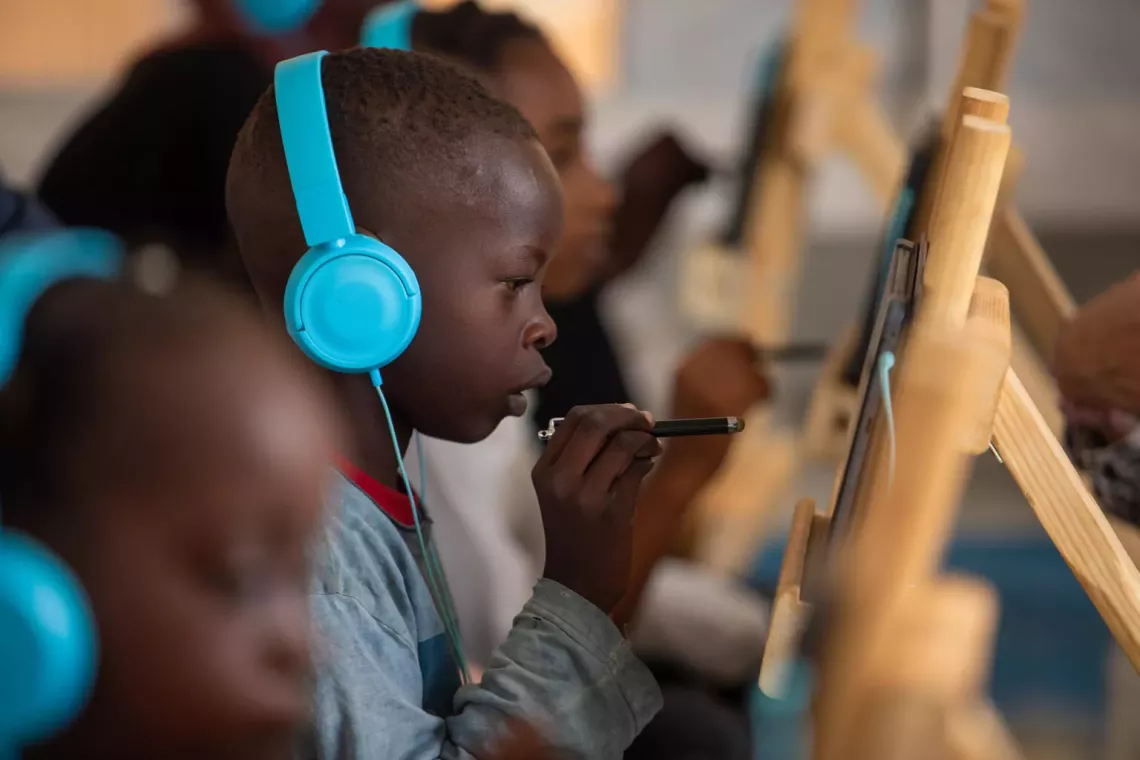
The learning crisis in Sudan is deepening, with more than 17 million of the 19 million school-aged children out of school. To address this, UNICEF has established 280 digital learning centres equipped with solar power, tablets, and learning materials across 13 states.
The centres, which also serve as safe spaces, reached over 72,000 children (51 per cent girls) aged between 7 and 17 years with self-paced lessons in Arabic, English, Mathematics, ICT and Science. The curriculum developed by the Ministry of Education, is an alternative and compressed programme designed to support children who have been out of school for extended periods.
“After each learning cycle, there is a small game known as the little explorer which tests the knowledge attained through various adventures,” said Arwa Omer, Education Officer.

Over 300 teachers and facilitators have been trained in digital pedagogy and interactive teaching methods, improving learner engagement, support and assessment. To further enhance learning outcomes, UNICEF has incorporated the learning passport- an innovative e-learning platform –into the digital curriculum to improve access to quality education for every child.
Nutrition

With families struggling to find food during the conflict, millions of children continue to grapple with malnutrition. Around 13 million children are facing acute levels of food insecurity. Without immediate support and treatment, many will not survive. Hunger has been reported in some parts of the country, increasing the risk of malnutrition among children.
An estimated 3.2 million children under the age of five are projected to suffer from acute malnutrition this year, with about 770,000 of these children at risk of severe acute malnutrition-the deadliest form.
Through thematic funding, UNICEF is on the ground delivering life-saving nutrition interventions to the most vulnerable communities. These efforts have significantly strengthened the delivery of high-impact nutrition programmes, enabling the timely identification of malnourished children, their immediate referral, and life-saving treatment.
Safe Learning Spaces

UNICEF has established safe learning spaces in various states to provide non-formal education for children in both displaced and host communities. More than 1,600 Safe Learning Spaces (SLS) have been established, reaching approximately 690,000 children, 51 per cent of whom are girls.
These safe spaces offered structured learning opportunities and psychosocial support, helping children recover, build resilience, and regain a sense of normalcy amid the conflict. The spaces also serve as a protective environment, shielding children from violence and exploitation. Through daily activities such as games and recreational programmes, these spaces provide emotional support and stability.

Children attending these spaces receive educational materials, including backpacks, pencils, textbooks, notebooks, and coloured pencils. Teachers are provided with essential teaching materials, incentives, and training in child-centred learning approaches and mental health and psychosocial support to better respond to the diverse needs of children in crisis situations.
Water, Sanitation and Hygiene

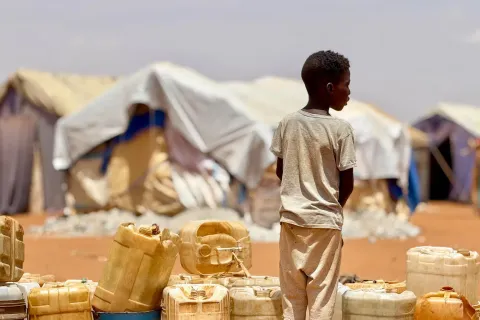
When conflicts disrupt access to clean and safe water, children and families are exposed to waterborne diseases and sometimes malnutrition. In Sudan, continuous attacks on water infrastructure, combined with the strain of mass displacement, have worsened water scarcity and fuelled the spread of deadly diseases such as cholera.
UNICEF is stepping up by providing clean water to communities, schools, and health facilities through the construction and rehabilitation of nine water facilities and water disinfection interventions. To ensure long-term sustainability, over 100 people have been trained and empowered in community management and pump maintenance.

Additionally, more than 500,000 people have benefited from hygiene promotion campaigns and the distribution of essential hygiene items such as water containers and cleaning materials.
Child Protection

More than 5 million children in Sudan have been displaced since the conflict erupted nearly two years ago, making it the largest child displacement crisis in the world. These children are at heightened risk of violence, abuse, and exploitation, while government systems responsible for the protection of children are on the brink of collapse.
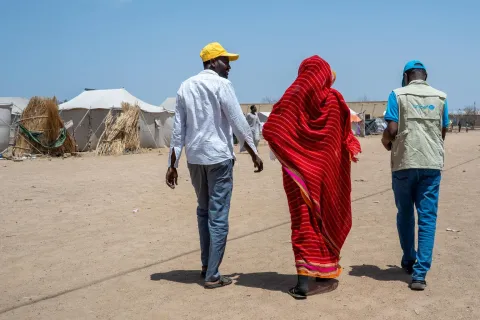
UNICEF continues to strengthen the social service workforce to ensure sustainable support for vulnerable children. Over 300 social workers and 320 members of community-based child protection networks have been trained and deployed to identify and respond to the needs of children in hotspot areas.
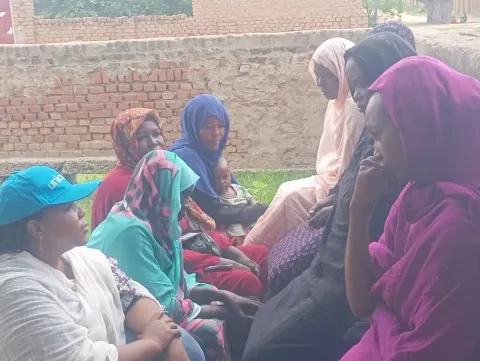
In more stable states such as Gedaref, Gezira, Kassala, Red Sea, White Nile, Northern State, and River Nile, approximately 30,000 children and caregivers have received mental health and psychosocial support, case management, and awareness on gender-based violence and sexual exploitation and abuse.
UNICEF continues to work closely with partners to provide life-saving assistance to children and families affected by the crisis. Through flexible funding, UNICEF delivers essential services such as safe and clean water, health services, education, and child protection, ensuring that children in Sudan receive the support they need to survive and thrive.