A chance to dream again
Mariam finds hope in a classroom after ten years away

After ten years out of school, 15-year-old Mariam now holds a book and pen – something she never thought would ever happen again. After attending only one year of primary school, Mariam had to drop out because her family couldn’t afford the costs, so she stayed home to help her mother with house chores.
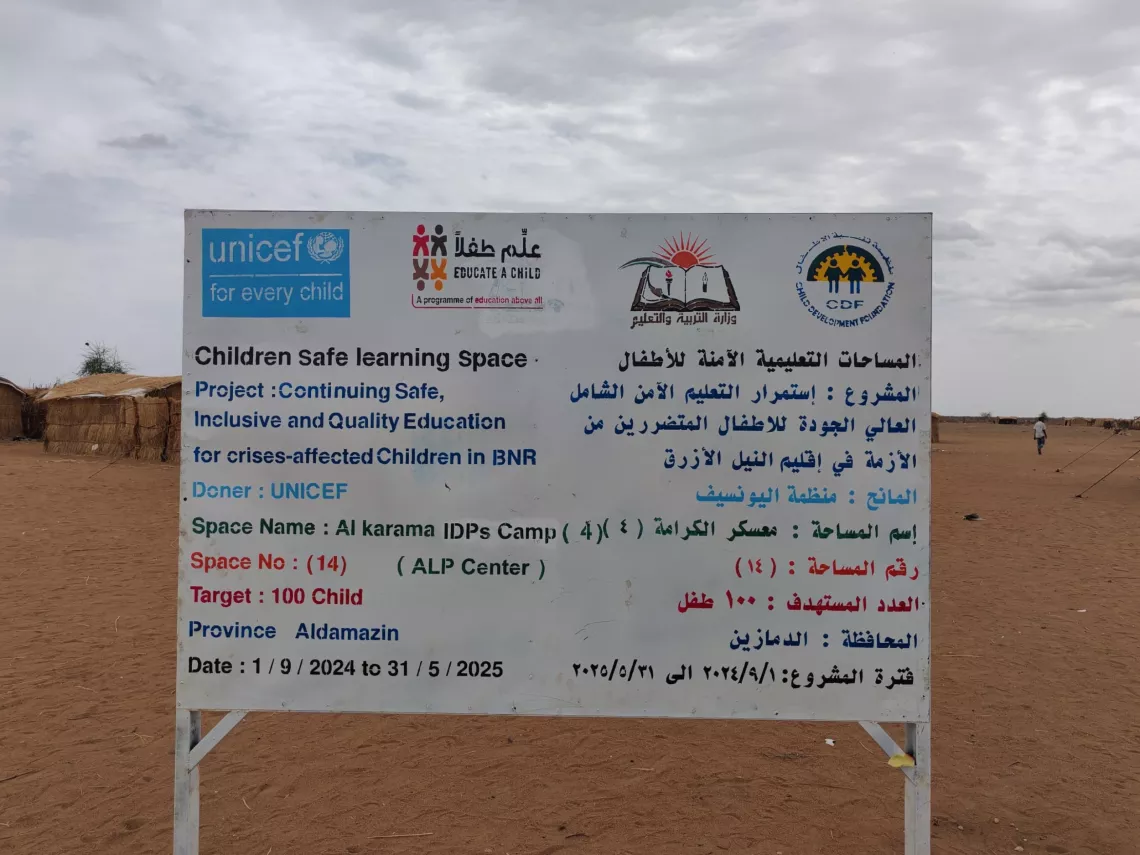
Two years ago, Mariam and her family were forced to flee their home when the conflict reached their doorstep, pushing them first to South Sudan and more recently to Alkarama camp in Damazine, as their home remains unsafe.
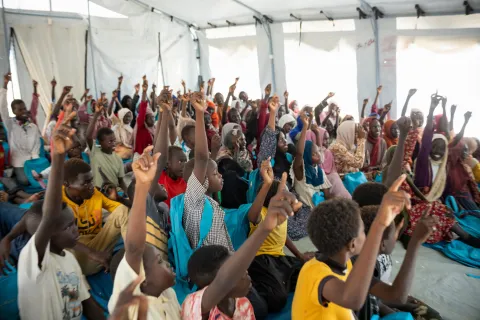
It is here that Mariam heard about the temporary learning space, where children like her, who had been out of school could attend classes. She is not alone - over 1,000 children in the camp have missed out on education since the war disrupted their lives.
Happy and excited, Mariam is now back to learning and catching up on what she lost, thanks to the UNICEF-supported Alternative Learning Programme (ALP) in Alkarama.
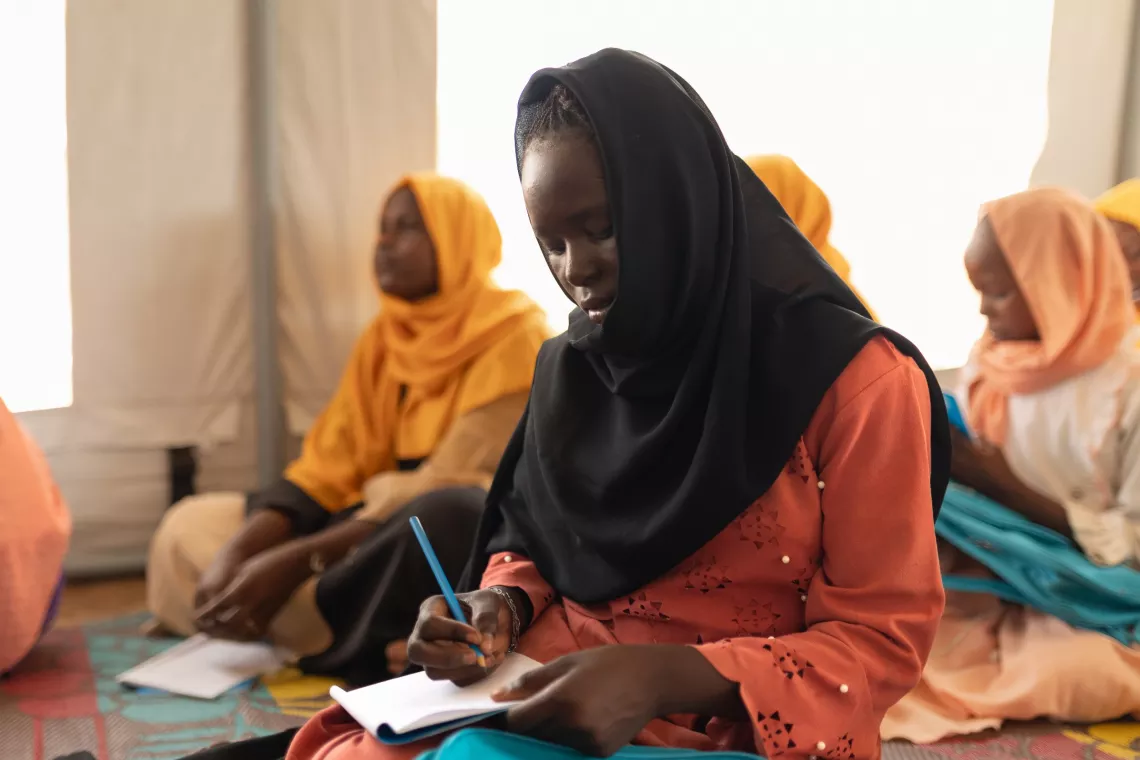
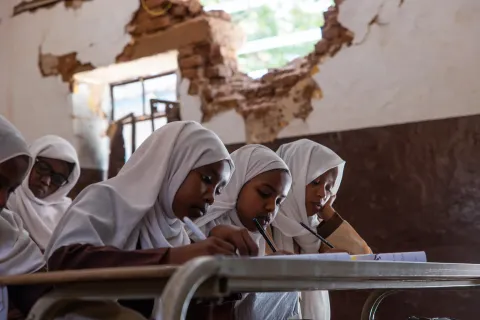
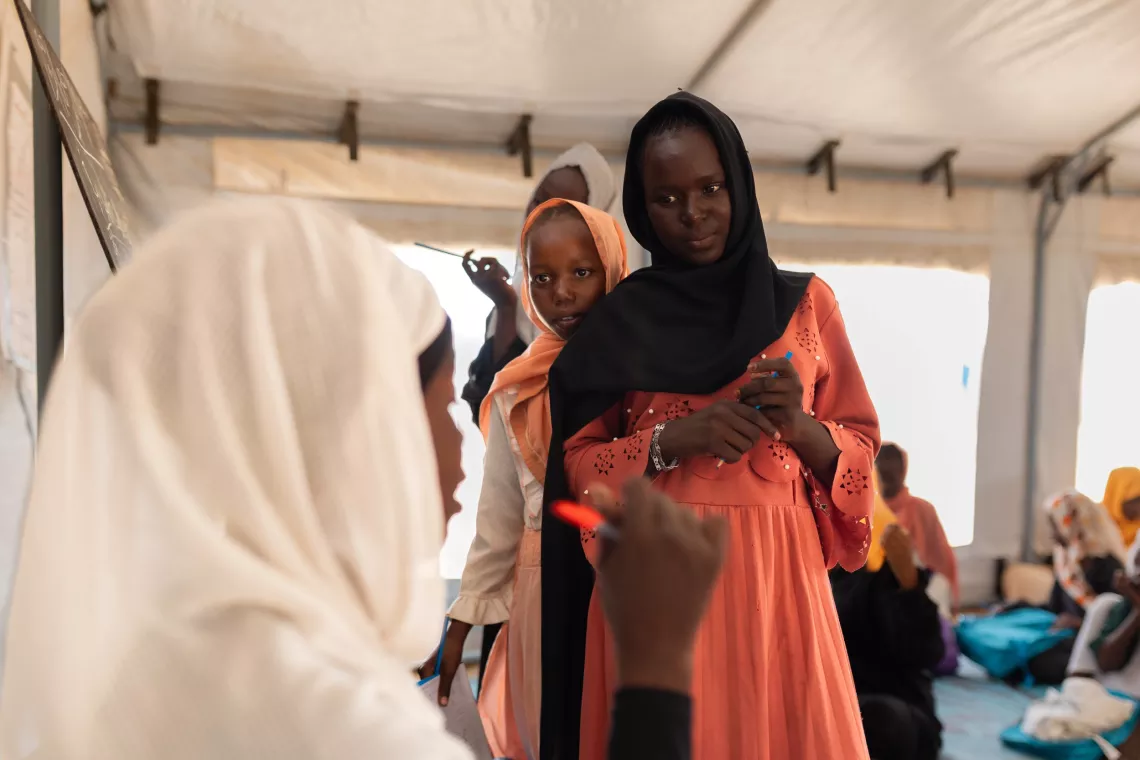
During a morning lesson, she sits at the front of the class in a UNICEF tent that serves as a temporary learning space for the displaced children. She listens carefully, jots down notes, and consults her peers on anything unclear after the lesson. Her new friends - Suhad and Rahel- have been instrumental in her learning journey and continue with her every step of the way.
What is the ALP catch-up programme?
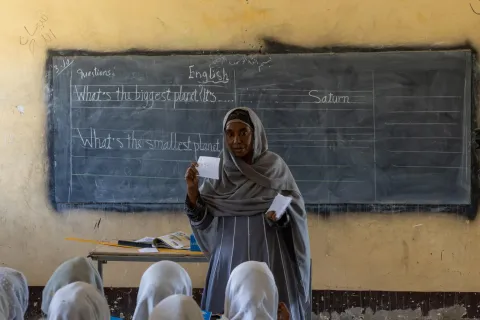
The Alternative Learning Programme (ALP) offers a pathway for children who missed the opportunity to join school on time or dropped out for different reasons. Children like Mariam enrolled in the programme follow the national curriculum, which is designed to bridge the 8 year primary education cycle within four years. The programme focuses on literacy and numeracy to help children transition into formal basic education or sit for the basic school certificate (end of basic education cycle), depending on their entry profile.
A chance to dream again
For years, Mariam never imagined she would return to school after being away for so long. Her hopes were lost, and her dreams seemed out of reach.
At the temporary learning space, Mariam is not only learning — she’s dreaming again.
The journey ahead won’t be easy, but her determination gives her the strength to face every challenge.
"Sometimes what we learn is very hard," she admits.
Despite the hardships of displacement, Mariam hopes her family can stay in the camp a little longer, as it is here that she finally got the chance to learn again. She worries that if they return home, that opportunity might disappear.
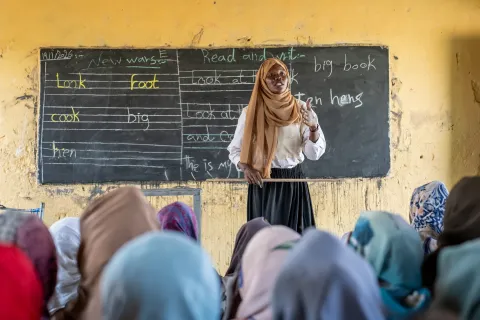
But for now, she continues her Arabic, mathematics, religious studies, and science lessons — catching up on lost time and staying focused on her childhood dream of becoming a pediatrician.
Across Sudan, UNICEF, through its partnership with Education Above All Foundation, has established temporary learning spaces to keep millions of children, adolescents, and young people affected by the conflict engaged in education, providing them with the opportunities to continue learning. Children also receive UNICEF school supplies- backpacks, pencils, notebooks, pens, coloured pencils, rulers, and more- ensuring they have all they need to learn.
The project provided continued learning opportunities to more than 116,000 out-of-school and emergency-affected children, half of whom were girls, through primary schools, the Alternative Learning Programme (ALP), and digital learning pathways, including Digital Learning Centres and the Learning Passport platform. Regular monitoring of attendance among ALP learners supported their retention, completion, and progression through the education system.
In a context where the education of millions of children has been repeatedly disrupted, back-to-learning campaigns implemented during the project period, alongside the distribution of scholastic materials, enabled millions of children to return to school and continue their learning.