From one meal a day to feeding a village
How a small cash transfer helped Victoria Alex transform hunger into hope in Wau, South Sudan.

In Kosti village, Wau South County, Victoria Alex remembers the days when her family survived on just one meal. Rising food prices and limited income opportunities left her children weak and hungry. Each day was a struggle, and the fear of malnutrition weighed heavily on her.
Her youngest child was only two months old when her household was selected to receive support through the Shock Responsive Cash Transfer (SRCT) pilot program. The cash arrived at a time when hunger was constant and hope was fading.
The support arrived when I needed it most, as the risk of malnutrition was a constant worry.
At first, the money helped her buy food to ease her children’s hunger. But Victoria also saw a chance to build something lasting. She used part of the transfer to start a small food stall beside her compound fence. It was modest at first, but neighbors began to come, grateful for a reliable source of local food. With each cycle of support, she reinvested in more supplies, saved a portion of her earnings, and slowly grew her business.

Her children’s lives began to change. Instead of surviving on one meal a day, they now had regular, nutritious food. Their health improved, and Victoria could afford school fees, clothes, and balanced diets. What once felt like a fight for survival became a path toward stability.
The cash support didn’t just feed us once, It gave us a way to feed ourselves every day.
Victoria’s story is not just about one family. It shows how modest support can spark resilience. Each transfer was more than money, it was a chance to fight hunger, protect children, and restore dignity.
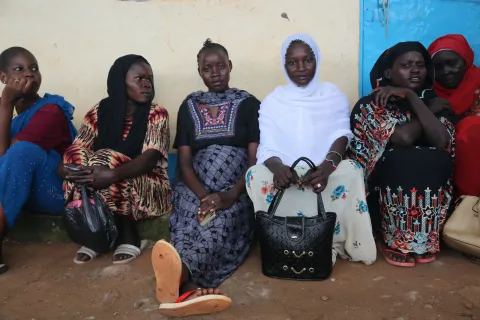
Across Wau, nearly 900 mothers and pregnant women received cash transfers each cycle.

The impact rippled through the community. Families who once faced empty plates began to rebuild. Mothers proved that with even a small opportunity, they could create livelihoods that nourished their children and strengthened their neighborhoods. Victoria’s stall became a symbol of what is possible when families are trusted with the means to shape their own future.
Her journey is a reminder that resilience grows when families are given the tools to survive shocks and invest in their children’s well‑being. It is proof that cash transfers can do more than ease hunger for a day, they can transform lives, one household at a time.