Family needs first
Emergency cash transfers empowering vulnerable families

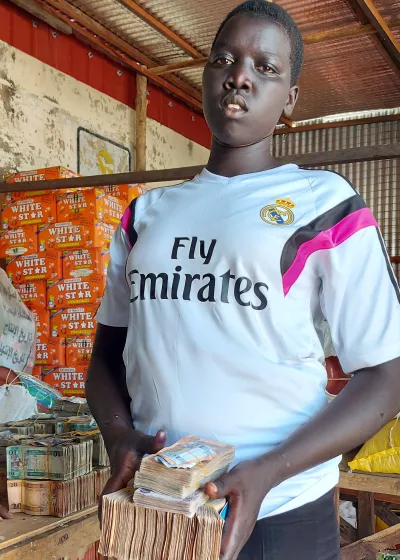
“I will buy food with this money and pay school fees for my siblings when the schools reopen,” begins 19-year-old Nyibol Ring Kau in Bor, Jonglei State.
After their father’s death, Nyibol’s mother remarried, and she and her younger siblings were left in the care of their auntie. As the eldest, Nyibol is head of the household which consists of herself, two brothers and one sister.
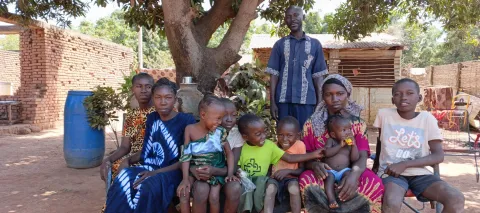
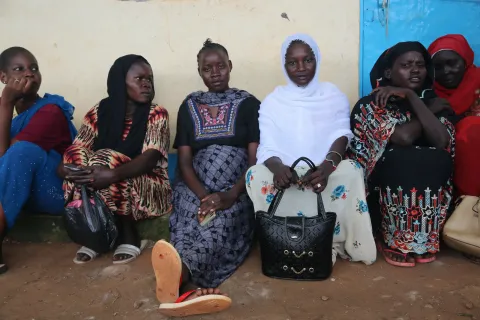
In South Sudan, social vulnerabilities resulting from either age, disability, and/or gender, compound the impacts of poverty and deprivation and are felt most immediately by children themselves, as well as women and the elderly.
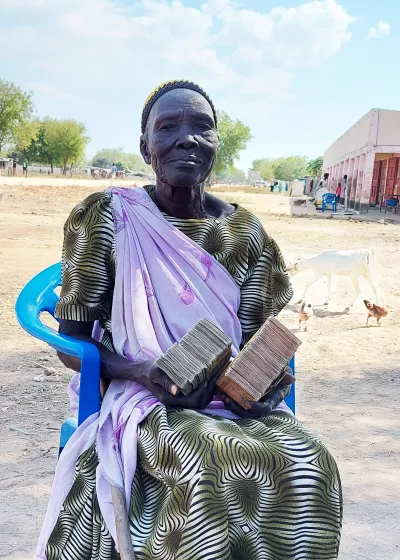
Nyibol is part of a group of 500 vulnerable families in Bor who will receive a UNICEF unconditional cash grant. Thanks to these grants’ households headed by children, women and the elderly are getting money that they can spend on their living expenses according to what they feel is most important.
“My Grandson will have dinner tonight.” For Yar Gai Anyang, 71 years old, the cash assistance could not have come at a better time. Yar is the sole caregiver of her 10-year-old orphaned grandson. Her other daughters are married and have moved away, leaving her alone with the boy. Following the devastating flood which swept large parts of Jonglei State, the family has had little or no harvest.
Similarly, two elderly Awan Akuol Muoch and Ajok Angieth have received the cash grant.
Awan is in her late sixties and is shouldering the responsibility of caring for her three grandchildren. With the cash she hopes to buy food and pay medical bills for her five-year-old grandson who has been unwell. On the other hand, Ajok lost her children to diseases and wars in the country and currently has no one to take care of her. She says she feels fortunate to have been registered to receive this cash grant.
According to UNICEF Cash Transfer Specialist Moffat Kamau this social safety net project is part of a seven-month initiative supporting the most at-risk families recovering from the impact of flooding that displaced whole communities last year.
The families benefitting from the cash transfer programme are identified through SCOPE, a computer-based system run by the World Food Programme. SCOPE registers the most vulnerable families. It helps UNICEF identify the most vulnerable households and reach them in a timely and efficient manner with a grant that allow them to access life-saving products.
Since 2019, humanitarian cash transfers have been a vital part of UNICEF’s work to serve the most vulnerable families in South Sudan. This cash-transfer initiative is linked to of a water sanitation and hygiene voucher-project that aims to improve hygiene in 9,400 vulnerable households headed by children, the elderly, and women, through access to adequate soap and washing facilities.
UNICEF is rolling-out this cash and voucher programme in several locations in Aweil, Bor and Bentiu with financial support from the Government of Japan.