Journeys to safety
Stories of returnees at Bulukat Transit Centre

A place of Rest and Recovery
For James and thousands of others, displacement is marked by uncertainty about food, clean water, health care, and the safety of loved ones. Since the outbreak of war in Sudan, humanitarian agencies including UNICEF, IOM, UNHCR, and WFP have been working together to provide life-saving assistance to families forced to flee, helping them regain stability and hope.
We were on the river for five days. The children were tired and hungry, but we were grateful to reach safety.

Conflict in Sudan and Its Impact on South Sudan
The conflict in Sudan erupted on 15 April 2023 in the capital, Khartoum, following a power struggle between the Sudanese Armed Forces (SAF) and the Rapid Support Forces (RSF). Fighting rapidly spread across the country, triggering mass displacement, economic collapse, and the breakdown of essential services. Millions of people were forced to flee, including Sudanese nationals, South Sudanese returnees, and refugees of other nationalities. Women and children have been particularly affected, facing increased risks of malnutrition, disease, violence, and psychosocial distress.
Due to its shared border and long-standing social and economic ties with Sudan, South Sudan has been significantly impacted by the crisis. Thousands of returnees and refugees have entered the country through official and informal border points, including Joda in Renk County, Upper Nile State, as well as Panakuach, Jua, Jamjang, and Kiir Adem.
Most arrivals first pass through Joda, the main entry and reception point and later to Wunthow, he transit centre in Renk, before continuing onward to Bulukat Transit Centre in Malakal, also in Upper Nile State. From there, families are supported to reach longer-term settlement locations across the country, including Gorom in Juba (Central Equatoria State), Yambio (Western Equatoria State), Aweil (Northern Bahr el Ghazal State), Maban (Upper Nile State), and Wau (Western Bahr el Ghazal State).

Transit and Immediate Support at Renk and Bulukat
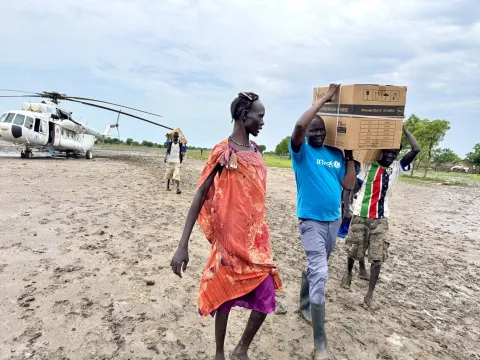
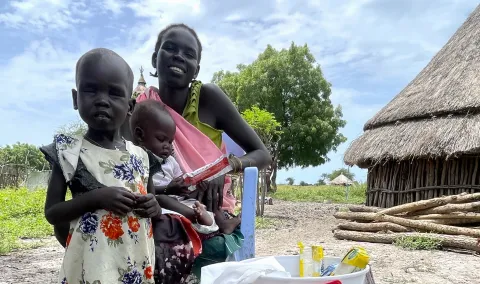
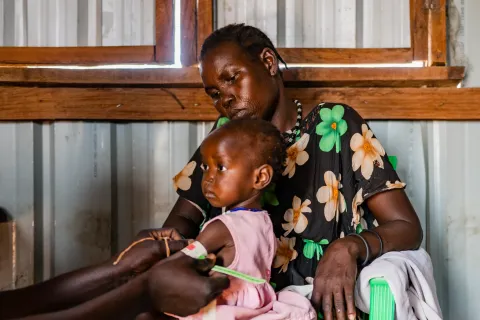
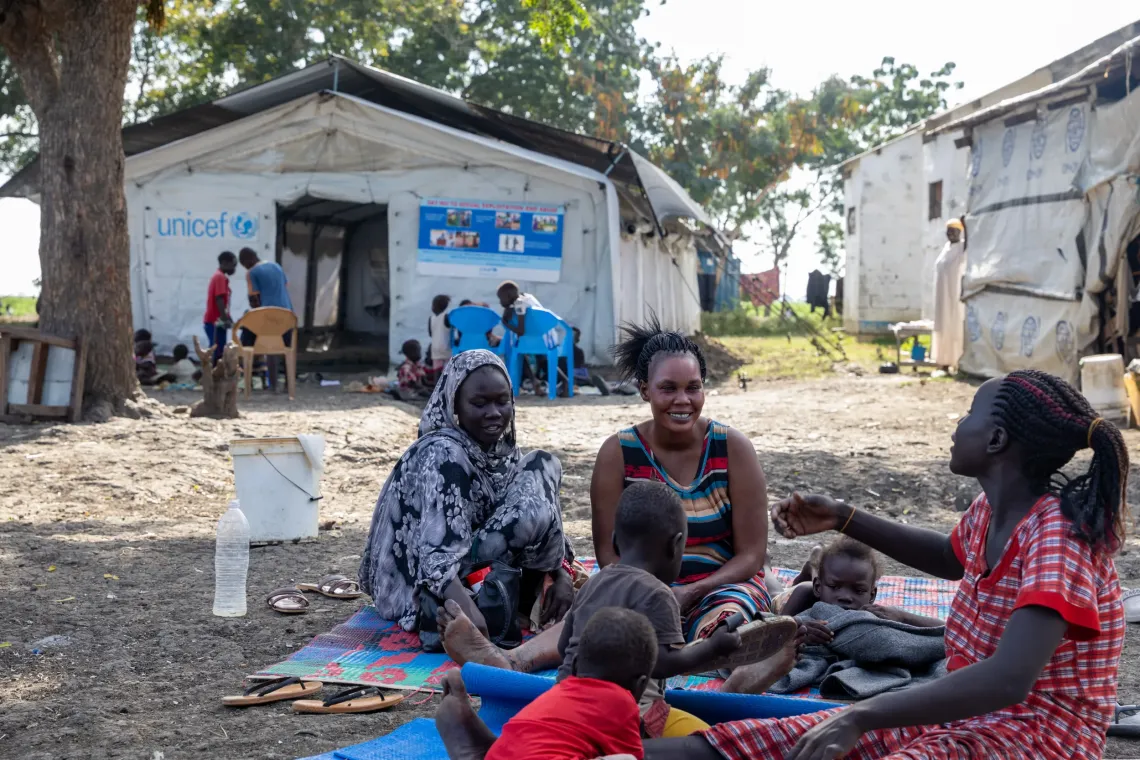
At the transit centres in Renk and Bulukat, families receive immediate assistance, including temporary shelter, food, clean water, and basic medical screening. Children, as well as pregnant and breastfeeding women, are screened for malnutrition, with cases of acute malnutrition referred for treatment through UNICEF-supported programmes. Psychosocial support is available, and child-friendly spaces provide children with a safe environment to play, rest, and begin recovering from the trauma of displacement.
The journey between Renk and Bulukat can take between two and five days by boat, depending on river conditions. Some vulnerable families stay longer in Renk for medical observation or nutritional support before continuing their journey. Upon arrival in Bulukat, IOM facilitates onward transportation, while UNICEF and partners ensure continuity of essential services.


UNICEF’s Multi-Sectoral Support
Across transit centres and settlement locations, UNICEF delivers integrated support spanning child protection, health, nutrition, water, sanitation, and education to address urgent humanitarian needs.
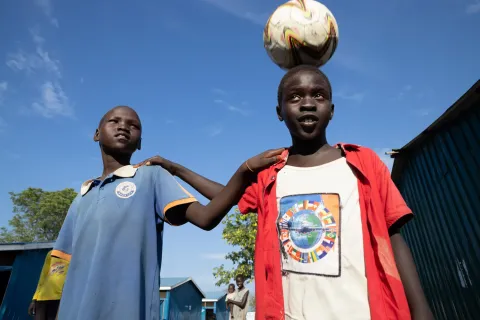
Child-friendly spaces play a central role in the response, offering children safe places to play, learn, and regain a sense of normalcy. Play-based activities support psychosocial recovery, helping children express emotions, build resilience, and restore social connections. Caregivers also receive support to strengthen family coping mechanisms.
Case management services ensure that unaccompanied and separated children receive appropriate care, family tracing, and reunification support. Women and girls access psychosocial support and case management through safe spaces and mobile teams, with clear referral pathways in place to prevent and respond to gender-based violence.
UNICEF also supports health and nutrition services, including immunization, treatment of acute malnutrition, infant and young child feeding counselling, and micronutrient supplementation. Access to safe water, sanitation, and hygiene facilities reduces the risk of disease, while temporary learning spaces help restore routine, learning, and stability for displaced children.
Through close coordination with partners, UNICEF ensures timely assistance and continuity of care as families move from border entry points to transit centres and onward to settlement areas.
Voices of Returnees
Across Bulukat Transit Centre, personal stories of resilience quietly unfold, stories shaped by loss, determination, and hope for a better future.
Aker Deng, 39, is a mother of three and grandmother to two young children. She arrived from Omdurman, Sudan, where she worked as a domestic helper and supported her family. As she reflects on her life before the war, her face brightens. “Sudan was home,” she says. “It was a warm place, full of love and joy.”

Her 17-year-old son, Akonon was forced to drop out of school when the conflict began in 2023 while he was in Class Three. He dreams of returning to education. “I want to become an engineer,” he says quietly. “I want to make people happy by building beautiful houses.” Aker’s 22-year-old daughter, Achwel, plans to start a small tea stall to support her two children. Aker herself hopes to sell fruits and vegetables once the family reaches Abyei, where they look forward to reuniting with relatives.
Nearby is Ayiik, 32, who carefully carries his frail 55-year-old mother as they disembark from a crowded boat. “She is sick and cannot walk by herself,” he explains. “Sometimes I support her to walk, but most times I have to carry her.”


Ayiik fled from Jebel Camp in Sudan Jedid, where he ran a small phone-charging kiosk and lived with his mother and two sisters, whom he was forced to leave behind. “We just want peace and a place to start again,” he says. “A place where I can take care of my mother.” He describes the journey as exhausting but expresses gratitude for the assistance received along the way.
We spent two days in Joda and five days in Renk, we received medical support, hygiene awareness, and help for our family. It made a big difference.
Seated beside her luggage, 33-year-old Sabrina Musa waits to board a vehicle heading to the airport. She fled Kalakala in Sudan with her 19-year-old son, who lives with epilepsy and was seeking medical care when the war forced them to flee. They are travelling onward to Wau before continuing to Abyei to reunite with family.
This place (Bulukat) is very organised. The sanitation is good, the environment is safe, and my son enjoys playing with other children here. It has been a long journey, but we are grateful for the support from the moment we entered South Sudan.”

For James, the elderly former factory driver, displacement meant leaving everything behind. “When the war started, I stayed, hoping to receive my benefits,” he says.

But when the fighting worsened, I had to flee with only the clothes I was wearing.” As he prepares to continue his journey, he adds quietly, “I pray the UN continues to help those still trapped in Sudan.”
These stories reflect the human cost of conflict, but also the resilience and determination of families rebuilding their lives after displacement. Through its multi-sectoral response, UNICEF supports returnees and refugees to regain stability, protection, and dignity, ensuring that families not only survive displacement, but begin to heal and move forward with hope.