I see my children in the children of South Sudan…..and it drives me on
Reflections from chief of nutrition in South Sudan, Ruth Situma.

August 2025. Bor, South Sudan.
When Ruth Situma, UNICEF’s chief of nutrition in South Sudan, was starting out in life in rural Kenya, she didn’t have a voice. ‘There was no space for me as a child to have an opinion or question adults. That wasn’t the norm’, she said when reflecting on her career as a humanitarian. She didn’t know what she was missing until one day everything changed: she started school. Suddenly she was in an environment where children could not just speak, but sing, shout and play too. And there were no chores. A light went on in her head and it’s never been extinguished.
From that time, I knew I wanted to advocate for children, to give children the space I never had.


But there was one problem - she didn’t know child rights organisations like UNICEF existed.
Reaching secondary school, she was very conscious that all her peers in the neighbourhood were starting to drift away from studies and on to suitors; choosing to get married rather than continue their education. She was feeling the pressure to do the same, but there was one person who kept her on track…her mother.
My mother stood firm and encouraged me to follow my studies and find my path. At times I felt I was missing out, but I am now very grateful to her for keeping me invested in my studies, because that helped me find my way to UNICEF.
After studying, she ended up working with Women Education Researchers of Kenya, New Sudan Women Federation, World Food Programme and then with UNICEF first in Kenya, New York where she supported several humanitarian countries such as Yemen and South Sudan, Ghana and then now working in South Sudan.
"I am so grateful for those early days, when I was young and ambitious. There wasn’t any challenge too big in those days… and I’m especially grateful for those people I’ve worked with along the way who have helped me, guided me and coached me into being a better person and a better professional. And now as a manager, I try to give back, living the values of care and respect, with my teams and peers." It was in Yemen and South Sudan, that Ruth found her true calling as a humanitarian worker
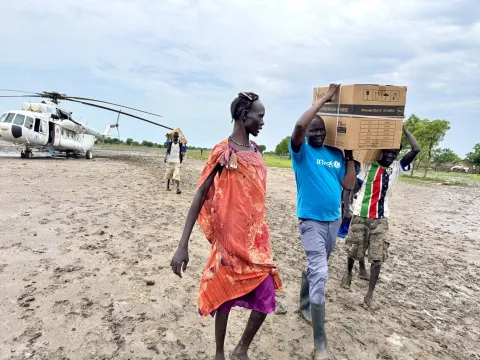
In humanitarian settings I found I could make a real difference. Although situations are tough, and at times a little overwhelming, there is no question in my mind, it’s here that UNICEF is making the biggest difference.


And the other change that contributed to her work was becoming a mother herself. Now a proud mother of three sons, she encourages them to also think about the wider world and situation of children less privileged than they are.
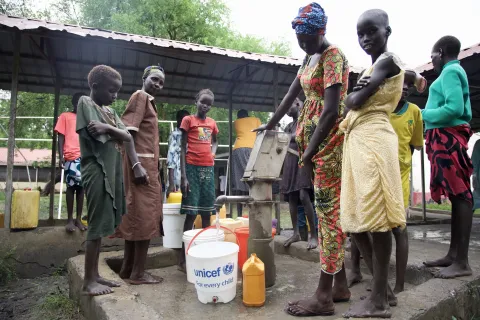
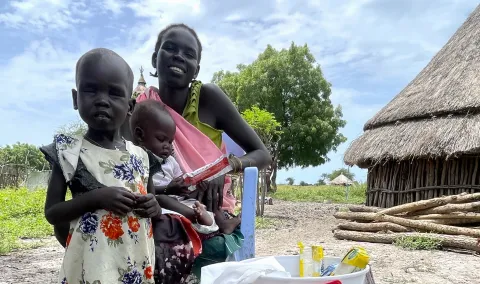
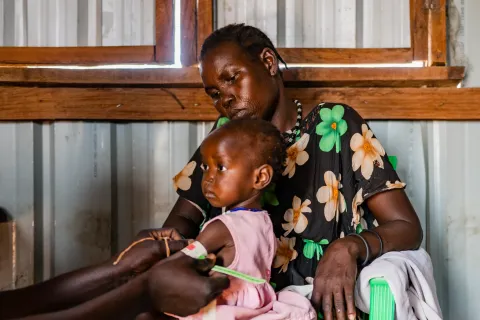
"I see my children in the children I meet in my work. And a voice rises up inside me asking…why are they not going to school? Why are they malnourished? They should be having fun, learning, just being children……but sadly those rights are denied so many. It is this injustice, created by simple differences in geography, or ethnicity or religion that drives me on to give more children a chance to realize their potential," she says, feeling the emotion that many mothers do when thinking about the vulnerabilities and innocence of over 2 million young children in South Sudan, at risk of acute malnutrition.
"It’s not always easy, and I’ve had days when I question the sustainability of the way we do things. But here in South Sudan I can see a real change happening. When we work with a community, helping them grow nutritious foods, teaching them how to prepare and feed their children…building a network of peer mothers, to teach younger mothers coming up…that’s when I have hope that change is possible, even in these very fragile settings", Ruth reflected.
In the end, being a humanitarian means being the last lifeline. And sometimes I ask myself. What if it was me? What if I was displaced, walking with my children, not knowing where I will sleep that night? What would I want? I know that I would want someone to support me, to be there for me. That is why the humanitarian community is so crucial…. Because if we aren’t there, no-one will be.