A bright future, powered by the sun
UNICEF solar radios transforming lives in Unity State

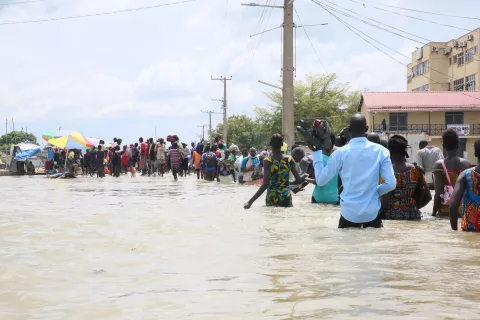
In 2020, Bentiu, the capital of Unity State and home to nearly a million people, faced its worst flooding in six decades. The catastrophic floods destroyed farmlands, swept away homes, killed livestock, and displaced thousands of residents. The deluge also triggered disease outbreaks, compounding the devastation.
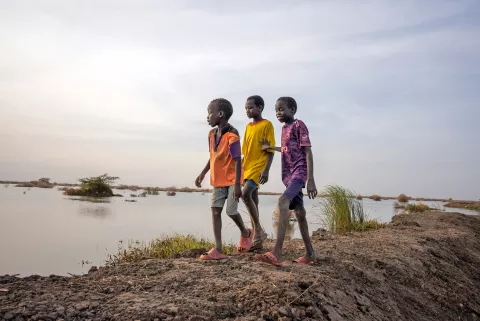
Flood waters surround the town four years later, leaving the population isolated behind fragile dikes maintained frequently. This ongoing crisis has exacerbated living conditions and left the future of Bentiu's vulnerable population in limbo.
Amidst this hardship, a simple but transformative tool is profoundly impacting solar radios. Initially introduced to provide vital health and social information, these radios have evolved into lifelines for thousands of people living in the Bentiu Protection of Civilians (PoC) site — a refuge to over 100,000 individuals displaced by conflict and climate shocks.

Through UNICEF's emergency Social and Behavioural Change (SBC) interventions, around key behavioural practices including immunization, exclusive breastfeeding, handwashing, open defecation, birth registration, prevention of gender-based violence, school enrolment, healthcare-seeking behaviour, etc, these solar radios are transforming lives.
One of the key achievements is the Sector One Radio Listening Group, established in June 2024. The group holds radio listening sessions weekly, monthly, or daily, depending on the needs. These sessions cover immunization, nutrition, health, WASH, and more discussions.

Led by a 27-year-old Juba Hoth Manyjok, the group has become a pivotal part of life in the PoC, using solar radios to educate, connect, and protect the community.

As a leader, I guide radio listening groups in this sector and around schools, and it's changing lives. When there's a disease outbreak, we are the first to educate our community on how to protect themselves.
But these radios go beyond health education. "The radio also helps me by providing light in my house and charging my phone for official work, so I can stay connected to the community and further access to life-saving information in mostly remote areas. My future goal is to expand the listening groups, continue to educate more families, and uplift the lives of those around me”.
Impacting Families and Health
Solar radio has been life-changing for Jany Biel, a 28-year-old mother of two living in Sector One Block Five.

The information from the radio has been so helpful to me and my family. I learned a lot about malaria prevention, which is critical because we live in a flooded area. From listening to this radio, I started using treated mosquito nets, and my children have been getting sick less often compared to the past.
I have learned much about antenatal care, breastfeeding, and immunization. Since following the information from the radio, both my unborn baby and I are healthy, with no complications. I believe it's because of the guidance I have received.

The success of these solar radios is part of a larger strategy to bring about Social and Behavior Change (SBC) in Unity State. 'UNICEF's Unity State SBC Coordinator Keji Rose is thrilled to see the progress.

I'm excited to hear mothers talk about how the radio has helped them. Behavior change is a process, and I see this as just the beginning. I have come to an understand that these solar radios are one of the most effective ways to reach the community with essential messages.
However, Keji is determined to do more, citing that her team needs to produce more programs on Gender-Based Violence (GBV) and education to reduce GBV cases and increase the number of children going to school.
A total of 928,491 people in Unity State will be reached with key messages on health, nutrition, WASH, child protection, and education.
A Broader Vision for Social Change
From lighting homes to charging phones, educating on health, building community resilience, and recording feedback, solar radios are transforming lives in Unity State, as numerous on-the-ground testimonies confirm.
With ongoing efforts from UNICEF, donors and partners, the vision is clear: to create a future where every community member has access to life-saving information, education, and the connection they need to thrive. Powered by the sun, these radios are lighting the way to a brighter tomorrow for South Sudan.

Atem Agot, an SBC Specialist, emphasized that the initiative underscores the significance of innovative, community-driven solutions in tackling the challenges confronting vulnerable populations.
“Solar radios, once simple tools for receiving messages, have become a lighthouse of hope for the people of Bentiu and across the country. They show how donor-supported projects can lead to real, sustainable change,” said Atem.
UNICEF's solar radio programming for social and behaviour change (SBC) across South Sudan is generously supported by the Vaccine Alliance (GAVI), KfW, World Bank and 'Canada's Global Initiative for Vaccine Equity (CANGIVE).