Anna and Nya Luide: chasing dreams amidst uncertainty
South Sudan’s worst cholera outbreak in its history

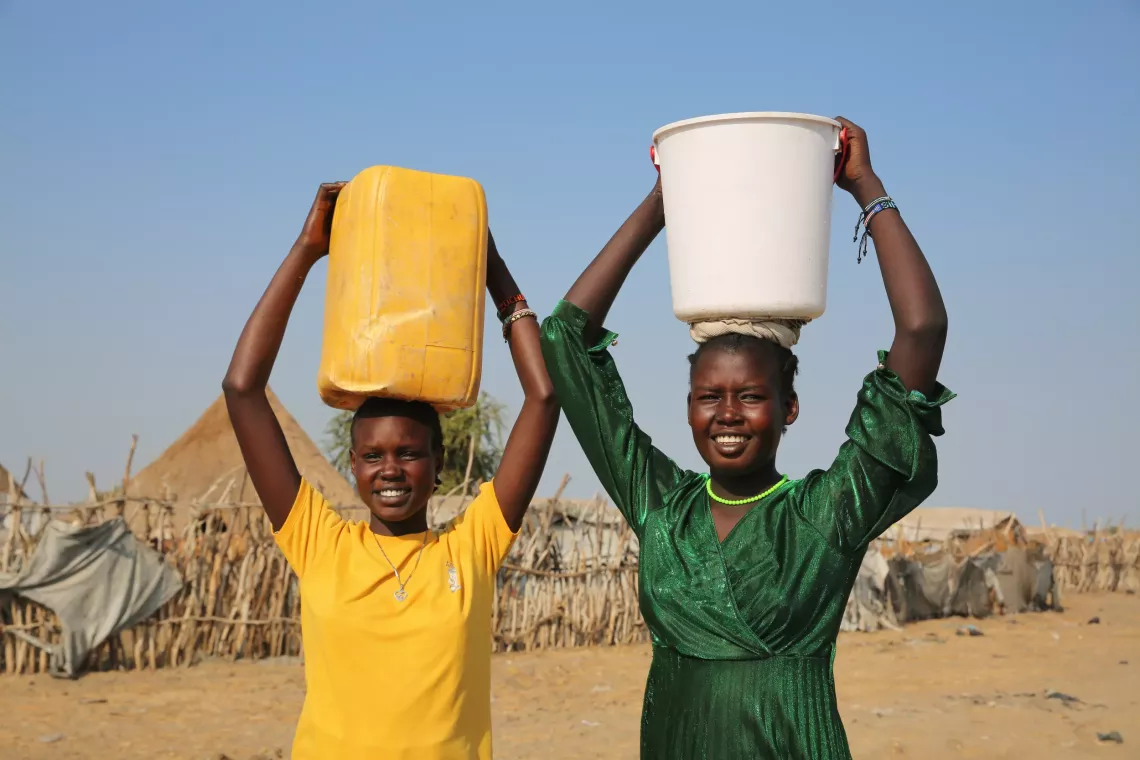
Everyday Anna Nyaguir Tiyen and Nya Luide Gatkueth Chap, both 17 years old fetch water from Delmet Water Point walking 30 minutes to fetch water and 30 minutes back to their home. The water point and home are separated by floodwaters. The quickest route is through the contaminated water, but they know the risks of cholera and other diseases. Instead, they take the longer path, making the trip three to four times a day to ensure their family has safe drinking water.
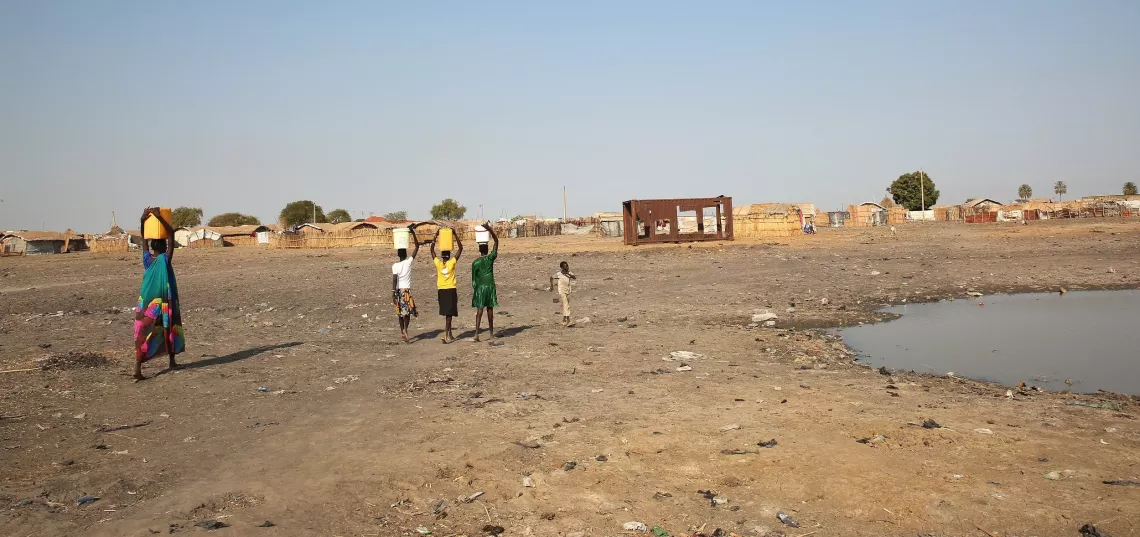
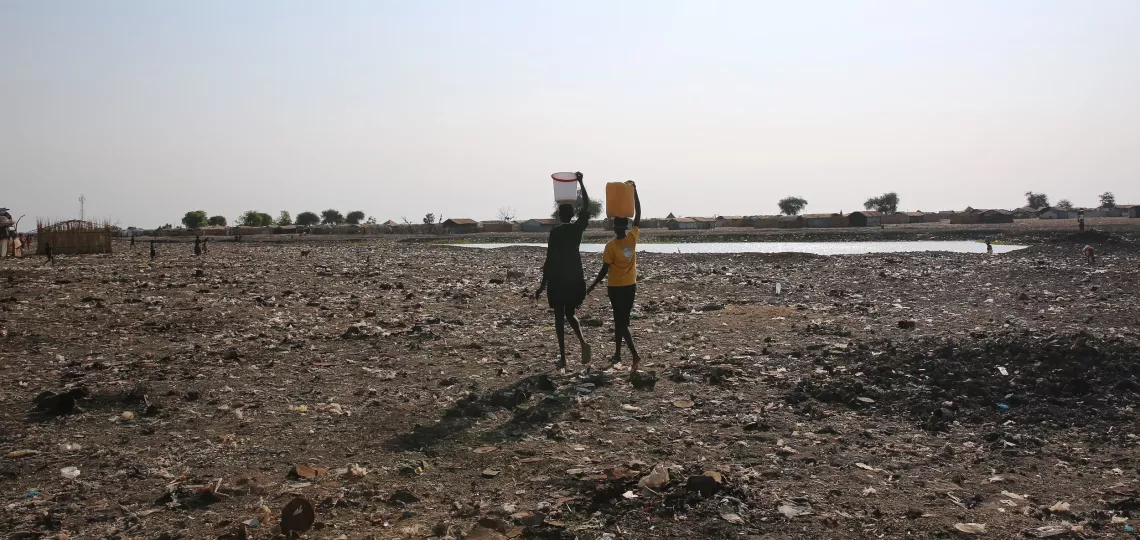
Anna and Nya Luide, both 17 years old are attending Nyuel Juol Primary School. Nya recently completed primary 7 and Anna is starting her Primary 7 soon. However, with the school closed after exams, their days are now spent helping their parents with household chores.
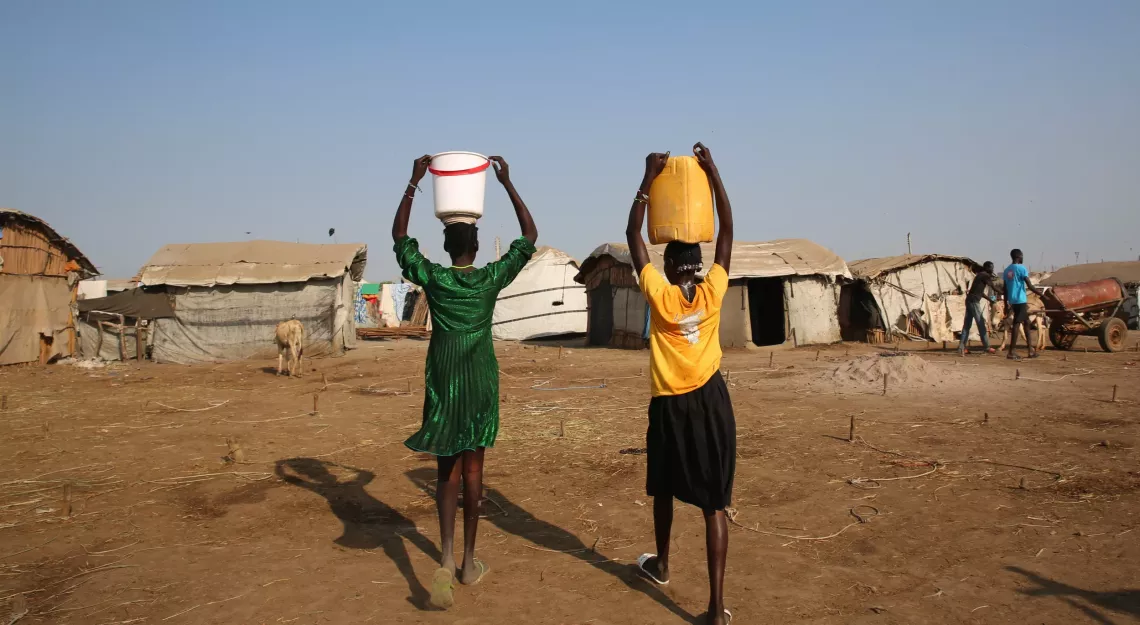
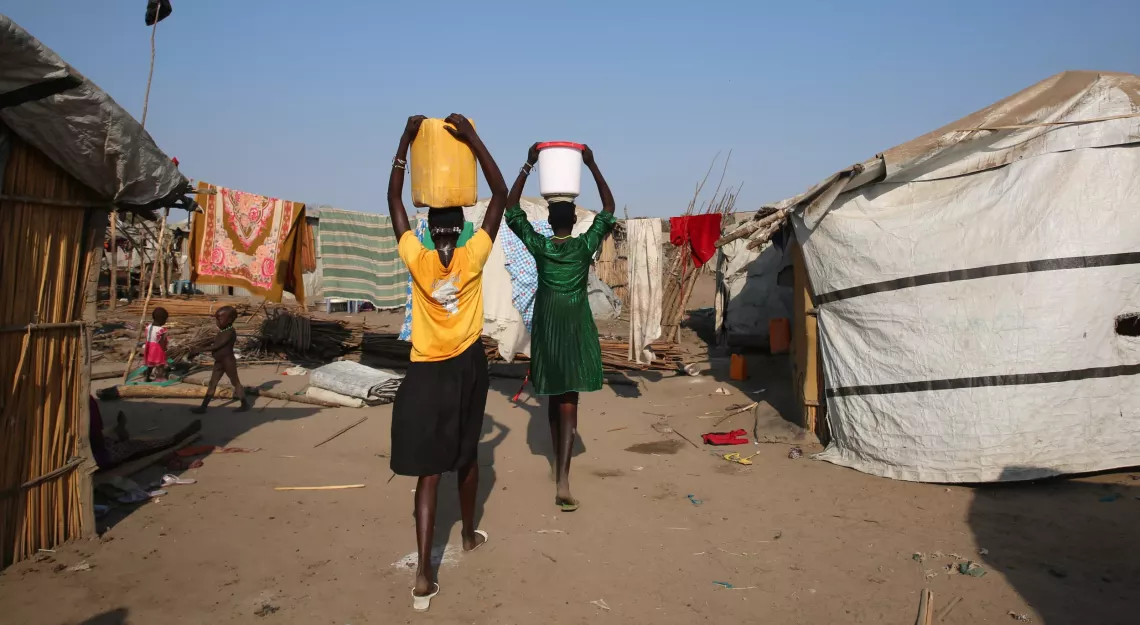
When they first heard about the cholera outbreak, they feared the disease. Slowly, the people in their community also started getting sick. They had learned about hygiene practices and sanitation in school. So, they made sure that they were using clean water and keeping their homes clean. Yet, despite their efforts, their younger siblings, just four and five years old, contracted cholera.
They played in the open areas where people defecate, and they also played in the contaminated flood water. Also, many homes don’t cover their food, which adds to the problem.
Thankfully, their siblings recovered after a few days of treatment they received at the Yoanyang Cholera Treatment Center without requiring hospitalization. However, Anna and Nya remain deeply concerned about the unsanitary conditions in their camp.

We don’t have a community latrine here and no matter how many times we asked, our elders don’t listen to us. They say there is not enough space to build latrines.

Maybe it’s because the government has asked people to move from here. They say the area is too congested and it will be demolished. We don’t know where we will go or if we’ll have access to clean water. Even our school might be too far!

Amid all this uncertainty, the sisters are hopeful on their dreams. “We feel happy when we are in school,” says Anna. “We learn so much, and at least there, we have access to latrines.” Anna aspires to become a pilot, while Nya hopes to be a doctor. Although they are unsure whether they will be able to go to school easily when they move from their current camp. They also worry if their families will be able to financially support their higher education after completing secondary school. Nevertheless, they remain hopeful.
They find time to talk about music, their favourite singers and play games when they find some time in between their chores. And they continue to dream of a life where their families don’t have to struggle for basic rights; education, sanitation, food and clean water.

Note: At the time this article was published, Anna and Nya Luide had already moved from the IDP camp where we first met them. We followed up with their school a week later, but they were still absent. Their classmates informed us that they have moved to a new location, but it remained uncertain whether they would return to school.
Background
The Delmet Water Point, established in December 2024 by UNICEF and Concern Worldwide with funding from the Central Emergency Response Fund (CERF), serves over 5,000 people in the community.
South Sudan’s Worst Cholera Outbreak in Two Decades
South Sudan is experiencing its worst cholera outbreak in its history. Since September 2024, there have been 39,932 suspected cases and 691 reported deaths across 41counties across 9 states up to mid-March 2025.
Alarmingly, 50% of cases involve children under 14. Malnutrition, lack of access to safe drinking water, and inadequate sanitation further increases the risk, particularly for children under five.
UNICEF’s Response and Ongoing Challenges
On top of the existing challenges, Rubkona county in Unity State has faced severe flooding for four consecutive years, forcing thousands of people to live with risks to several health challenges.
UNICEF is actively supporting cholera prevention and treatment efforts. This includes the procurement of Oral Cholera Vaccinations, the provision of supplies to ensure the provision of clean water and the establishment of water points. UNICEF has further supported communication campaigns to prevent Cholera and other waterborne diseases, signs and symptoms of Cholera and where to seek help.
UNICEF is looking for 19 million USD to provide safe and clean water and sanitation systems, as well as treatment and vaccination for cholera.