South Sudan Unites for World Breastfeeding Week 2025: "Prioritise Breastfeeding: Create sustainable support systems"
The country has made strong progress on exclusive breastfeeding for children under six months, and now needs a final push to reach the national target of 80% in 2027.
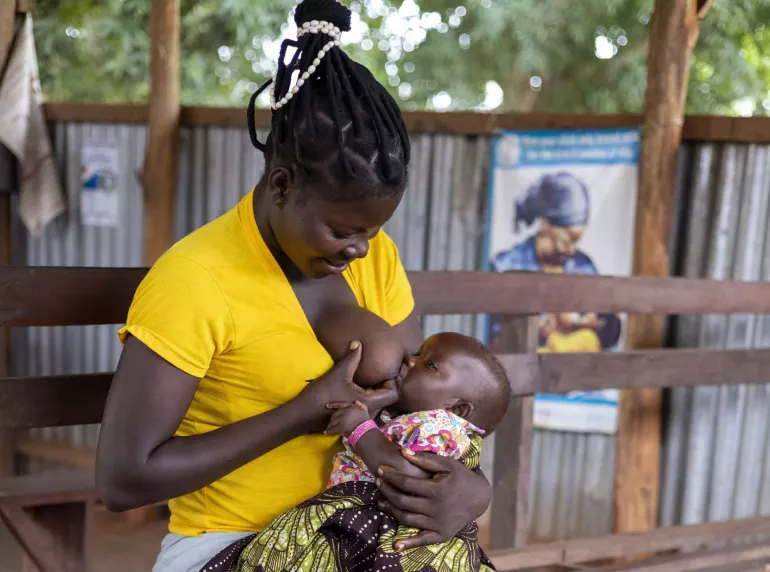
Juba, 4 August 2025 – The Ministry of Health, Republic of South Sudan, in partnership with UNICEF and key nutrition partners, launched a nationwide commemoration of World Breastfeeding Week (WBW) 2025. This annual advocacy takes place from 1 to 7 August 2025. This year's global theme, "Prioritise breastfeeding: Create sustainable support systems", calls upon policymakers and all sectors of society in South Sudan to safeguard this natural practice for the best start in life and the future of the nation's children.
South Sudan has made significant progress over the past decade, with the proportion of children under six months exclusively breastfed increasing from 45% in 2010 to 73% in 2024. However, more is needed, as three out of every ten newborns remain deprived of their right to a healthy start to life and miss out on the appropriate first food in the first six months of life.
Breastmilk is nature’s perfect first food and one of the most effective ways to ensure a child's health and survival. It is the only food that baby needs for the first 6 months. Exclusive breastfeeding up to six months and complementary feeding after six months, along with continued breastfeeding until a child turns two years old, helps build immunity and protects them against common childhood illnesses. Breastfeeding is the best way to prevent infant morbidity, mortality, and malnutrition to attain optimal growth and development.
In South Sudan, where challenges like food insecurity, high rates of malnutrition, and limited access to healthcare persist, promoting and protecting breastfeeding is not just beneficial; it is critical.
Barriers faced by mothers include cultural practices, lack of support at home and work, misinformation, aggressive marketing of breastmilk substitutes, and the pressures of insecurity and displacement, which hinder successful breastfeeding. Improving breastfeeding practices is essential to combat South Sudan's persistently high rates of infant mortality and acute malnutrition.
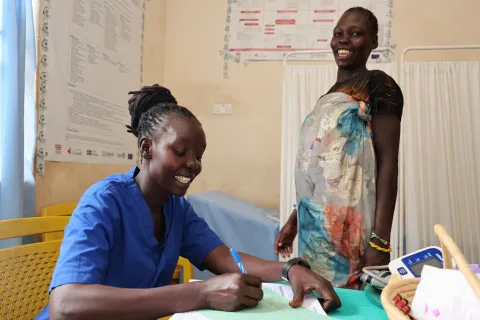
“To create sustainable support systems” is a call to action for all, declared Hon. Sarah Cleto Rial, Minister of Health, Republic of South Sudan. "Prioritizing breastfeeding is not only the mother's burden. It requires the active commitment and support of everyone. The Government of South Sudan reaffirms its commitment by empowering healthcare workers with skills to provide breastfeeding counselling in antenatal, delivery, and postnatal care and strengthening hospital and community linkages."
In South Sudan, the Focus Areas for World Breastfeeding Week 2025 are on strengthening community support systems through mother-to-mother support groups, mobilising community health workers, religious leaders, and traditional authorities to dispel myths and promote positive social norms. It is important to create supportive environments for breastfeeding mothers and continue to advocate against the inappropriate marketing of breastmilk substitutes.
To reach the 2027 national target of 80% of children exclusively breastfed, the whole of society must address women's barriers to exclusive breastfeeding. While the Ministry of Health, UNICEF, and their partners work hard to ensure that malnourished children receive necessary therapeutic services and nutrition treatment centres are established, more needs to be done to prevent malnutrition in the first place.
"Breastfeeding is a child's first vaccine and the best source of nutrition. Investing in protecting, promoting, and supporting breastfeeding is investing in South Sudan's most valuable resource, its children” said Noala Skinner, UNICEF Representative in South Sudan. “We must all play our part to support breastfeeding mothers and break down the barriers they face."
Breastfeeding is the cornerstone of child survival and development in South Sudan. Protecting it demands a unified effort. When integrated across policies, health systems, workplaces and communities, breastfeeding becomes more than a feeding choice — it becomes a pillar of sustainable development.
Join South Sudan in celebrating World Breastfeeding Week 2025 as we unite to protect, promote, and support breastfeeding, creating sustainable support systems for breastfeeding mothers.
Media contacts
About UNICEF
UNICEF promotes the rights and wellbeing of every child, in everything we do. Together with our partners, we work in 190 countries and territories to translate that commitment into practical action, focusing special effort on reaching the most vulnerable and excluded children, to the benefit of all children, everywhere.
For more information about UNICEF and its work in South Sudan visit: www.unicef.org/southsudan
Follow UNICEF South Sudan on Twitter, Facebook, Instagram and YouTube