Special Delivery: Ventilators and Incubators to Protect Gaza’s Newborns
UNICEF and King Salman Humanitarian Aid and Relief Centre are working to ensure that Gaza’s vulnerable newborns have the equipment they need to survive
- English
- العربية
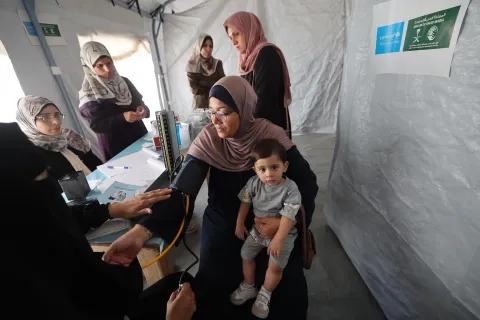
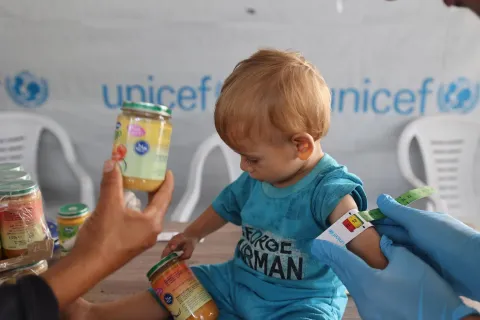
In the Gaza Strip, health conditions over the last two years have deteriorated dramatically and many infants are born premature, malnourished or in emergency deliveries. NICUs are often managing too many cases of extremely fragile infants with limited equipment.
The ceasefire that went into effect in October 2025 has allowed UNICEF and its partners to contribute critical building blocks to Gaza’s decimated health sector, restoring lifesaving care to nearly two million Palestinians. While the influx of humanitarian aid remains inadequate, a reduction in trauma cases and physical attacks is paving the way for hospitals to restore their services.
As of January 10, only half of the Gaza Strips 36 hospitals were operating partially.
Since November, however, UNICEF has distributed three direly needed ventilators and three incubators to Gaza’s hospitals that support vulnerable newborns and premature infants.

The delivery of high-frequency oscillatory (HFO) ventilators to Nasser, al-Aqsa and El Helou hospitals with the fund from Saudi Arabia through King Salman Humanitarian Aid and Relief Centre marks the first introduction of neonatal ventilators to the Gaza Strip in five years, providing gentle, stable ventilation for premature infants.
This equipment ensures safer management of extremely premature infants, reduces mortality among newborns with severe breathing problems, ensures standard care across Gaza’s hospitals, and bolsters the health’s systems efforts to restore its neonatal capacity after months of strain.
Saving Gaza’s Youngest
There is a baby born in Gaza every twelve minutes, entering the world in extremely challenging conditions, with shortages of medical equipment, power, space and staff. Since the new ventilators and incubators were delivered, dozens of newborns received intensive newborn care.
“These ventilators are lifesaving for babies in the NICU,” says Dr. Hatem at Nasser Hospital in Khan Younis. “There is a severe shortage of this type of equipment across hospitals, and Nasser receives critical cases from many areas – so having this support can make the difference between life and death.”

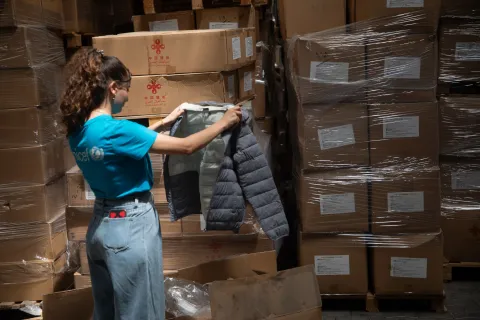
Since November, UNICEF has supplied essential neonatal and critical care equipment – approximately 3 incubators, 15 ventilators, 15 monitors, 10 pulse oximeters, 50 infusion pumps, 10 syringe pumps, and medical kits – helping reactivate NICUs.
This delivery is part of the fund provided from Saudi Arabia through King Salman Humanitarian Aid and Relief Centre into rebuilding and reinforcing Gaza’s neonatal and paediatric critical care services, ensuring that newborns—especially those born prematurely or medically fragile—have the chance to survive and thrive.