UNICEF in the State of Palestine Humanitarian Situation Update - WASH in The Gaza Strip
Reporting Period 29 May 2026
Highlights
Ahead of summer months: update on Water, Sanitation and Hygiene (WASH) in the Gaza Strip
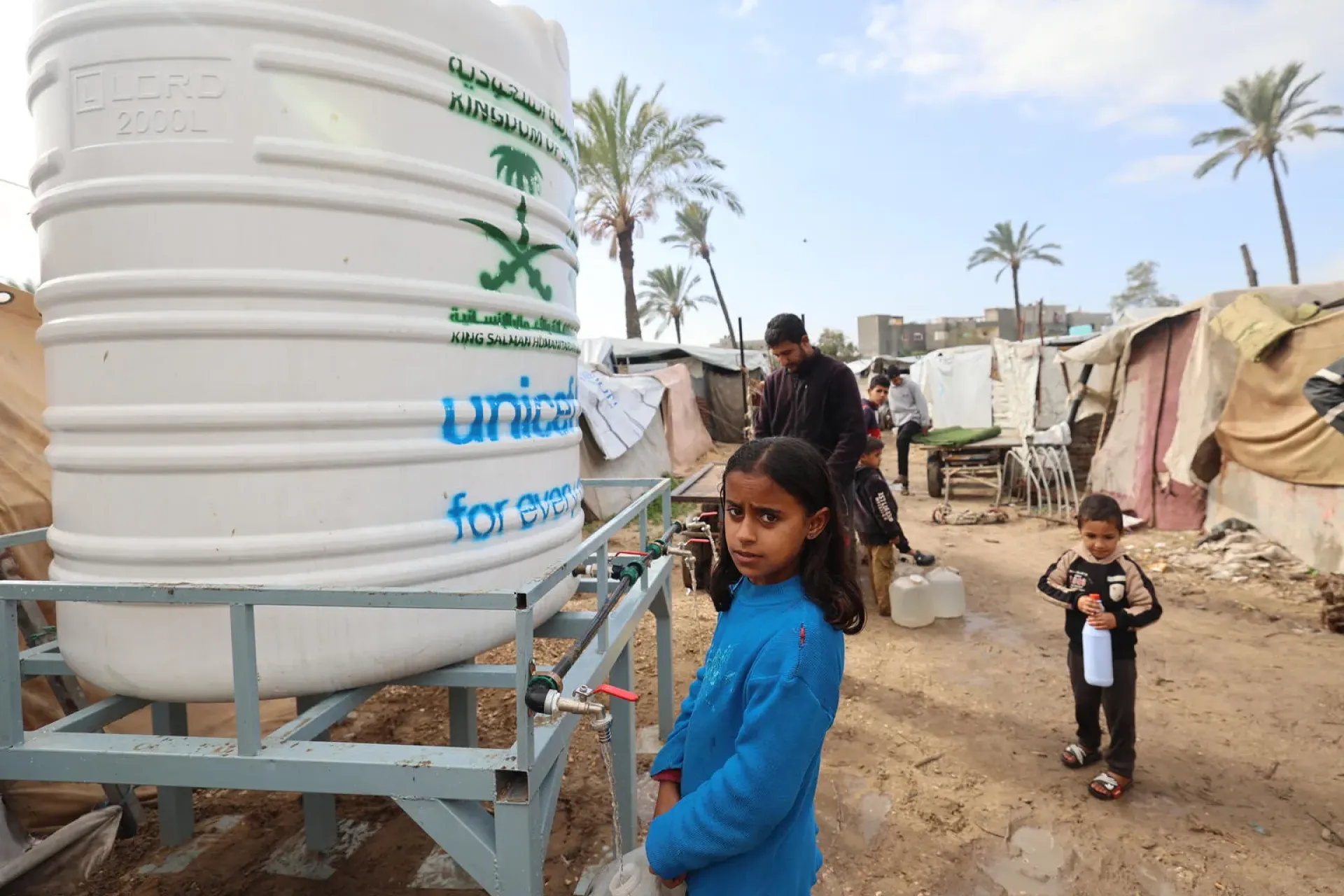
For 1.1 million children in Gaza, water remains a daily uncertainty. UNICEF and partners continue to sustain emergency WASH services through a combination of trucked water, desalination, wells and limited network supply. Drinking water distributions are reaching up to 1.5 million people, depending on access and operational conditions. Despite efforts, most families remain water insecure (82 per cent), and up to 70 per cent are unable to collect the minimum of 6 litres per person per day for drinking and cooking.
A critical water-trucking route remains inaccessible: Humanitarian actors have suspended all water-trucking operations at the Al Mansoura filling point since the incident on 17 April, in which two UNICEF-contracted truck drivers were killed. UNICEF and partners are now trucking water from desalination plants at a significant additional cost of about USD 40,000 per day to cover the 2 million litres per day previously collected from Al Mansoura. The filling station is critical for daily access to drinking water of 285,000 people.
Core water systems remain under severe strain due to restrictions on energy, chemicals, spare parts: Seawater desalination output was 20,000 m³/day in March but has since decreased to 16,000 m³/day due to shortages of chemicals and spare parts. Shortages of engine oil, lubricating oil, and other essential consumables also disrupt water production and related services.
- Solid waste, sanitation and environmental health pressures are alarming: Children and families face deteriorating hygiene conditions, as growing quantities of waste accumulate in and around displacement sites, shelters, and overcrowded communities while disposal sites remain inaccessible.1 Under normal conditions, waste would be transferred to managed disposal sites, but in the current context disposal capacity is extremely limited, temporary sites are full or nearly full, and access to landfill options remains constrained. Environmental health risks are severe, with rodents and pest infestations threatening further spread of disease.