From school gardens to climate action: Learning for a greener future in Somalia
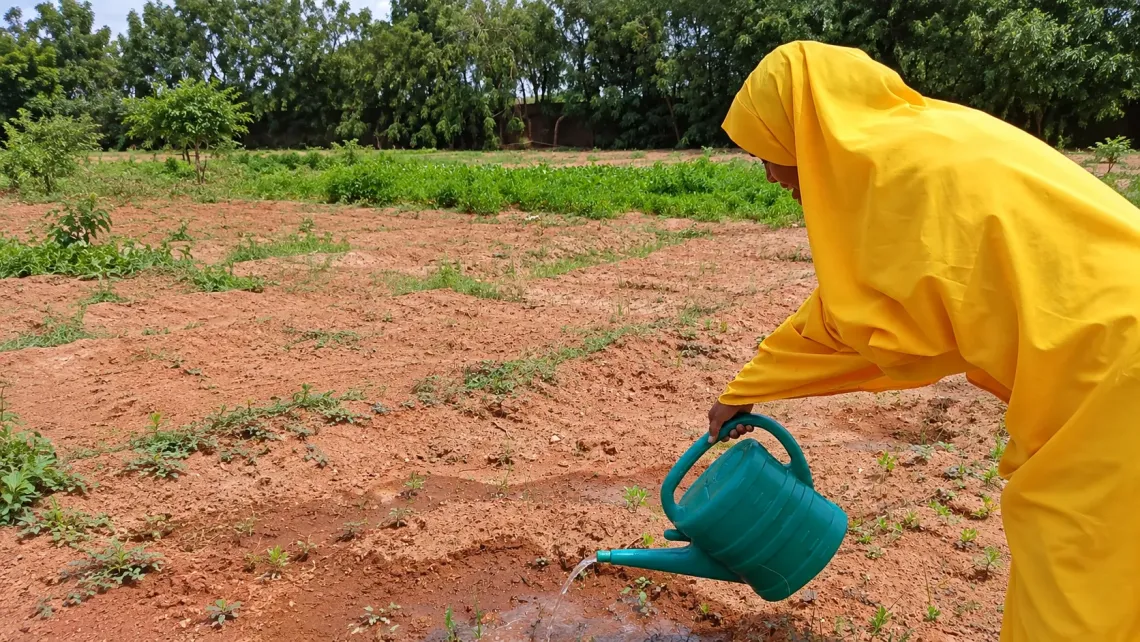
At GECPD Harfo School in Somalia, a small garden is helping students turn environmental learning into practical action.

For Asad Abdikadir Hassan, a teacher at GECPD Harfo School, the school garden has become more than a place to grow plants. It is a space where students learn about environmental protection, climate resilience and the importance of caring for their surroundings.
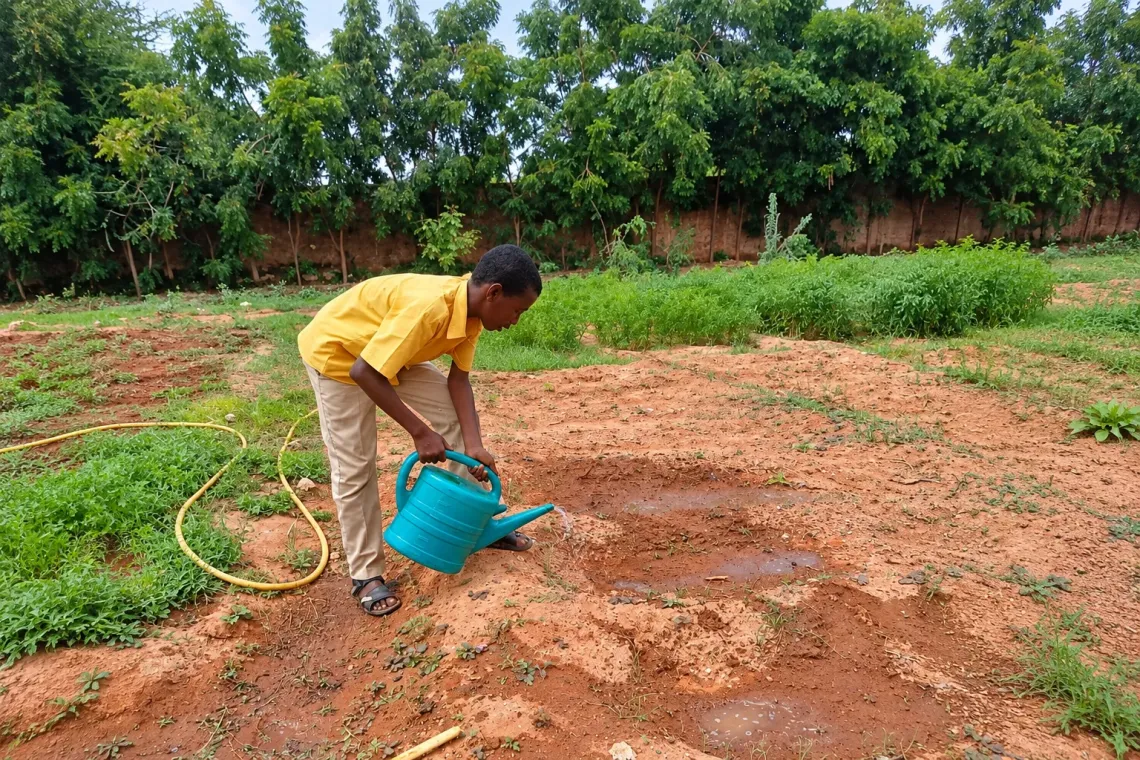
Working alongside five students directly involved in the garden, Asad is helping turn climate and environmental education into practical skills that children can also apply at home and in their communities.
What is happening at GECPD Harfo School is part of a wider effort supported by UNICEF and partners to strengthen climate education in Somalia, connecting practical activities in schools with broader efforts to build climate resilience within the education system.
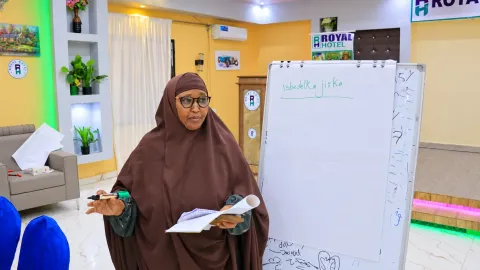
Asad received training covering climate change awareness, environmental protection, soil types and climate-responsive irrigation. He is now using this knowledge to establish and maintain the school garden together with students.
“This initiative has been amazing in terms of improving our school environment. As a teacher, I have learned a lot from this plantation activity. It has given me practical knowledge that I can use beyond the school. I have even started a small garden at my home.”
From school gardens to wider climate learning
The experience at GECPD Harfo School reflects a broader investment in practical climate and environmental education across Somalia.
With support from UNICEF and partners, school gardens have been established in 30 schools, reaching approximately 7,500 students with opportunities to learn about environmental responsibility, sustainable gardening and climate-sensitive nutrition.
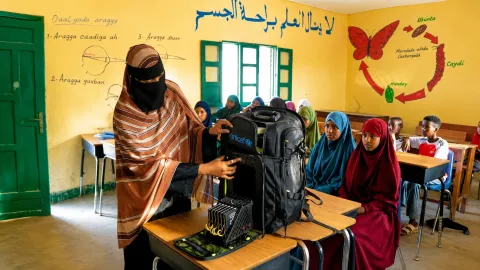
Climate awareness and education activities have also been organized across 90 schools, using arts, sports and other participatory approaches to engage children and surrounding communities in climate change, environmental conservation, water management and greening.
These activities demonstrate different ways of making climate education relevant to students' everyday lives. Rather than learning about environmental challenges only in theory, children can explore how practical actions, from caring for plants to conserving water, contribute to a healthier school environment and greater climate awareness.
For Asad, the benefits extend beyond the garden itself. Students are developing teamwork, responsibility and practical skills while learning how their actions can help protect the environment.
Connecting school-level action to education-system strengthening
The significance of these activities goes beyond the individual schools and students reached. They offer practical examples of how climate education can be delivered through engaging, school-based approaches that connect learning to the local environment.
UNICEF and partners are working with the Federal Ministry of Education, Culture and Higher Education to strengthen climate education and climate resilience within Somalia's education system.
Experiences such as those at GECPD Harfo School illustrate how practical learning can complement these wider efforts. They highlight the importance of equipping teachers with relevant knowledge and skills, creating opportunities for students to apply what they learn, and connecting climate education with the challenges children encounter in their communities.
Learning that extends beyond the school
For Asad, one of the most encouraging results has been seeing students take responsibility for the garden and develop skills that can be useful outside the classroom.
The initiative also demonstrates the value of supporting teachers themselves. Asad has applied what he learned through the training not only with his students but also at home, where he has started his own small garden.
Recognizing these benefits, he hopes similar opportunities will continue to reach more schools.
“I would like to request continued support for school gardening and climate action. These activities are very important because they give teachers and students practical skills that can continue to benefit our schools, homes, and communities.”
The experience at GECPD Harfo School shows how even a small school garden can create opportunities for meaningful environmental learning. Across Somalia, similar school-based activities are helping children connect climate awareness with practical action.
As UNICEF and partners continue working with the Government to strengthen climate education, these experiences offer examples of how learning can become more relevant to children's lives and contribute to the broader ambition of building a climate-resilient education system.
This initiative was supported by People's Postcode Lottery, helping UNICEF and partners advance climate education and resilience at school, community and system levels in Somalia.