Spotlighting a religious leader’s impact on society
The formation of the National Islamic Advisory Group has contributed to changing behaviours and norms in the community.

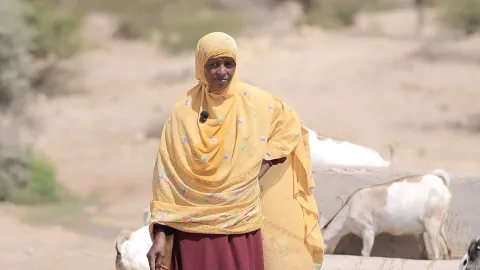
Galkayo, 1 April 2024: In a small, displacement camp on the outskirts of Galkayo town known as Halabookhad IDP camp, we meet Sheikh Ali Mohamed. He welcomes us with a smile and remarks, “I have been waiting for you ever since I heard you were interested in my story. Tell me what you would like to know, I have the answers.”
Sheikh Ali, 34, and a father of three, has lived in this camp for 10 years. He was displaced from Wardeer district on the border with Ethiopia due to drought. He settled in the camp with his family and has never looked back.
In the IDP camp, Sheikh Ali sees the daily struggles of his community, chief among them poverty, lack of education, healthcare, nutrition, and social inequality. He is acutely aware of his responsibility to help bring about positive change in the community. Throughout our interview, it is apparent that Sheikh Ali is not only a respected religious leader, but he is also a dedicated community elder who carries the interests of his people at heart. He believes that true faith is not just about spiritual wellbeing but also about caring for the physical health and wellbeing of others.


“From a young age, I had a natural gift for leadership and a profound understanding of religious teachings. I was always in the madrassa, I wanted to learn as much as I could and at one point, I was the assistant to my madrassa teacher,” he says.
Ali finished the Quran when he was still a young boy and took it upon himself to teach his siblings and friends at home. Ali was always encouraging them to continue learning and stay committed. “This is a journey that I started when I was still a young boy and today, here I am still doing what I love and what I dedicated my life to do,” he adds.
With support from the Puntland Minority Women Development Organization (PMWDO), Ali underwent a three-day training by the National Islamic Advisory Group (NIAG) on the importance of vaccination, hygiene, nutrition, education, and disease prevention. The NIAG is an entity of religious scholars established in 2016 to promote public health.

Ali believes that it is crucial for everyone to take care of their health, especially during difficult times. He encourages mothers to exclusively breastfeed their babies for their proper growth and development and teaches the importance of vaccinating children and educating girls, believing that they should have the same opportunities as boys.
His dual role as a religious leader and community elder allows Ali to reach a wider audience and bridge the gap between faith and science. Through his efforts, Ali has not only saved lives but also inspired others to change their beliefs and norms.
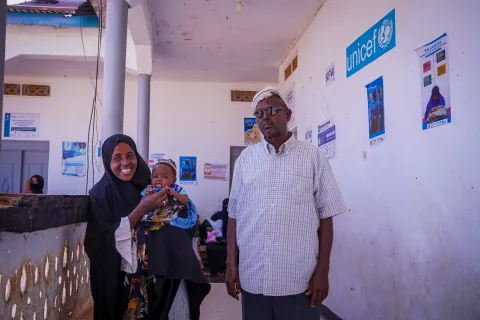
The use of the religious leaders has been an effective strategy in promoting immunization because of the immense respect they command in the community. The NIAG has played a key role in shifting mindsets among the clergy and, through them, the community. Through religious leaders, families have been persuaded to immunize their children and adopt other health-seeking behaviours. And in mobilizing communities during mass immunization campaigns, Ali will be found at the forefront, explaining the benefits of vaccinating children and dispelling religious myths, important work in a country like Somalia where vaccine-preventable diseases continue to claim thousands of young lives every year.
UNICEF’s support to the NIAG is made possible by generous financial contributions from the Government of Denmark.