A mother’s hope for a better future rekindled as life-saving health services return to Laascaanood
After two years of conflict and disruption, families in Laascaanood are able to access vital health services to protect their children.

Two years ago, Ayaan Hassan fled her home in Laascaanood with her three children, two girls and a boy, when conflict erupted in the town. Life changed overnight. Schools were forced to shut down and health services collapsed even as the provision of basic necessities disappeared. For Ayaan and so many other families, the desperate search for safety meant leaving everything behind. In the process, her children missed out on critical health services like immunization during a period they needed them most.
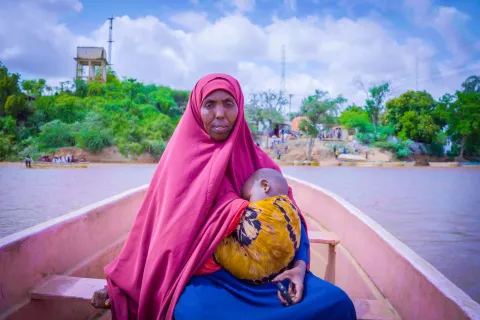
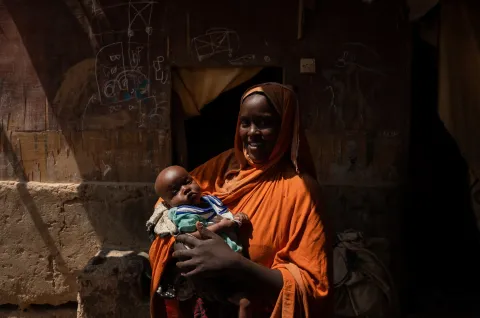
Two years later, calm has returned to Laascaanood, and a sense of normalcy is slowly beginning to grow. At Sayidka Health Centre, located in the heart of the town, Ayaan arrives carrying her youngest daughter, Maryama, in her arms.

“She had a fever and diarrhea last week, and I was really worried,” Ayaan says quietly. “I brought her here to get treatment and to make sure she finally gets the immunizations she missed.”
Maryama is one of thousands of children benefiting from the return of health services in Laascaanood where, for nearly two years, children had been cut off from life-saving health services due to the conflict.
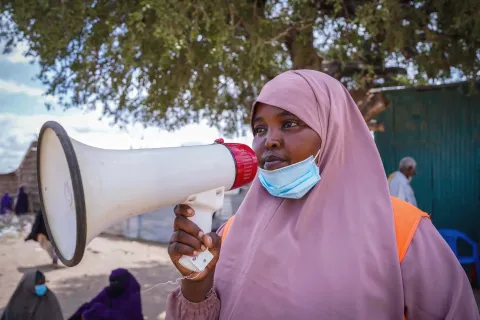
“For two years, this clinic was quiet,” recalls nurse Sadia. “Children missed out on life-saving vaccines. It is a relief to be back, doing what we were trained to do, protecting children.”
The revival of services at Sayidka and other health centers has been made possible through the Gamers Without Borders contribution from the Saudi Esports Federation, under the supervision of King Salman Humanitarian Aid and Relief Centre (KSrelief). Their support has not only expanded access to life-saving treatments but also strengthened local healthcare systems, ensuring that facilities like Sayidka can continue to serve communities in need.

Thanks to this generous contribution, UNICEF has been able to deliver critical, life-saving health services to vulnerable populations affected by emergencies. The efforts have focused on regions with the greatest needs, prioritizing vulnerable women and children in the Bari, Sool, Sanaag, and Mudug areas of Somalia.
As a result, 28 health centres have been strengthened to provide comprehensive primary healthcare services, now reaching over 250,000 people. These services include immunization, treatment for childhood illnesses, and maternal care. UNICEF has also supported the training of healthcare workers to improve their skills in assessing, classifying, and managing common childhood diseases—especially the leading causes of child mortality in Somalia: pneumonia, diarrhea, and malaria.

Ayaan remains grateful. Her family still has its struggles - her husband earns a modest income as a market trader while she stays home to care for the children. Knowing that Maryama has received her vaccines means one less issue to worry about.
“I can’t afford private clinics. Without this center, I don’t know what I would have done.”
For Maryama, vaccination means more than protection for her children from diseases like measles and pneumonia; it means a healthy future for them, a hope for a better tomorrow. And for Nurse Sadia, it reaffirms the purpose of her work.
“This is what keeps me going,” Sadia says. “Every child I vaccinate is a life Iam saving.”