Mobile health teams save lives with early detection of malnutrition
Front line workers full of heart

Unpredictable and extreme weather due to climate change is affecting Somalia. Dedicated frontline health and nutrition workers are in action with immediate life-saving response as 1.5 million children are expected to need treatment for malnutrition by the end of the year. Establishing health systems in places where malnutrition is highest will enable families to stay in their communities. UNICEF is answering this call by supporting the Ministry of Health and Community Based Organizations to help build resilience while saving lives, with funding from the EU Civil Protection and Humanitarian Aid Operations (ECHO).

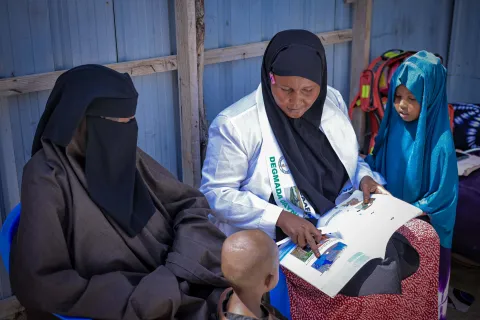
Today, suspecting mothers are lined up to have their children assessed and treated for malnutrition at the mobile health Deegan Outpatient Therapeutic Programme (OTP) in South Galkayo. The mobile clinic is managed by UNICEF partner Skills Active Forward (SAF UK). "The situation of malnutrition is severe. We've registered and admitted around eighty cases in the past two months of children under five years old. Most have a recovery period of six weeks. We constantly advise women on good practices to help their children recover from malnutrition,” says Nurse Bisharo Abdulle Elmi.
Malnutrition can be very complex to treat. There is sickness due to lack of food, but it can also be the quality and the diversity of food being given to children. Treating malnutrition also requires addressing underlying causes of common childhood diseases such as malaria, diarrhea and pneumonia. The underlying causes include a lack of clean water, sanitation, and hygiene facilities. Without educating caregivers and finding solutions to the overall situation, relapse can easily happen.
“UNICEF supports us in terms of capacity-building trainings, improving facilities, and overall program implementation. They have provided us with guidelines, procedures, and various resources to enhance our work," says Nurse Elmi.


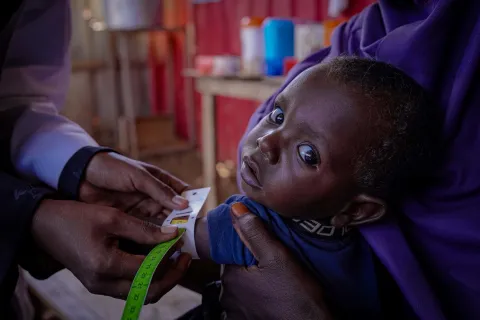
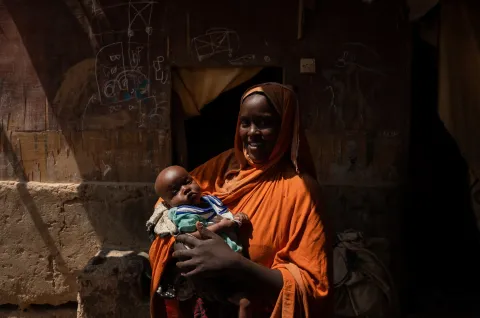
Nasra brought her 2-year-old child, Mohamed, to the clinic today. “He had previously been assessed by the mobile team and was prescribed RUTF [ready-to-use therapeutic food, a medicinal peanut paste], to help him become healthier. Mohamed was referred because of severe acute malnutrition,” she says.
As a Mid-Upper Arm Circumference (MUAC) measuring tape is used, Nasra sees red showing through the box. This means that baby Mohamed still has severe acute malnutrition (SAM), also known as severe acute wasting, but he is showing a good improvement from last week. She will continue the treatment and follow up next week.
For many cases identified early, treatment can be provided on an outpatient basis by issuing RUTF and routine medications, following simple medical protocols and weekly monitoring. If the child has underlying conditions, this will require inpatient services to ensure the underlying conditions are managed, feeding with fortified milk is monitored and the child is stabilized before transferring to an OTP for continued treatment with RUTF.
On the MUAC, if yellow shows through the box, the child has moderate acute malnutrition and is treated as outpatient through a supplementary feeding programme, conducted by UN partner organization WFP.

Mobile teams can detect malnourishment quickly with the MUAC and are reaching children that are not able to make it to a clinic. Malnutrition can lead to long term physical and developmental damages. The earlier it is detected the more cost-effective the treatment can be, and more importantly, it can help save lives and prevent suffering.
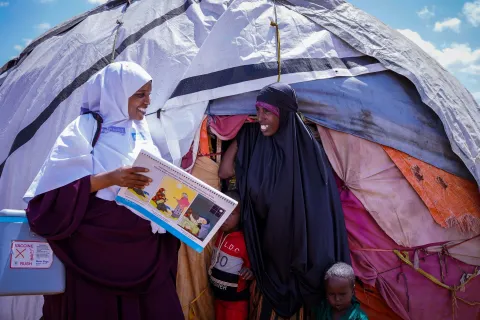
"I carry my MUAC measurement tape wherever I go to assess the nutrition conditions of children in the camp. If I come across severely malnourished children, I direct them to the clinic for help,” says Nimo Mohamed Ali, a health worker with UNICEF partner organization SAF UK.
In 2023 UNICEF and partners treated more than 600,000 children for severe wasting in 71 districts across Somalia. This is through the dedicated work of front-line health workers like Elmi and Nimo. Programs like the Deegan Mobile Clinic are possible with support from donors such as the European Union’s Civil Protection and Humanitarian Aid Operations (ECHO). This programme includes system strengthening and building resilience among communities. UNICEF works with the Ministry of Health to scale up the treatment of children with wasting and integrate it within routine primary health-care services.

Nimo’s eyes light up as she sees the green marker appear on the little girls’ arm, meaning the child is a healthy weight. “It brings me joy to witness the children I have recommended to the clinic receiving treatment and eventually being declared free from nutritional deficiencies. That is what motivates me to do my job as a frontline worker."