Education sector analysis 2012-16
Key objectives of the analysis include identifying education trends and priorities that will shape the new Education Sector Strategic Plan 2018-2020 (ESSP).

Highlights
The Federal Government of Somalia (FGS) Education Sector Analysis (ESA) has been conducted in response to the request by the Government of Federal Government of Somalia, its sector partner, the Global Partnership for Education (GPE), and the Managing Entity, UNICEF, for an evidence-based analysis of the Education Sector within the period of the outgoing Interim Education Sector Plan (IESSP) (2013-2016). Key objectives of the analysis include identifying education trends and priorities that will shape the new Education Sector Strategic Plan 2018-2020 (ESSP).2 This ESA is based on a wide spectrum of dialogues with Federal Government of Somalia officials, local partners and community stakeholders. The report is committed to being as accurate and rigorous as possible based on the evidence available so as to inform policies and strategies for the education sector for the next three years and aligned to the 3-year timeframe of the National Development Plan for Somalia 2017-19.
ESA/ESSP Methodology
The methodology utilized for this sector analysis follows international standards and guidelines developed by organizations such as UNESCO, UNICEF and USAID. The analysis has been developed based on the following key stages:
- Analysis of the key statistics including the relevant Education Management Information System (EMIS) statistics for the relevant years was carried out. Data covering most of the FGS regions and states are now available. The ESA would have been stronger if it had been enriched by the analysis of trend data of the various education indicators through cohort studies and comparisons across at least three years. This however was not feasible as only Banadir region has data going back three years while the other regions had data for only the last year when EMIS was expanded to cover all regions and state.
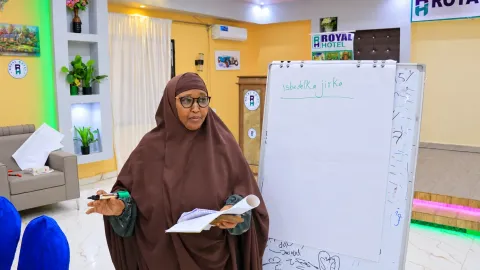
- Workshops were held with key members of the Ministry to formulate research questions and to analyse the progress made in each sector of education. Presentation of draft findings were made to the same workshops for their discussion, validation and the contextualization of these findings resulting in this sector analysis which reflects the conclusions of both stakeholders in discussions and workshops and the analysis of the reports and statistics. The report includes inputs based on notes on State consultations carried out by the ministry. Working groups were instructed to establish priorities and strategies in the interim ESSP to align with the NDP to 2019
Report Structure
This sector analysis report is structured on the Global Partnership for Education (GPE) guidelines for sector analysis and sector planning, albeit with the appropriate modifications related to context of the Federal Government within its fragile context. The context recognise that the government is striving to consolidate new state institutions, prioritize needs and lacks much of the data needed to conduct rigorous education Subsector analysis in specific areas such as ECCE, TVET and higher education, especially in emerging regional states of Central and South Somalia. Much attention has been given to the need to provide a credible education sector analysis which can support a strategic plan which can be supported by development partners and owned by local stakeholders and the MOECHE. Although the data gaps sometimes limit the scope and depth of analysis in some education Subsectors, the report’s structure is based on these six Subsectors: Early Childhood Education (ECCE), Primary, Secondary, Alternative Basic Education (ABE) and Higher Education and Technical and Vocational Education and Training (TVET) and mirrors the organizational structure of the MOECHE. In addition, the partners in the Ministry’s technical Working Groups identified critical themes, often cutting-across the Subsectors, specifically: Equity, Gender and Inclusiveness, Educational Governance and Management, Monitoring & Evaluation, EMIS, Education Cost and Financing, Teacher Training, Curriculum Development, Quality Assurance and Standards, Examinations, Special Needs and Education and Teacher Training. These are explored in a chapter dedicated to ‘cross-cutting’ themes.